下载App
资质规则
旅行
账户

Phoebe F
The Sunrise Was the Appetizer
Sliding Sands Trail的点评
点评:Like most visitors, I came for the famous sunrise.
After hiking the Sliding Sands to Halemauʻu traverse, I'd argue the sunrise is just the opening act. The hike is the real reason to visit Haleakalā.
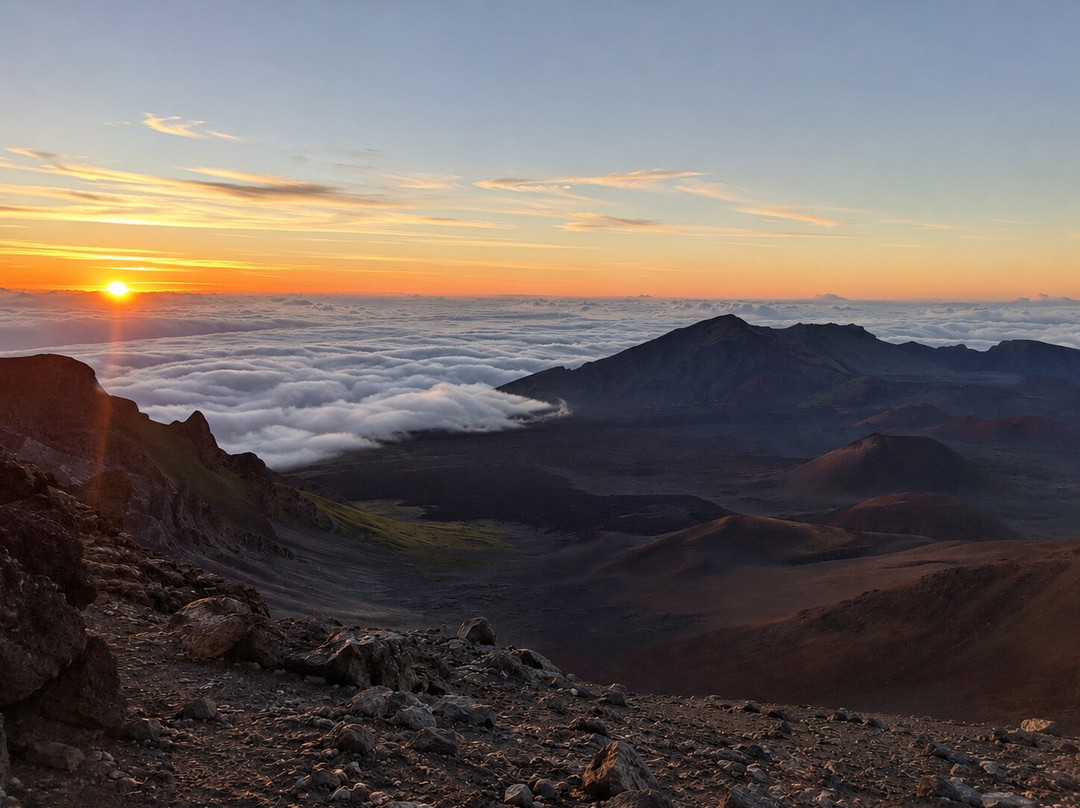
I stayed near Kahului the night before so I could get a full night's sleep and left my hotel at about 3:00 a.m. The drive up was easy that early, with very little traffic until the final climb to the summit. I arrived roughly 40 minutes before sunrise, which I thought was about perfect. It gave me enough time to park, bundle up, walk to an overlook, and simply enjoy the changing colors instead of worrying about making it in time. If you're planning a sunrise visit, I'd recommend giving yourself a similar cushion.
Dress in layers for the sunrise. Even in late July, it was only about 45°F (7°C) before sunrise, and a steady breeze made it feel cooler. Don't let the tropical location fool you—you're standing at over 10,000 feet. I was comfortable wearing a light windbreaker over a long-sleeve UV shirt, and by the time I was well into the hike I had peeled down to much lighter clothing. It's much easier to remove a layer than wish you'd brought one.
When the sun finally rose just before 6:00 a.m., it absolutely lived up to its reputation. Watching the clouds stretch to the horizon from above 10,000 feet is one of those experiences that's difficult to capture in photographs, no matter how many you take.
Then something interesting happened.
Within about 20 to 30 minutes, many people headed back to their cars and drove down the mountain. One of Hawaii's busiest sunrise attractions suddenly became remarkably quiet. If you're planning to hike, it's the perfect time to begin.
The Sliding Sands to Halemauʻu route is approximately 11 miles and is a point-to-point hike, so you'll either need two vehicles or arrange a shuttle. Don't let the steady downhill beginning fool you. While there are no technical sections or rock scrambles, you're spending most of the day hiking between roughly 7,000 and 10,000 feet, and the sustained climb out through the Halemauʻu switchbacks is where you'll earn your lunch.
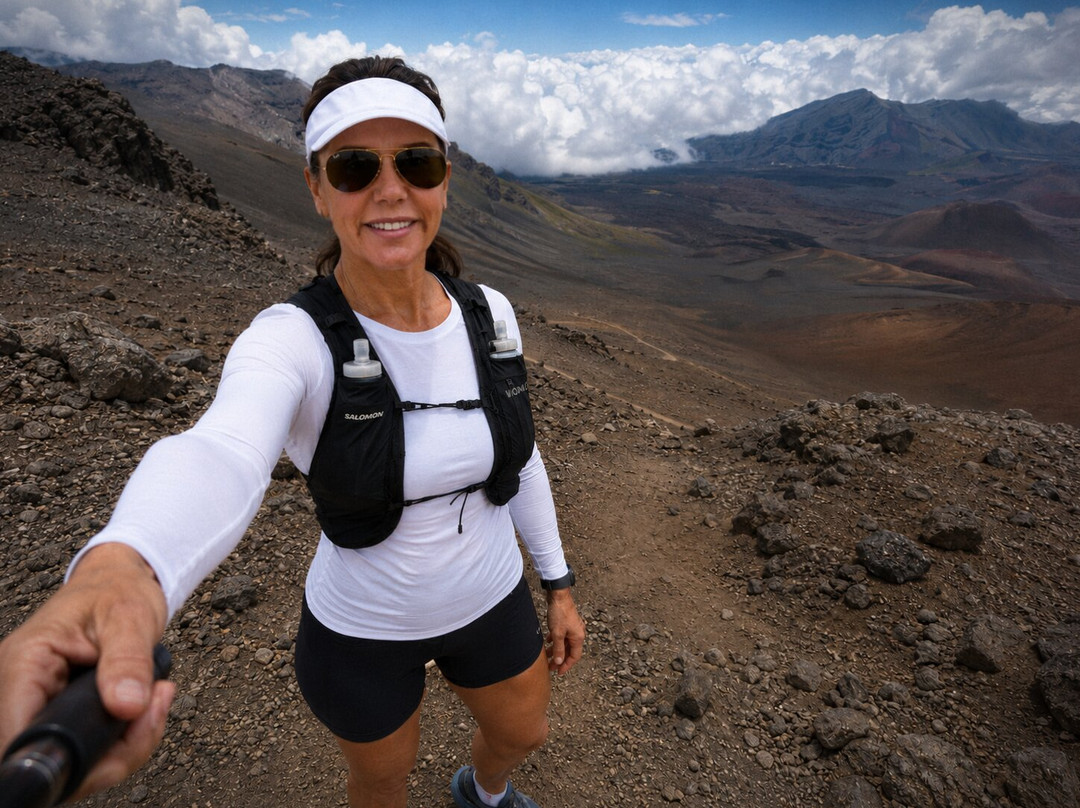
The scenery changes constantly. The upper crater feels almost like another planet, with colorful cinder cones, lava formations, and enormous open vistas in every direction. As you continue, vegetation gradually returns near the crater walls before the trail climbs through the spectacular Halemauʻu switchbacks.
By the time I reached that final climb, the weather had changed completely. The windbreaker was long gone. The long-sleeve shirt had disappeared into my pack. I was hiking in a sports bra and shorts—trail couture, apparently. The crater wore it better.
The hike took me about 6½ to 7 hours, including plenty of stops for photographs. I drank about 2½ liters of water and finished almost all of it. If it's warmer than normal, you're a slower hiker, or you simply like having a safety margin, I'd carry 3 liters.
A few practical tips if you're planning this trip:
Reserve your sunrise entry early. The sunrise reservation costs $1 per vehicle, but it's separate from the park entrance fee. Most reservations are released 60 days in advance, with another limited release 48 hours before your visit. Don't wait until the last minute if your dates are fixed.
Stay nearby the night before. Leaving from Kahului around 3:00 a.m. made for a relaxed morning and helped ensure I wasn't stressed about missing the sunrise.
Dress in layers. You'll probably start the morning bundled up and finish the hike in much lighter clothing.
Wear trail shoes. The footing is mostly volcanic cinders, gravel, and rock. It's never especially technical, but good traction makes the hike much more comfortable.
Carry enough water. There is very little shade for much of the hike. I found 2½ liters adequate, but 3 liters is a safer choice for many hikers.
Don't burn all your energy on the descent. The trail starts by losing elevation, but the longest sustained climb doesn't come until the very end.
Plan your entire day around the hike. If you're only coming for sunrise, you'll probably be back in Kahului before breakfast. If you're hiking the crater, don't schedule much afterward.
When I visited, the summit district and the Sliding Sands–Halemauʻu route were fully open with no significant closures affecting the hike.
If you're only interested in checking a famous sunrise off your bucket list, Haleakalā won't disappoint.
But if you enjoy hiking, don't drive back down immediately after sunrise.
Most visitors remember the sunrise.
I think the people who hike into the crater remember the entire day.
Overall: ★★★★★
One of the best day hikes I've ever done and unquestionably one of the highlights of my week on Maui. It requires an early alarm, a little planning, and a full day of hiking—but if you enjoy being outdoors, I think it's one of the most rewarding experiences on the island.
After hiking the Sliding Sands to Halemauʻu traverse, I'd argue the sunrise is just the opening act. The hike is the real reason to visit Haleakalā.
I stayed near Kahului the night before so I could get a full night's sleep and left my hotel at about 3:00 a.m. The drive up was easy that early, with very little traffic until the final climb to the summit. I arrived roughly 40 minutes before sunrise, which I thought was about perfect. It gave me enough time to park, bundle up, walk to an overlook, and simply enjoy the changing colors instead of worrying about making it in time. If you're planning a sunrise visit, I'd recommend giving yourself a similar cushion.
Dress in layers for the sunrise. Even in late July, it was only about 45°F (7°C) before sunrise, and a steady breeze made it feel cooler. Don't let the tropical location fool you—you're standing at over 10,000 feet. I was comfortable wearing a light windbreaker over a long-sleeve UV shirt, and by the time I was well into the hike I had peeled down to much lighter clothing. It's much easier to remove a layer than wish you'd brought one.
When the sun finally rose just before 6:00 a.m., it absolutely lived up to its reputation. Watching the clouds stretch to the horizon from above 10,000 feet is one of those experiences that's difficult to capture in photographs, no matter how many you take.
Then something interesting happened.
Within about 20 to 30 minutes, many people headed back to their cars and drove down the mountain. One of Hawaii's busiest sunrise attractions suddenly became remarkably quiet. If you're planning to hike, it's the perfect time to begin.
The Sliding Sands to Halemauʻu route is approximately 11 miles and is a point-to-point hike, so you'll either need two vehicles or arrange a shuttle. Don't let the steady downhill beginning fool you. While there are no technical sections or rock scrambles, you're spending most of the day hiking between roughly 7,000 and 10,000 feet, and the sustained climb out through the Halemauʻu switchbacks is where you'll earn your lunch.
The scenery changes constantly. The upper crater feels almost like another planet, with colorful cinder cones, lava formations, and enormous open vistas in every direction. As you continue, vegetation gradually returns near the crater walls before the trail climbs through the spectacular Halemauʻu switchbacks.
By the time I reached that final climb, the weather had changed completely. The windbreaker was long gone. The long-sleeve shirt had disappeared into my pack. I was hiking in a sports bra and shorts—trail couture, apparently. The crater wore it better.
The hike took me about 6½ to 7 hours, including plenty of stops for photographs. I drank about 2½ liters of water and finished almost all of it. If it's warmer than normal, you're a slower hiker, or you simply like having a safety margin, I'd carry 3 liters.
A few practical tips if you're planning this trip:
Reserve your sunrise entry early. The sunrise reservation costs $1 per vehicle, but it's separate from the park entrance fee. Most reservations are released 60 days in advance, with another limited release 48 hours before your visit. Don't wait until the last minute if your dates are fixed.
Stay nearby the night before. Leaving from Kahului around 3:00 a.m. made for a relaxed morning and helped ensure I wasn't stressed about missing the sunrise.
Dress in layers. You'll probably start the morning bundled up and finish the hike in much lighter clothing.
Wear trail shoes. The footing is mostly volcanic cinders, gravel, and rock. It's never especially technical, but good traction makes the hike much more comfortable.
Carry enough water. There is very little shade for much of the hike. I found 2½ liters adequate, but 3 liters is a safer choice for many hikers.
Don't burn all your energy on the descent. The trail starts by losing elevation, but the longest sustained climb doesn't come until the very end.
Plan your entire day around the hike. If you're only coming for sunrise, you'll probably be back in Kahului before breakfast. If you're hiking the crater, don't schedule much afterward.
When I visited, the summit district and the Sliding Sands–Halemauʻu route were fully open with no significant closures affecting the hike.
If you're only interested in checking a famous sunrise off your bucket list, Haleakalā won't disappoint.
But if you enjoy hiking, don't drive back down immediately after sunrise.
Most visitors remember the sunrise.
I think the people who hike into the crater remember the entire day.
Overall: ★★★★★
One of the best day hikes I've ever done and unquestionably one of the highlights of my week on Maui. It requires an early alarm, a little planning, and a full day of hiking—but if you enjoy being outdoors, I think it's one of the most rewarding experiences on the island.
翻译:和大多数游客一样,我也是冲着著名的日出而来的。
在徒步穿越了从“滑动沙地”到哈莱毛乌的路线之后,我觉得日出其实只是开场戏罢了。这条徒步路线才是游览哈雷阿卡拉的真正理由。
前一晚我住在卡胡卢伊附近,这样就能睡个好觉。凌晨3点左右我离开酒店。清晨时分路上车很少,直到接近山顶时才有些车流。我在日出前约40分钟抵达,我觉得这个时间刚刚好。这给了我充足的时间停车、穿好衣服,然后走到观景台,尽情欣赏色彩变幻的景致,而不必担心能否及时赶到。如果你打算在日出时份前往,我建议也给自己留出类似的时间缓冲。
观赏日出时要穿多层衣物。即便是在七月下旬,日出前气温也仅有约45华氏度(7摄氏度),加上持续的微风,体感温度更低。可别被这里的热带环境迷惑——你可是身处海拔超过10,000英尺的高地啊。我穿着长袖防紫外线衬衫,外面再套一件轻便防风夹克,感觉很舒服;等到徒步进行到一半时,我就把夹克脱掉,只穿更轻便的衣物了。脱掉一层衣服总比后悔没带衣服要容易得多。
清晨6点不到,太阳终于升起,果然名不虚传。从海拔一万多英尺的高处眺望云层延展至地平线的景象,实在是很难用照片来完美呈现——不管拍摄多少张都无济于事。接着,一件有趣的事情发生了。
大约20到30分钟后,许多人纷纷回到自己的车里,驾车下山。这个夏威夷最热门的观日出景点顿时变得格外安静。如果你打算徒步旅行,现在正是出发的绝佳时机。
从“滑动沙地”到哈勒毛乌的路线全长约11英里,属于点对点徒步路线,因此你需要准备两辆车或者安排专车接送。不过,可别被一开始的持续下坡路段给迷惑了。虽然没有技术难度较高的路段或需要攀岩的地方,但你一整天大部分时间都是在海拔7,000至10,000英尺的高度徒步。而沿着哈勒毛乌地区的蜿蜒小路持续向上的那段攀登过程,才是真正考验体力的环节——也正是这段路能让你“赚得”一顿午餐。
沿途的景色变幻无穷。火山口上部简直就像另一个星球:色彩斑斓的火山渣锥、形态各异的熔岩构造,以及四面八方一望无际的开阔景致。继续前行时……在小径蜿蜒穿过壮丽的哈勒毛乌弯道之前,火山口边缘的植被逐渐重新生长出来。
当我开始攀爬最后一段路程时,天气已完全发生变化。防风夹克早已不见踪影,长袖衬衫也被我塞进了背包里。此刻我只穿着运动胸罩和短裤在徒步——这显然算是“户外时尚装扮”吧。而火山口倒是能更好地驾驭这种装扮。
整个徒步过程耗时约6个半小时到7个小时,期间我还多次停下拍照。我喝了大约2½升水,几乎全喝光了。如果天气比平时更热,或者你徒步速度较慢,又或者你希望多留些“安全余量”,我建议携带3升水。
如果你打算进行这次旅行,这里有一些实用建议:
尽早预订日出观赏名额。每辆车需支付1美元的预订费,这笔费用与公园门票是分开的。大部分名额会在出行前60天放出,此外在出行前48小时还会有少量名额放出。如果行程日期已确定,切勿拖延到最后一刻才行动。
前一晚最好住在附近。我凌晨3点左右从卡胡卢伊出发,这样早上就能从容不迫,也避免了因错过日出而心生焦虑。
穿多层衣物。清晨时你可能需要穿得厚实些,但徒步结束时穿的衣服就会轻便得多。
穿上徒步鞋。沿途路面多为火山灰、碎石和岩石。虽然路线本身并不算复杂,但良好的抓地力能显著提升徒步的舒适度。带上足够的水。大部分路段都几乎没有遮阴处。我觉得2.5升就足够了,但对大多数徒步者来说,带3升会更保险。
下坡时也别把体力耗尽。虽然路线一开始是下坡,但最漫长且持续时间最长的上坡路段其实是在最后。
把一整天的安排都围绕这次徒步来规划。如果你只是为了看日出,很可能在早餐前就返回卡胡卢伊了。要是你打算徒步穿越火山口,那之后就别再安排太多活动了。
我去的时候……山顶区域以及Sliding Sands–Halemauʻu步道均已完全开放,没有任何影响徒步的重大封闭情况。
如果你只是想亲眼目睹著名的日出景象以完成心愿清单上的项目,哈雷阿卡拉绝对不会让你失望。
不过,如果你喜欢徒步,那么在日出后也别急着开车下山。
大多数游客只记得日出的场景。
我认为那些徒步进入火山口的人则能记住一整天的经历。总体评分:★★★★★
这是我经历过的最棒的日间徒步路线之一,也绝对是我在毛伊岛行程中的亮点所在。虽然需要早起、稍作规划,还要花一整天时间来徒步——但如果你喜欢户外活动,我觉得这绝对是岛上最值得体验的经历之一。
在徒步穿越了从“滑动沙地”到哈莱毛乌的路线之后,我觉得日出其实只是开场戏罢了。这条徒步路线才是游览哈雷阿卡拉的真正理由。
前一晚我住在卡胡卢伊附近,这样就能睡个好觉。凌晨3点左右我离开酒店。清晨时分路上车很少,直到接近山顶时才有些车流。我在日出前约40分钟抵达,我觉得这个时间刚刚好。这给了我充足的时间停车、穿好衣服,然后走到观景台,尽情欣赏色彩变幻的景致,而不必担心能否及时赶到。如果你打算在日出时份前往,我建议也给自己留出类似的时间缓冲。
观赏日出时要穿多层衣物。即便是在七月下旬,日出前气温也仅有约45华氏度(7摄氏度),加上持续的微风,体感温度更低。可别被这里的热带环境迷惑——你可是身处海拔超过10,000英尺的高地啊。我穿着长袖防紫外线衬衫,外面再套一件轻便防风夹克,感觉很舒服;等到徒步进行到一半时,我就把夹克脱掉,只穿更轻便的衣物了。脱掉一层衣服总比后悔没带衣服要容易得多。
清晨6点不到,太阳终于升起,果然名不虚传。从海拔一万多英尺的高处眺望云层延展至地平线的景象,实在是很难用照片来完美呈现——不管拍摄多少张都无济于事。接着,一件有趣的事情发生了。
大约20到30分钟后,许多人纷纷回到自己的车里,驾车下山。这个夏威夷最热门的观日出景点顿时变得格外安静。如果你打算徒步旅行,现在正是出发的绝佳时机。
从“滑动沙地”到哈勒毛乌的路线全长约11英里,属于点对点徒步路线,因此你需要准备两辆车或者安排专车接送。不过,可别被一开始的持续下坡路段给迷惑了。虽然没有技术难度较高的路段或需要攀岩的地方,但你一整天大部分时间都是在海拔7,000至10,000英尺的高度徒步。而沿着哈勒毛乌地区的蜿蜒小路持续向上的那段攀登过程,才是真正考验体力的环节——也正是这段路能让你“赚得”一顿午餐。
沿途的景色变幻无穷。火山口上部简直就像另一个星球:色彩斑斓的火山渣锥、形态各异的熔岩构造,以及四面八方一望无际的开阔景致。继续前行时……在小径蜿蜒穿过壮丽的哈勒毛乌弯道之前,火山口边缘的植被逐渐重新生长出来。
当我开始攀爬最后一段路程时,天气已完全发生变化。防风夹克早已不见踪影,长袖衬衫也被我塞进了背包里。此刻我只穿着运动胸罩和短裤在徒步——这显然算是“户外时尚装扮”吧。而火山口倒是能更好地驾驭这种装扮。
整个徒步过程耗时约6个半小时到7个小时,期间我还多次停下拍照。我喝了大约2½升水,几乎全喝光了。如果天气比平时更热,或者你徒步速度较慢,又或者你希望多留些“安全余量”,我建议携带3升水。
如果你打算进行这次旅行,这里有一些实用建议:
尽早预订日出观赏名额。每辆车需支付1美元的预订费,这笔费用与公园门票是分开的。大部分名额会在出行前60天放出,此外在出行前48小时还会有少量名额放出。如果行程日期已确定,切勿拖延到最后一刻才行动。
前一晚最好住在附近。我凌晨3点左右从卡胡卢伊出发,这样早上就能从容不迫,也避免了因错过日出而心生焦虑。
穿多层衣物。清晨时你可能需要穿得厚实些,但徒步结束时穿的衣服就会轻便得多。
穿上徒步鞋。沿途路面多为火山灰、碎石和岩石。虽然路线本身并不算复杂,但良好的抓地力能显著提升徒步的舒适度。带上足够的水。大部分路段都几乎没有遮阴处。我觉得2.5升就足够了,但对大多数徒步者来说,带3升会更保险。
下坡时也别把体力耗尽。虽然路线一开始是下坡,但最漫长且持续时间最长的上坡路段其实是在最后。
把一整天的安排都围绕这次徒步来规划。如果你只是为了看日出,很可能在早餐前就返回卡胡卢伊了。要是你打算徒步穿越火山口,那之后就别再安排太多活动了。
我去的时候……山顶区域以及Sliding Sands–Halemauʻu步道均已完全开放,没有任何影响徒步的重大封闭情况。
如果你只是想亲眼目睹著名的日出景象以完成心愿清单上的项目,哈雷阿卡拉绝对不会让你失望。
不过,如果你喜欢徒步,那么在日出后也别急着开车下山。
大多数游客只记得日出的场景。
我认为那些徒步进入火山口的人则能记住一整天的经历。总体评分:★★★★★
这是我经历过的最棒的日间徒步路线之一,也绝对是我在毛伊岛行程中的亮点所在。虽然需要早起、稍作规划,还要花一整天时间来徒步——但如果你喜欢户外活动,我觉得这绝对是岛上最值得体验的经历之一。


© 2026 Tripadvisor 版权所有。
部分照片由 VFM Leonardo 提供。
TripAdvisor公司对外部网站的内容一概不负责。优惠价格中不含税和其他费用。
ICP证:沪B2-20200433
沪ICP备20013175号
 沪公网安备31010502005427号
鹰程信息技术(上海)有限公司