下载App
资质规则
旅行
账户
Brun066
A remarkable example of the architectural transition from Romanesque to Gothic within the Pisan style.
Church of San Michele in Borgo的点评
点评:While passing through the center of Pisa to visit an exhibition at the "Arsenali della Repubblica", we walked along the central Borgo Stretto and stumbled upon this church, which is almost hidden by the houses lining the street.
Having seen it many times during our trips to Pisa but never having stopped to look at it closely, we decided to visit it this time; partly to counter the common traveler's feeling, that all of Pisa’s medieval churches look alike, appearing as more or less scaled-down copies of the magnificent Cathedral.
This feeling is reinforced because these Pisan churches invariably feature a white marble façade articulated by small columns: a clear reflection of the Cathedral’s design, which was not only brilliant but also ahead of its time, setting a precedent that influenced architecture not just in Pisa and its country but, to some extent, in nearby Lucca as well.
In fact, upon closer inspection, the façade of the church of San Michele in Borgo reveals significant differences from the Cathedral. First, although the church was founded long ago (in 1016; major celebrations marking its thousand-year history took place in 2016), its construction spanned a long period, continuing into the 14th century; consequently, the façade (which was typically the last part to be built) displays a transition toward the Gothic style.
The upper section of the façade — featuring the traditional Pisan colonnade but with trefoil arches rather than the standard semicircular ones — is the primary evidence of this shift. The same applies to the small loggia above the main portal, a work by Lupo di Francesco: a pupil of Giovanni Pisano, whose most famous works include the church of Santa Maria della Spina, also in Pisa, and the tomb of Saint Eulalia in Barcelona Cathedral.
The interior has a more archaic feel, yet it is part of a reconstruction effort — following the Allied bombings of World War II, which also caused the destruction of the adjoining Benedictine convent — that removed Baroque accretions.
While also other works are noteworthy and capture the eye, the most remarkable pieces inside the church are likely the fresco of the Archangel Michael (to whom the church is dedicated), located in one of the lunettes on the inner façade (mid-13th century), and a sculpted crucifix attributed to Nino Pisano, found on a side altar (mid-14th century).
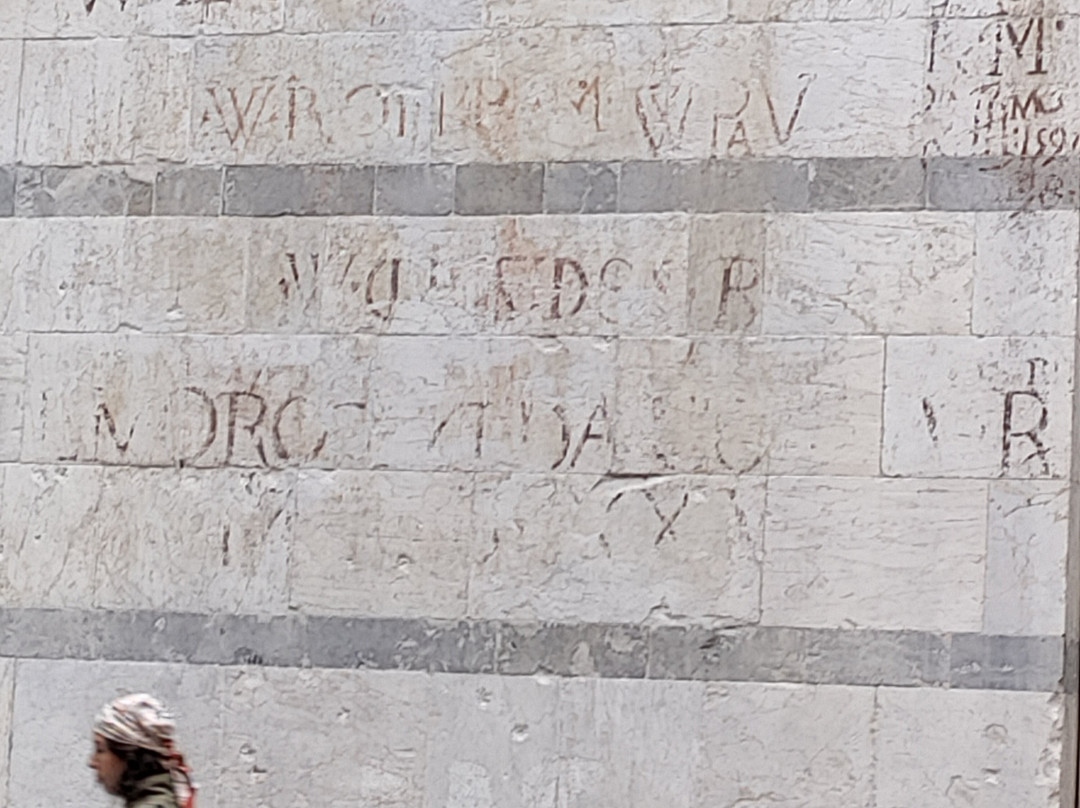
A striking example of electioneering graffiti, painted into the lower section of the façade, relates to the candidates for Rector of the University of Pisa (late 16th century).
Having seen it many times during our trips to Pisa but never having stopped to look at it closely, we decided to visit it this time; partly to counter the common traveler's feeling, that all of Pisa’s medieval churches look alike, appearing as more or less scaled-down copies of the magnificent Cathedral.
This feeling is reinforced because these Pisan churches invariably feature a white marble façade articulated by small columns: a clear reflection of the Cathedral’s design, which was not only brilliant but also ahead of its time, setting a precedent that influenced architecture not just in Pisa and its country but, to some extent, in nearby Lucca as well.
In fact, upon closer inspection, the façade of the church of San Michele in Borgo reveals significant differences from the Cathedral. First, although the church was founded long ago (in 1016; major celebrations marking its thousand-year history took place in 2016), its construction spanned a long period, continuing into the 14th century; consequently, the façade (which was typically the last part to be built) displays a transition toward the Gothic style.
The upper section of the façade — featuring the traditional Pisan colonnade but with trefoil arches rather than the standard semicircular ones — is the primary evidence of this shift. The same applies to the small loggia above the main portal, a work by Lupo di Francesco: a pupil of Giovanni Pisano, whose most famous works include the church of Santa Maria della Spina, also in Pisa, and the tomb of Saint Eulalia in Barcelona Cathedral.
The interior has a more archaic feel, yet it is part of a reconstruction effort — following the Allied bombings of World War II, which also caused the destruction of the adjoining Benedictine convent — that removed Baroque accretions.
While also other works are noteworthy and capture the eye, the most remarkable pieces inside the church are likely the fresco of the Archangel Michael (to whom the church is dedicated), located in one of the lunettes on the inner façade (mid-13th century), and a sculpted crucifix attributed to Nino Pisano, found on a side altar (mid-14th century).
A striking example of electioneering graffiti, painted into the lower section of the façade, relates to the candidates for Rector of the University of Pisa (late 16th century).
翻译:当我们穿过比萨市中心去参观“共和国军械库”的展览时,沿着中央的博尔戈·斯特雷托街行走,偶然发现了这座教堂——它几乎被街道两旁的房屋所遮蔽。
以往几次来比萨时虽多次见到它,却从未驻足仔细观赏。这一次我们决定来参观一番;部分原因是为了打破普通游客常有的那种“比萨的所有中世纪教堂看起来都差不多”的印象。它们看起来就像是那座宏伟大教堂的缩小版。
这种印象之所以更加深刻,是因为这些比萨的教堂无一例外都拥有由细小圆柱装饰的白色大理石立面:这显然是大教堂设计的体现。该设计不仅出色,还领先于时代,为后世树立了典范,不仅影响了比萨及整个托斯卡纳地区的建筑风格,甚至也在一定程度上影响了邻近的卢卡。
事实上,仔细观察的话……博尔戈的圣米凯莱教堂的立面与大教堂的立面存在显著差异。虽然这座教堂始建于很早以前(1016年;为纪念其千年历史,2016年还举办了大型庆典),但其建设过程持续了很长时间,一直延续到14世纪。因此,作为通常最后才建造的组成部分,其立面呈现出向哥特式风格过渡的特征。立面的上部——拥有传统的比萨式柱廊,但采用三叶形拱门而非常见的半圆形拱门——便是这种风格转变的主要证据。主入口上方的小凉廊同样如此,它是卢波·迪·弗朗西斯科的作品:他是乔瓦尼·皮萨诺的弟子,后者最著名的作品包括同样位于比萨的圣玛丽亚·德拉·斯皮纳教堂,以及巴塞罗那大教堂中的圣欧拉利亚墓。
教堂的内部则呈现出更为古朴的风格。不过,这也是战后重建工作的一部分——在二战期间盟军的轰炸导致毗邻的本笃会修道院化为废墟,此次重建旨在去除后来添加的巴洛克风格元素。
虽然教堂内还有其他值得注意且引人注目的艺术品,但最出色的恐怕要数大天使米迦勒的湿壁画了(这座教堂正是供奉给他的)。该壁画位于教堂内立面的一块半月形区域中,绘制于13世纪中叶。还有一件据信为尼诺·皮萨诺所雕刻的十字架,发现于一侧的祭坛上(14世纪中期)。
另一件引人注目的竞选涂鸦出现在立面的下半部分,内容涉及比萨大学校长的候选人名单(16世纪末)。
以往几次来比萨时虽多次见到它,却从未驻足仔细观赏。这一次我们决定来参观一番;部分原因是为了打破普通游客常有的那种“比萨的所有中世纪教堂看起来都差不多”的印象。它们看起来就像是那座宏伟大教堂的缩小版。
这种印象之所以更加深刻,是因为这些比萨的教堂无一例外都拥有由细小圆柱装饰的白色大理石立面:这显然是大教堂设计的体现。该设计不仅出色,还领先于时代,为后世树立了典范,不仅影响了比萨及整个托斯卡纳地区的建筑风格,甚至也在一定程度上影响了邻近的卢卡。
事实上,仔细观察的话……博尔戈的圣米凯莱教堂的立面与大教堂的立面存在显著差异。虽然这座教堂始建于很早以前(1016年;为纪念其千年历史,2016年还举办了大型庆典),但其建设过程持续了很长时间,一直延续到14世纪。因此,作为通常最后才建造的组成部分,其立面呈现出向哥特式风格过渡的特征。立面的上部——拥有传统的比萨式柱廊,但采用三叶形拱门而非常见的半圆形拱门——便是这种风格转变的主要证据。主入口上方的小凉廊同样如此,它是卢波·迪·弗朗西斯科的作品:他是乔瓦尼·皮萨诺的弟子,后者最著名的作品包括同样位于比萨的圣玛丽亚·德拉·斯皮纳教堂,以及巴塞罗那大教堂中的圣欧拉利亚墓。
教堂的内部则呈现出更为古朴的风格。不过,这也是战后重建工作的一部分——在二战期间盟军的轰炸导致毗邻的本笃会修道院化为废墟,此次重建旨在去除后来添加的巴洛克风格元素。
虽然教堂内还有其他值得注意且引人注目的艺术品,但最出色的恐怕要数大天使米迦勒的湿壁画了(这座教堂正是供奉给他的)。该壁画位于教堂内立面的一块半月形区域中,绘制于13世纪中叶。还有一件据信为尼诺·皮萨诺所雕刻的十字架,发现于一侧的祭坛上(14世纪中期)。
另一件引人注目的竞选涂鸦出现在立面的下半部分,内容涉及比萨大学校长的候选人名单(16世纪末)。

© 2026 Tripadvisor 版权所有。
部分照片由 VFM Leonardo 提供。
TripAdvisor公司对外部网站的内容一概不负责。优惠价格中不含税和其他费用。
ICP证:沪B2-20200433
沪ICP备20013175号
 沪公网安备31010502005427号
鹰程信息技术(上海)有限公司