下载App
资质规则
旅行
账户
Brun066
The seat of the kingdom's administration under Parakramabahu I "the Great".
King’s Council Chamber的点评
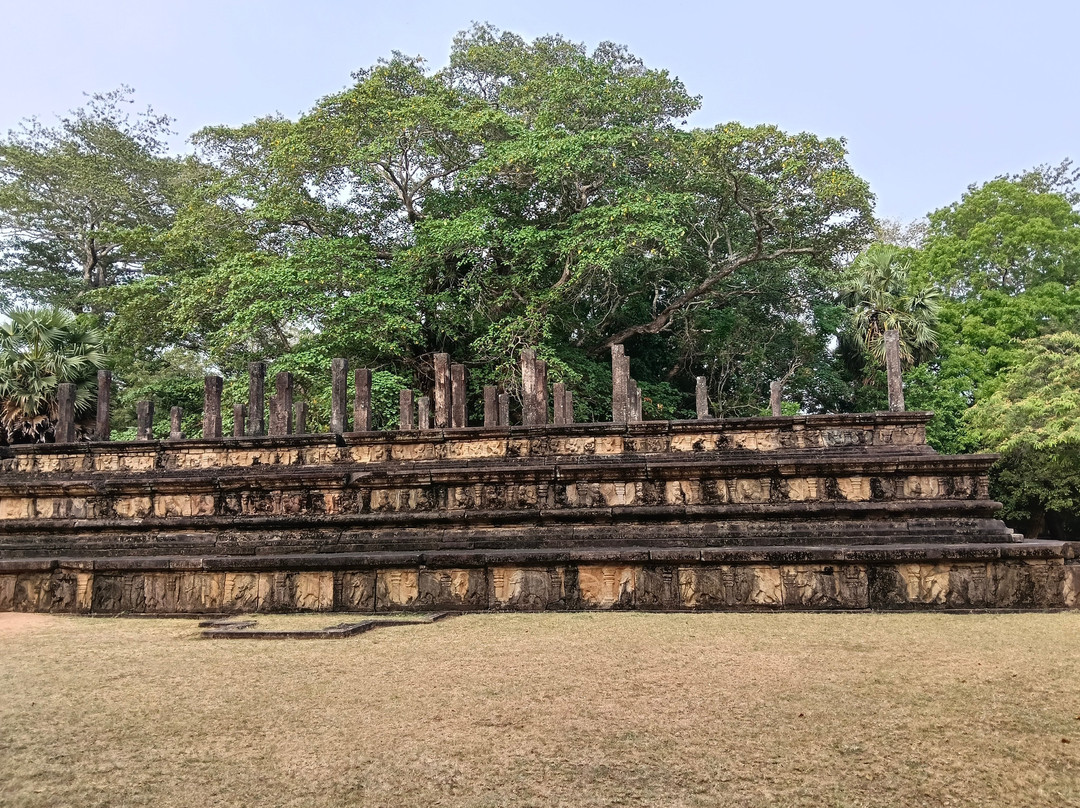
点评:South of the extraordinary cluster of sacred buildings known as the "Quadrangle", the "Citadel" lies, ie the heart of secular power. Here, alongside the indistinct ruins of the Royal Palace — reputed to have been massive — stand the substantial remains of the Royal Council Chamber (Raja Vaishyabhuganga, or Raja Sabhawa).
The structure consists of three stacked rectangular platforms supporting the chamber itself. Although the roof is gone, a large number of the rectangular pillars that once supported it remain standing (forty-eight, by most accounts).
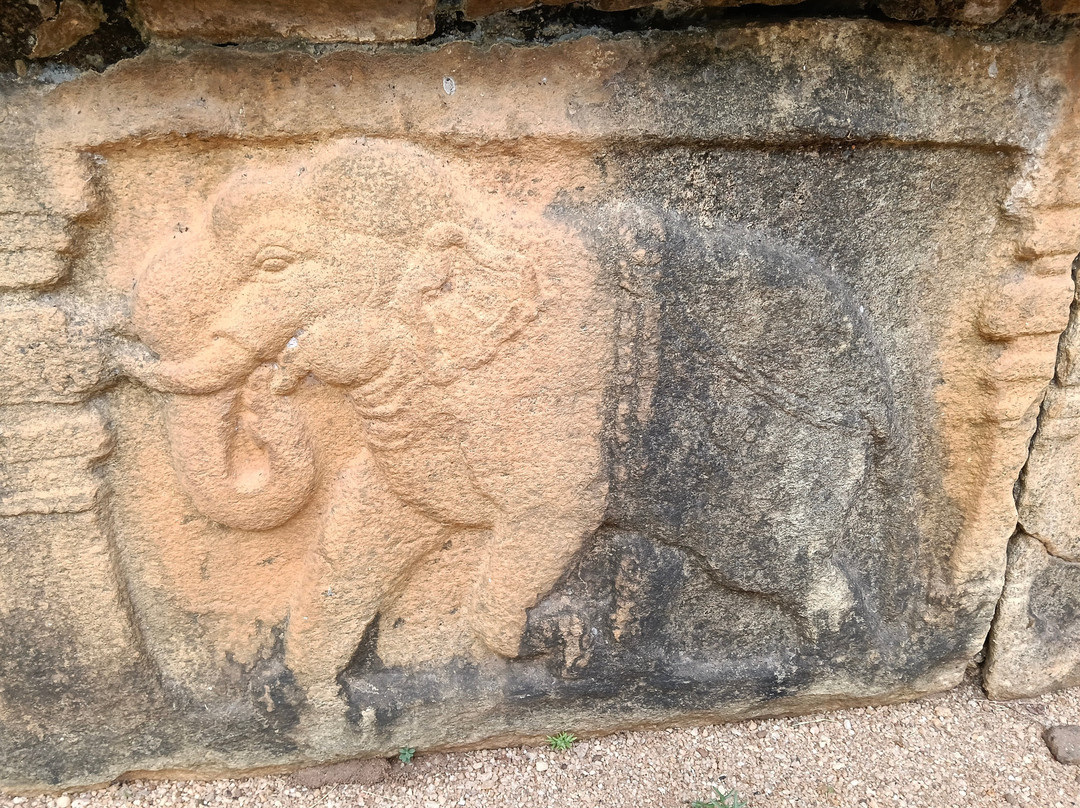
The most interesting features are the bas-reliefs adorning the three platforms: the lowest tier depicts elephants, the middle tier lions, and the upper tier figures known as "Wamana" (mythical dwarfs).
As with other buildings here, the access stairways are flanked by "moonstones", slabs symbolizing the stages of the endless Buddhist cycle of existence.
It's likely that the bulk of government business took place here; this was where ministers, officials, and governors gathered in the king's presence.
Like many other structures in the ancient city, this building was commissioned by King Parakramabahu I — known as "the Great" — under whose reign (1153–1186) Polonnaruwa reached its zenith.
翻译:在被称作“四合院”的那片宏伟的宗教建筑群以南,便是“城堡”,也就是世俗权力的中心。在这里,与据传规模宏大的王宫的模糊遗迹相邻的,是皇家议事厅的庞大残迹(即Raja Vaishyabhuganga或Raja Sabhawa)。
该建筑由三个层层叠置的矩形平台构成,用以支撑议事厅本身。虽然屋顶已经不复存在,大量曾经支撑过它的矩形石柱至今仍屹立不倒(据多数记载,共有四十八根)。
最引人注目的要数装饰着三个平台的浅浮雕:最底层刻有大象,中层刻有狮子,最上层则刻有被称为“瓦玛纳”的形象(即神话中的矮人)。
与此处的其他建筑一样,通往平台的阶梯两侧也排列着“月石”——这些石板的象征意义在于代表佛教中永无止境的生死轮回的各个阶段。大部分的政务很可能都是在这里处理的;大臣、官员以及地方长官们都会在国王面前齐聚于此。
与古城中的许多其他建筑一样,这座建筑也是由被称为“大帝”的帕拉克拉马巴胡一世下令修建的。在其统治时期(1153–1186年),波隆纳鲁沃达到了鼎盛阶段。

© 2026 Tripadvisor 版权所有。
部分照片由 VFM Leonardo 提供。
TripAdvisor公司对外部网站的内容一概不负责。优惠价格中不含税和其他费用。
ICP证:沪B2-20200433
沪ICP备20013175号
 沪公网安备31010502005427号
鹰程信息技术(上海)有限公司