下载App
资质规则
旅行
账户
Brun066
It testifies to Messina's fundamental role in attracting artistic excellence in the past.
Fontana di Orione的点评
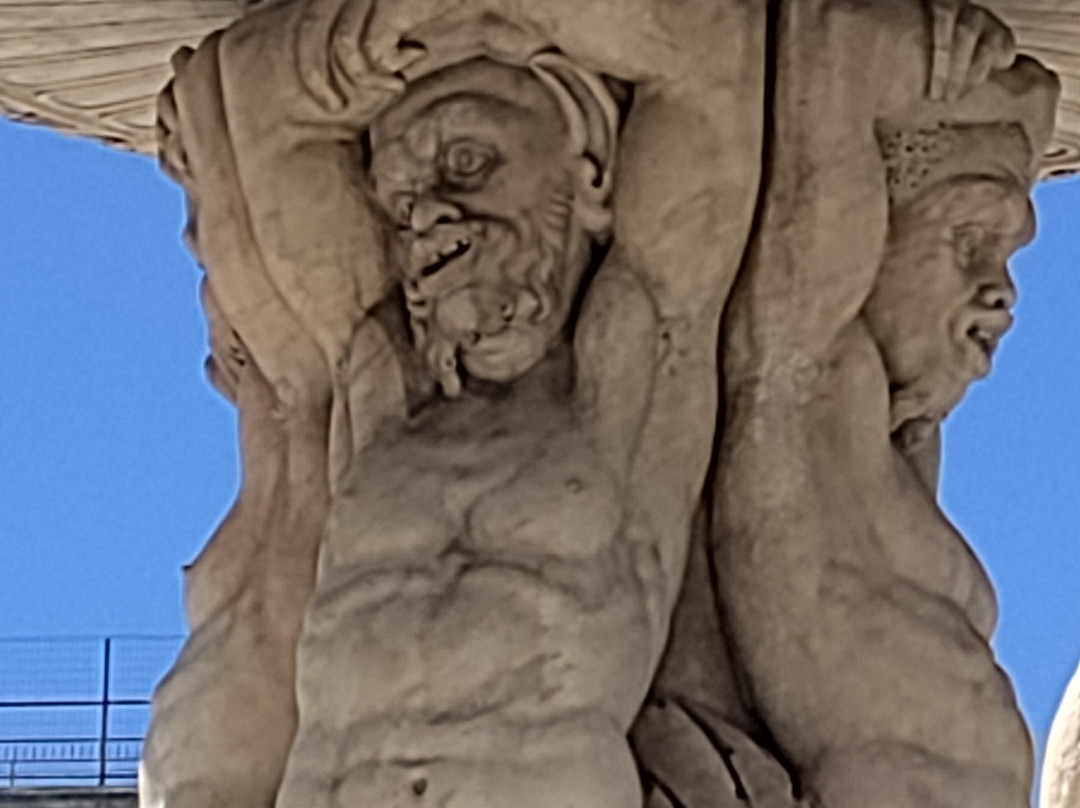
点评:This fountain is not only a significant work of sculpture, but is also noteworthy for its connection to a major hydraulic engineering project, which further demonstrates — if proof were needed — the importance of the city of Messina in the 16th century. A crossroads of maritime trade in the Mediterranean, governed by a powerful and far-sighted urban aristocracy, by this work the city represents and celebrates the arrival point of the first urban aqueduct, completed in 1547 (while the fountain itself dates back to 1553), and created by capturing and channeling the waters of the nearby Camaro and Bordonaro streams.
The fountain is the work of a Florentine architect, Giovanni Angelo Montorsoli, who worked in Messina even more than in his hometown. Perhaps his greatest work is the so-called "Apostolato", inside the nearby Cathedral, unfortunately destroyed in 1943 during the war.
Inspired by the founding myth of Messina, as narrated by Diodorus Siculus (the giant Orion is said to have aided the first king of Messina in building the city), the fountain displays such nobility of form and stylistic coherence that Bernard Berenson called it "the most beautiful fountain of the European Renaissance".
To decipher the fountain's mythological or allegorical characters, visitors should consult a good guidebook or online sites. Here, it's sufficient to emphasize once again Messina's fundamental role in attracting artistic excellence in the past; a role unfortunately overshadowed by the destruction the city has suffered throughout history.
The fountain is the work of a Florentine architect, Giovanni Angelo Montorsoli, who worked in Messina even more than in his hometown. Perhaps his greatest work is the so-called "Apostolato", inside the nearby Cathedral, unfortunately destroyed in 1943 during the war.
Inspired by the founding myth of Messina, as narrated by Diodorus Siculus (the giant Orion is said to have aided the first king of Messina in building the city), the fountain displays such nobility of form and stylistic coherence that Bernard Berenson called it "the most beautiful fountain of the European Renaissance".
To decipher the fountain's mythological or allegorical characters, visitors should consult a good guidebook or online sites. Here, it's sufficient to emphasize once again Messina's fundamental role in attracting artistic excellence in the past; a role unfortunately overshadowed by the destruction the city has suffered throughout history.
翻译:这座喷泉不仅是一件重要的雕塑作品,更因其与一项大型水利工程的关联而引人注目,这进一步证明了——如果还需要证据的话——16世纪墨西拿城的重要性。作为地中海海上贸易的十字路口,墨西拿由强大而富有远见的城市贵族统治。这座喷泉象征并颂扬了第一条城市引水渠的终点,该引水渠于1547年竣工(而喷泉本身则建于1553年),其水源来自附近的卡马罗溪和博尔多纳罗溪。
这座喷泉出自佛罗伦萨建筑师乔瓦尼·安杰洛·蒙托索利之手,他在墨西拿的工作甚至比在他的家乡佛罗伦萨还要多。他最伟大的作品或许是位于附近大教堂内的“使徒”(Apostolato),可惜的是,这座教堂在1943年的战争中被毁。
这座喷泉的设计灵感源自狄奥多罗斯·西库鲁斯所记载的墨西拿建城神话(据说巨人猎户座曾帮助墨西拿的第一位国王建造了这座城市),其造型高贵典雅,风格浑然一体,以至于伯纳德·贝伦森称其为“欧洲文艺复兴时期最美的喷泉”。
若想解读喷泉中蕴含的神话或寓意,游客可参考专业的旅游指南或相关网站。在此,我们只需再次强调墨西拿在过去吸引艺术精英的重要地位;可惜的是,这座城市在历史上遭受的破坏掩盖了这一重要地位。
这座喷泉出自佛罗伦萨建筑师乔瓦尼·安杰洛·蒙托索利之手,他在墨西拿的工作甚至比在他的家乡佛罗伦萨还要多。他最伟大的作品或许是位于附近大教堂内的“使徒”(Apostolato),可惜的是,这座教堂在1943年的战争中被毁。
这座喷泉的设计灵感源自狄奥多罗斯·西库鲁斯所记载的墨西拿建城神话(据说巨人猎户座曾帮助墨西拿的第一位国王建造了这座城市),其造型高贵典雅,风格浑然一体,以至于伯纳德·贝伦森称其为“欧洲文艺复兴时期最美的喷泉”。
若想解读喷泉中蕴含的神话或寓意,游客可参考专业的旅游指南或相关网站。在此,我们只需再次强调墨西拿在过去吸引艺术精英的重要地位;可惜的是,这座城市在历史上遭受的破坏掩盖了这一重要地位。

© 2026 Tripadvisor 版权所有。
部分照片由 VFM Leonardo 提供。
TripAdvisor公司对外部网站的内容一概不负责。优惠价格中不含税和其他费用。
ICP证:沪B2-20200433
沪ICP备20013175号
 沪公网安备31010502005427号
鹰程信息技术(上海)有限公司