下载App
资质规则
旅行
账户
Yvonne G
1
To Likhubula Falls and Dziwe La Nkhalamba with Mount Mulanje guide Rodney Kambalame
Mount Mulanje Hike With Local Guide的点评
点评:Last Monday (13 April) I was leaving CCAP House Likhubula after the Likhubula Children's Choir week at which I'd been doing some creative writing sessions with the students. Suddenly, instead of going to Blantyre that morning, there was an opportunity to go for a walk on Mount Mulanje. It all happened so quickly – Kingsley Mmambo was about to set off on a day hike with some clients, and when I said, impulsively, "I wish I could come!" he offered to find me a guide for a shorter route.
So I returned to the chalet where I'd been staying and unpacked walking shoes, sunhat, swimsuit and suncream. As I walked back up the track, I met a young man who greeted me in a friendly way and introduced himself as my guide, Rodney Kambalame We collected water from Likhubula House – "four bottles", he advised. The day was hot, and as time went on, I realised he was right. We discussed the options: a 2-hour walk directly to the waterfall and back; or a longer route which would allow me to see more of the mountain. That way, it would take about 2 hours to get to the waterfall and about an hour to walk back down to Likhubula House. I chose the second. I was a bit apprehensive; I wasn't at my fittest, and was unused to the heat.
I needn't have worried. Rodney walked a little ahead but quickly seemed to have the measure of my pace. "Pang'ono, pang'ono", he said each time the path grew steeper. I laughed – it was an expression I'd learned from one of the children during the song-writing sessions. "Slowly, slowly". And now, uttered by Rodney, it was very reassuring. I was glad to be able to take my time and look around me and listen to the sounds of the forest – and to get my breath back after each steep section of the way. "We will stop here," he said at regular intervals, always slightly ahead of me in judging the right moment to get some breath, let the heartbeat slow, or drink some water. "Take as long as you want," he said.
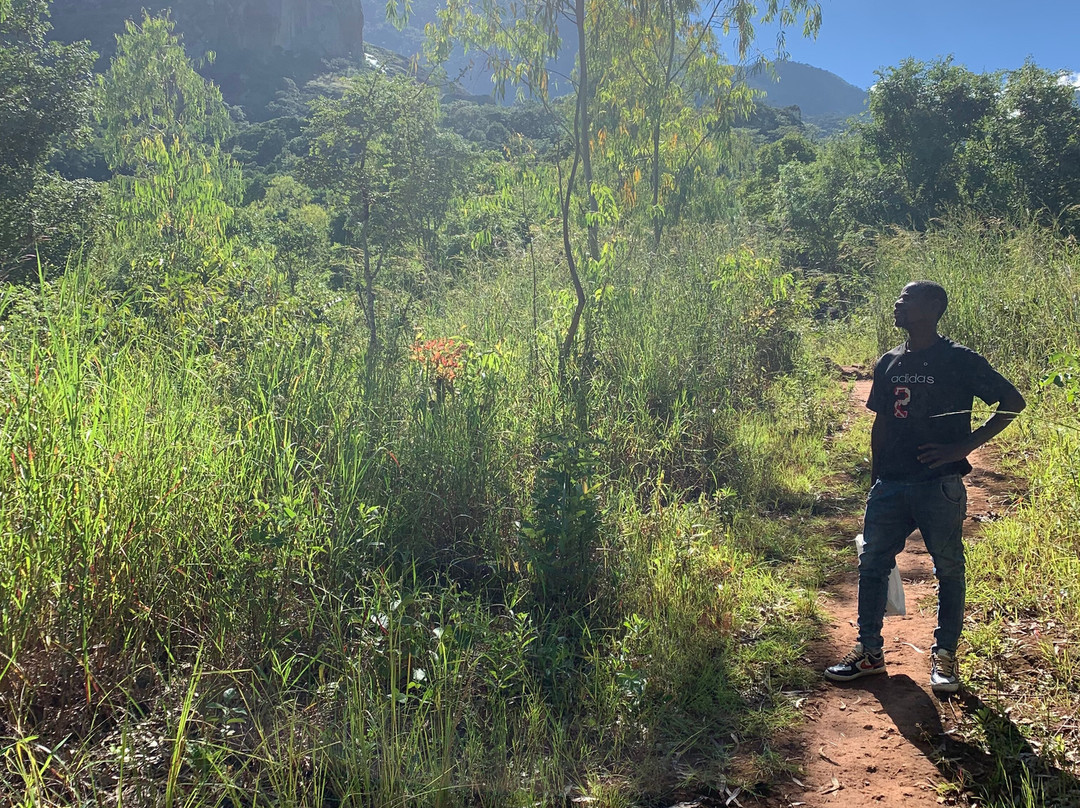
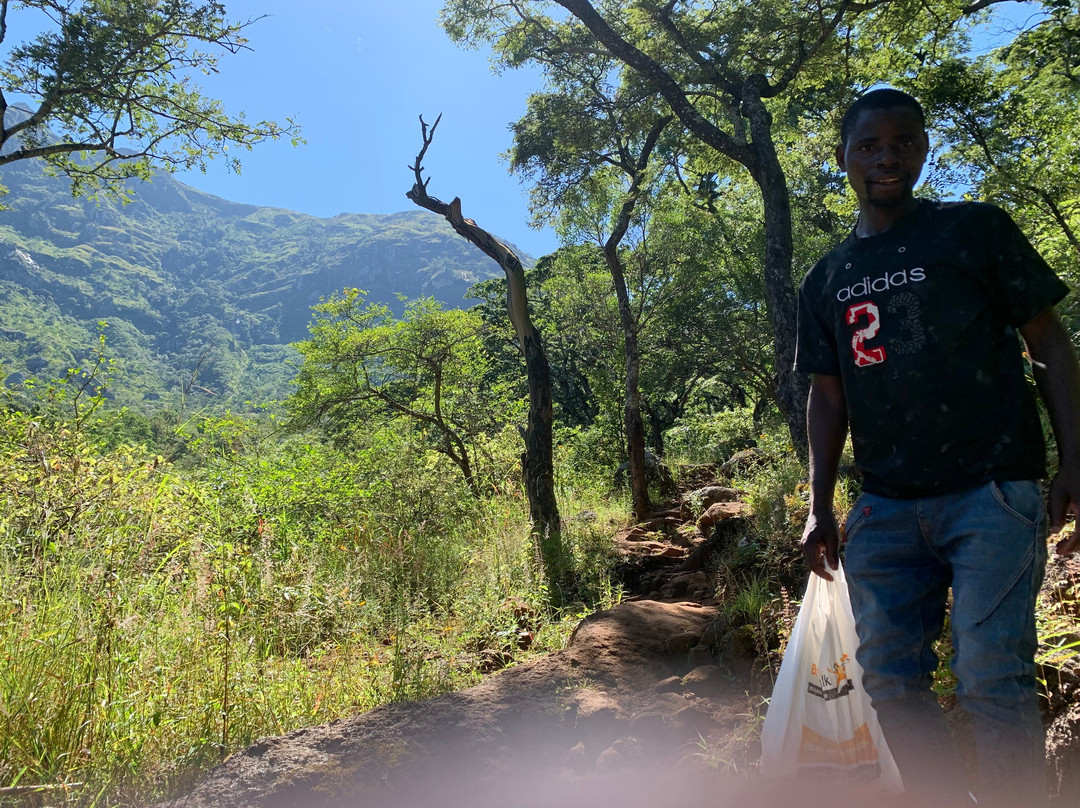
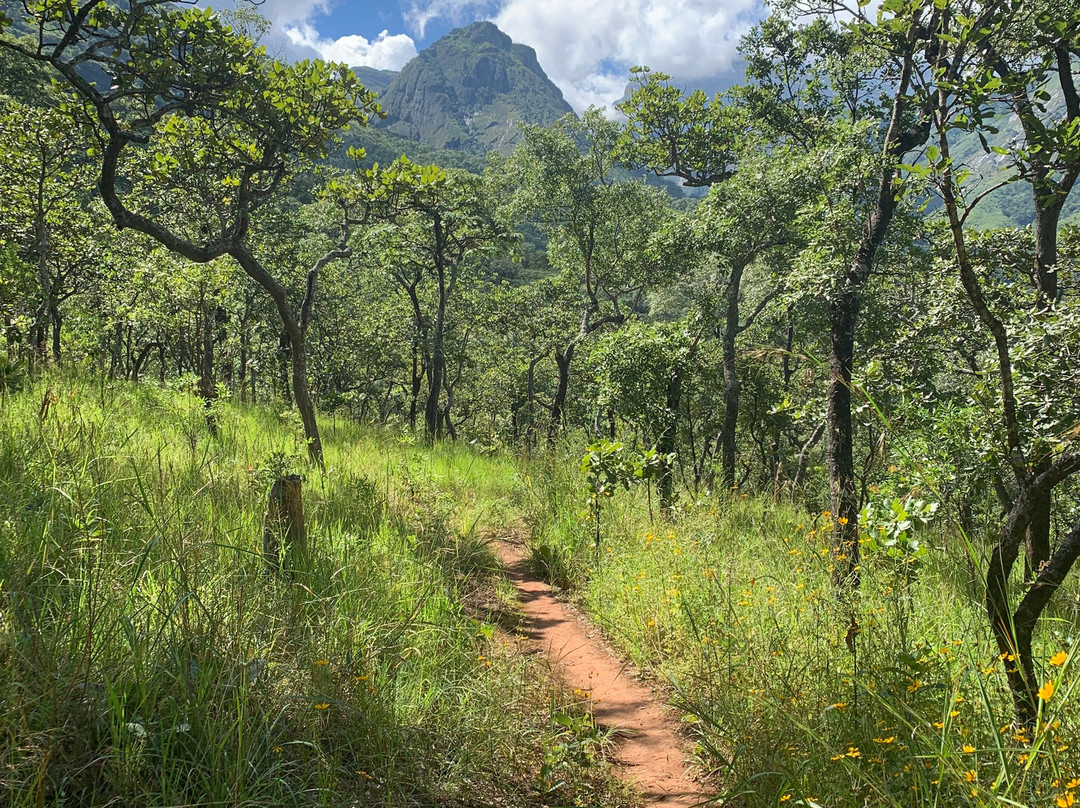
From time to time Rodney would tell me the names of the trees – some familiar, but many not. I wished I had asked more. He was quick to spot a trail of ants, warning me to step over them, and to point out a green snake whose movement he had glimpsed in the grass. He had a plastic bag in his pocket, and regularly stooped to scoop up litter left by others on the path. He told me about the cable we could see above the trees, a remnant of the former Skyline, developed in the 1950s to transport logs down the mountain and goods and equipment to and from Chambe plateau. He told me about the Mulanje Porters' Race and traced with his finger the route it followed up and across the mountainside. He named the peaks we could see, and pointed the direction in which Sapitwa lay out of sight beyond the massive ramparts of rock.
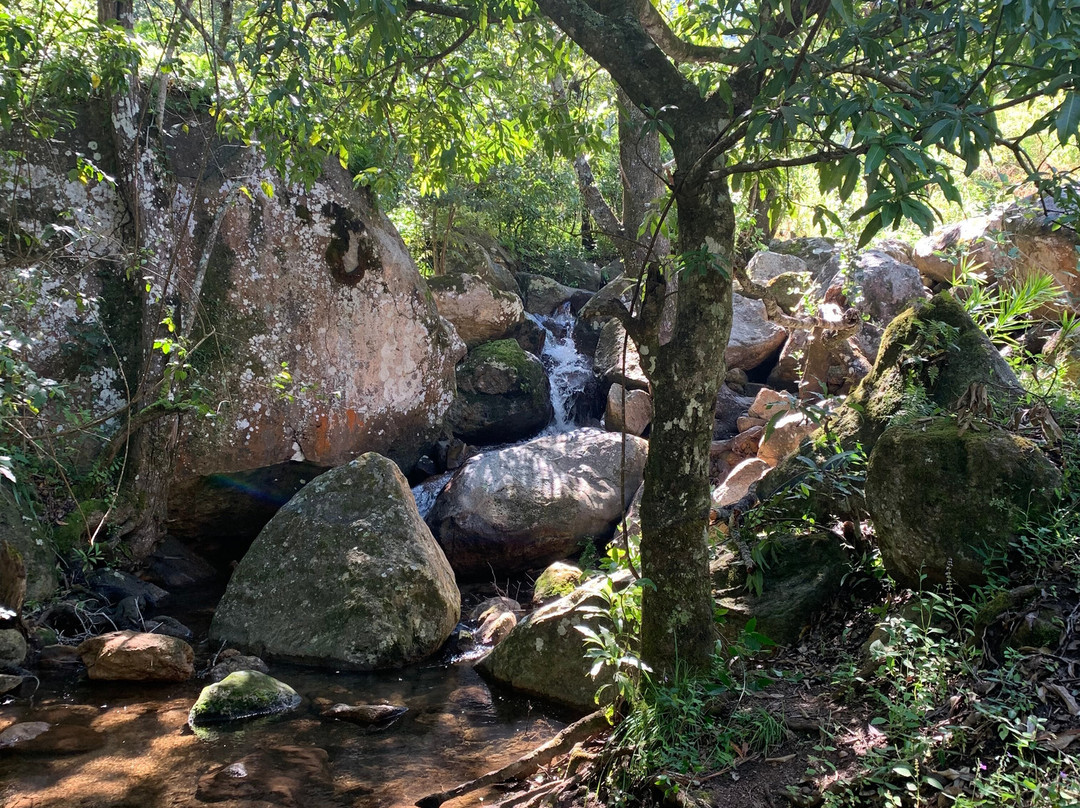
After a while I could hear Likhubula Falls and we descended the path to the smooth boulders that lay around the pools at Dziwe La Nkhalamba. It was a beautiful, magical place. Rodney explained about the Rift Valley and the many different trees we could see – despite the degradation of the forest elsewhere – growing along the mountainside above the pools. He helped me down the rocks to a sheltered spot where I could change into my swimsuit, and indicated a safe place to get into the water. It was hard for me to judge – the water was churned up by the force of the falls after all the rain that had fallen, and I couldn't see the bottom. I trusted what he said, slid from the rock, and felt my feet touch the bottom just before I submerged. I bounced to the surface and spent some time slowly circling the pool, absorbing the sights and sounds around me: the torrent of water, the blue sky and white-necked crows, the pale, smooth rocks – some like great eggs – and the luxuriance of the trees.
The rock I'd slid down as an entry point was too high and too smooth for me to climb out, but before I could decide on another way, Rodney had mapped a route in his mind. Reaching a hand from above he directed me from one rock to the next, firmly insisting so I had no time to hesitate and wobble or lose momentum till I reached the shore. He knew what he was doing.
I dried in the sun on the rocks, returned to a nook to get into my clothes and we set off back to Likhubula. Again Rodney suggested a choice of routes – one slightly longer, and I was glad to be able to see still more. We followed, for some way, a scar of red clay and stones between the trees – this was, Rodney explained, the remains of the old road between Likhubula and the former Skyline. Now we looked out at the vast plain spreading to the horizons. It lay veiled in heat, marked with a long road, patched with villages and fields, dotted with trees and punctuated here and there with small, perfectly formed, conical mountains.
We reached Likhubula House, the end of the walk, and I sat in the shade, drinking the last of the water and reflecting on the walk – an unexpected beautiful and enriching adventure in the company of a guide who was kind, careful and encouraging; observant, intuitive and thoughtful. Heartfelt thanks, Rodney, if you see this. I hope I can come back to Mulanje, and I hope we can meet again.
So I returned to the chalet where I'd been staying and unpacked walking shoes, sunhat, swimsuit and suncream. As I walked back up the track, I met a young man who greeted me in a friendly way and introduced himself as my guide, Rodney Kambalame We collected water from Likhubula House – "four bottles", he advised. The day was hot, and as time went on, I realised he was right. We discussed the options: a 2-hour walk directly to the waterfall and back; or a longer route which would allow me to see more of the mountain. That way, it would take about 2 hours to get to the waterfall and about an hour to walk back down to Likhubula House. I chose the second. I was a bit apprehensive; I wasn't at my fittest, and was unused to the heat.
I needn't have worried. Rodney walked a little ahead but quickly seemed to have the measure of my pace. "Pang'ono, pang'ono", he said each time the path grew steeper. I laughed – it was an expression I'd learned from one of the children during the song-writing sessions. "Slowly, slowly". And now, uttered by Rodney, it was very reassuring. I was glad to be able to take my time and look around me and listen to the sounds of the forest – and to get my breath back after each steep section of the way. "We will stop here," he said at regular intervals, always slightly ahead of me in judging the right moment to get some breath, let the heartbeat slow, or drink some water. "Take as long as you want," he said.
From time to time Rodney would tell me the names of the trees – some familiar, but many not. I wished I had asked more. He was quick to spot a trail of ants, warning me to step over them, and to point out a green snake whose movement he had glimpsed in the grass. He had a plastic bag in his pocket, and regularly stooped to scoop up litter left by others on the path. He told me about the cable we could see above the trees, a remnant of the former Skyline, developed in the 1950s to transport logs down the mountain and goods and equipment to and from Chambe plateau. He told me about the Mulanje Porters' Race and traced with his finger the route it followed up and across the mountainside. He named the peaks we could see, and pointed the direction in which Sapitwa lay out of sight beyond the massive ramparts of rock.
After a while I could hear Likhubula Falls and we descended the path to the smooth boulders that lay around the pools at Dziwe La Nkhalamba. It was a beautiful, magical place. Rodney explained about the Rift Valley and the many different trees we could see – despite the degradation of the forest elsewhere – growing along the mountainside above the pools. He helped me down the rocks to a sheltered spot where I could change into my swimsuit, and indicated a safe place to get into the water. It was hard for me to judge – the water was churned up by the force of the falls after all the rain that had fallen, and I couldn't see the bottom. I trusted what he said, slid from the rock, and felt my feet touch the bottom just before I submerged. I bounced to the surface and spent some time slowly circling the pool, absorbing the sights and sounds around me: the torrent of water, the blue sky and white-necked crows, the pale, smooth rocks – some like great eggs – and the luxuriance of the trees.
The rock I'd slid down as an entry point was too high and too smooth for me to climb out, but before I could decide on another way, Rodney had mapped a route in his mind. Reaching a hand from above he directed me from one rock to the next, firmly insisting so I had no time to hesitate and wobble or lose momentum till I reached the shore. He knew what he was doing.
I dried in the sun on the rocks, returned to a nook to get into my clothes and we set off back to Likhubula. Again Rodney suggested a choice of routes – one slightly longer, and I was glad to be able to see still more. We followed, for some way, a scar of red clay and stones between the trees – this was, Rodney explained, the remains of the old road between Likhubula and the former Skyline. Now we looked out at the vast plain spreading to the horizons. It lay veiled in heat, marked with a long road, patched with villages and fields, dotted with trees and punctuated here and there with small, perfectly formed, conical mountains.
We reached Likhubula House, the end of the walk, and I sat in the shade, drinking the last of the water and reflecting on the walk – an unexpected beautiful and enriching adventure in the company of a guide who was kind, careful and encouraging; observant, intuitive and thoughtful. Heartfelt thanks, Rodney, if you see this. I hope I can come back to Mulanje, and I hope we can meet again.
翻译:上周一(4月13日),我结束了在利库布拉儿童合唱团为期一周的活动,正准备离开利库布拉儿童合唱团之家。在那一周里,我为孩子们进行了一些创意写作课程。那天早上,我原本计划去布兰太尔,却突然有机会去穆兰杰山徒步。一切都发生得太快了——金斯利·姆曼博正准备带着一些客户出发进行一日徒步旅行,我脱口而出:“真希望我也能去!”他便主动提出帮我找个向导,带我走一条更短的路线。
于是,我回到住的小木屋,拿出徒步鞋、遮阳帽、泳衣和防晒霜。沿着小路往回走的时候,我遇到了一位年轻人,他热情地和我打招呼,并自我介绍说他是我的向导,名叫罗德尼·坎巴拉梅。我们在利库布拉之家取了水——“四瓶,”他建议道。那天天气很热,随着时间的推移,我意识到他说得没错。我们讨论了两种方案:一是直接步行两小时到达瀑布再返回;二是选择一条更长的路线,这样我可以欣赏到更多山景。这样的话,到达瀑布大约需要两小时,返回利库布拉小屋大约需要一小时。我选择了后者。我有点忐忑不安;我的体能状态不太好,而且不习惯炎热的天气。
我的担心完全是多余的。罗德尼走在前面一点,但很快就摸清了我的步伐。“慢点,慢点,”每当小路变得陡峭时,他都会这样说。我笑了——这是我在写歌的时候从一个孩子那里学来的表达方式。“慢慢来,慢慢来。”现在,罗德尼这么说,让我感到非常安心。我很高兴能够放慢脚步,环顾四周,聆听森林的声音——并且在每走过一段陡峭的路段后都能喘口气。 “我们就在这里停下来,”他时不时地说道,总是比我更早地判断出何时该停下来喘口气、让心跳慢下来或者喝点水。“你想待多久就待多久,”他说。
罗德尼时不时会告诉我这些树的名字——有些我认识,但很多都不认识。我真希望当时能多问问。他很快就发现了一串蚂蚁,提醒我跨过去,还指给我看一条绿蛇,说他刚才在草丛里瞥见了它的身影。他口袋里装着一个塑料袋,时不时地弯下腰,捡起别人留在路上的垃圾。他告诉我,我们能看到树顶上的那条缆绳,那是上世纪五十年代修建的“天际线”铁路的遗迹,这条铁路当时用来把木材从山上运下来,以及把货物和设备运进运出昌贝高原。他还跟我讲了穆兰杰搬运工比赛,并用手指描出了比赛路线,这条路线蜿蜒穿过山坡。他报出了我们能看到的山峰的名字,并指出了萨皮特瓦山隐没在巨大岩壁之后的方向。
过了一会儿,我听到了利库布拉瀑布的轰鸣声,我们沿着小路下到齐韦拉恩卡兰巴水潭周围光滑的巨石旁。那是一个美丽而神奇的地方。罗德尼向我们讲解了东非大裂谷,以及我们看到的许多不同的树木——尽管其他地方的森林已经退化——它们仍然生长在水潭上方的山坡上。他扶我沿着岩石走到一个避风的地方,让我换上泳衣,并指出了一个可以安全下水的地方。我很难判断水深——连日暴雨过后,瀑布的水流湍急,水面翻腾,我看不见水底。我相信他的指示,从岩石上滑了下来,在沉入水底之前,我感觉到了脚底触到了水底。我跃出水面,缓缓绕着水池游了一会儿,细细品味着周围的景色和声音:奔腾的水流、湛蓝的天空、白颈乌鸦、苍白光滑的岩石——有些像巨大的蛋——以及郁郁葱葱的树木。
我滑下来作为入水点的那块岩石太高也太光滑,我根本爬不上去。还没等我找到别的路,罗德尼已经在脑海中规划好了一条路线。他从上方伸出一只手,引导我从一块岩石游到另一块岩石,坚定地引导着我,让我没有丝毫犹豫、摇晃或失去动力,直到抵达岸边。他经验丰富,知道自己在做什么。
我在岩石上晒干了身子,回到一个角落换上衣服,然后我们启程返回利库布拉。罗德尼再次推荐了几条路线——其中一条稍长一些,我很高兴能看到更多风景。我们沿着树丛间一道由红土和石头铺成的痕迹走了一段路——罗德尼解释说,这是利库布拉和以前的天际线之间古老道路的遗迹。现在,我们眺望着延伸至地平线的广袤平原。平原笼罩在热浪之中,一条长长的道路蜿蜒其间,点缀着村庄和农田,树木星罗棋布,不时有小巧精致的圆锥形山峰点缀其间。
我们到达了利库布拉小屋,徒步旅行的终点,我坐在树荫下。喝完最后一口水,回味着这次徒步旅行——这是一次意想不到的美好而充实的冒险,陪伴我的是一位和蔼、细心、鼓励人心的向导;他观察入微、直觉敏锐、体贴周到。罗德尼,如果你看到这段话,请接受我由衷的感谢。我希望还能回到穆兰杰,也希望我们能再次相遇。
于是,我回到住的小木屋,拿出徒步鞋、遮阳帽、泳衣和防晒霜。沿着小路往回走的时候,我遇到了一位年轻人,他热情地和我打招呼,并自我介绍说他是我的向导,名叫罗德尼·坎巴拉梅。我们在利库布拉之家取了水——“四瓶,”他建议道。那天天气很热,随着时间的推移,我意识到他说得没错。我们讨论了两种方案:一是直接步行两小时到达瀑布再返回;二是选择一条更长的路线,这样我可以欣赏到更多山景。这样的话,到达瀑布大约需要两小时,返回利库布拉小屋大约需要一小时。我选择了后者。我有点忐忑不安;我的体能状态不太好,而且不习惯炎热的天气。
我的担心完全是多余的。罗德尼走在前面一点,但很快就摸清了我的步伐。“慢点,慢点,”每当小路变得陡峭时,他都会这样说。我笑了——这是我在写歌的时候从一个孩子那里学来的表达方式。“慢慢来,慢慢来。”现在,罗德尼这么说,让我感到非常安心。我很高兴能够放慢脚步,环顾四周,聆听森林的声音——并且在每走过一段陡峭的路段后都能喘口气。 “我们就在这里停下来,”他时不时地说道,总是比我更早地判断出何时该停下来喘口气、让心跳慢下来或者喝点水。“你想待多久就待多久,”他说。
罗德尼时不时会告诉我这些树的名字——有些我认识,但很多都不认识。我真希望当时能多问问。他很快就发现了一串蚂蚁,提醒我跨过去,还指给我看一条绿蛇,说他刚才在草丛里瞥见了它的身影。他口袋里装着一个塑料袋,时不时地弯下腰,捡起别人留在路上的垃圾。他告诉我,我们能看到树顶上的那条缆绳,那是上世纪五十年代修建的“天际线”铁路的遗迹,这条铁路当时用来把木材从山上运下来,以及把货物和设备运进运出昌贝高原。他还跟我讲了穆兰杰搬运工比赛,并用手指描出了比赛路线,这条路线蜿蜒穿过山坡。他报出了我们能看到的山峰的名字,并指出了萨皮特瓦山隐没在巨大岩壁之后的方向。
过了一会儿,我听到了利库布拉瀑布的轰鸣声,我们沿着小路下到齐韦拉恩卡兰巴水潭周围光滑的巨石旁。那是一个美丽而神奇的地方。罗德尼向我们讲解了东非大裂谷,以及我们看到的许多不同的树木——尽管其他地方的森林已经退化——它们仍然生长在水潭上方的山坡上。他扶我沿着岩石走到一个避风的地方,让我换上泳衣,并指出了一个可以安全下水的地方。我很难判断水深——连日暴雨过后,瀑布的水流湍急,水面翻腾,我看不见水底。我相信他的指示,从岩石上滑了下来,在沉入水底之前,我感觉到了脚底触到了水底。我跃出水面,缓缓绕着水池游了一会儿,细细品味着周围的景色和声音:奔腾的水流、湛蓝的天空、白颈乌鸦、苍白光滑的岩石——有些像巨大的蛋——以及郁郁葱葱的树木。
我滑下来作为入水点的那块岩石太高也太光滑,我根本爬不上去。还没等我找到别的路,罗德尼已经在脑海中规划好了一条路线。他从上方伸出一只手,引导我从一块岩石游到另一块岩石,坚定地引导着我,让我没有丝毫犹豫、摇晃或失去动力,直到抵达岸边。他经验丰富,知道自己在做什么。
我在岩石上晒干了身子,回到一个角落换上衣服,然后我们启程返回利库布拉。罗德尼再次推荐了几条路线——其中一条稍长一些,我很高兴能看到更多风景。我们沿着树丛间一道由红土和石头铺成的痕迹走了一段路——罗德尼解释说,这是利库布拉和以前的天际线之间古老道路的遗迹。现在,我们眺望着延伸至地平线的广袤平原。平原笼罩在热浪之中,一条长长的道路蜿蜒其间,点缀着村庄和农田,树木星罗棋布,不时有小巧精致的圆锥形山峰点缀其间。
我们到达了利库布拉小屋,徒步旅行的终点,我坐在树荫下。喝完最后一口水,回味着这次徒步旅行——这是一次意想不到的美好而充实的冒险,陪伴我的是一位和蔼、细心、鼓励人心的向导;他观察入微、直觉敏锐、体贴周到。罗德尼,如果你看到这段话,请接受我由衷的感谢。我希望还能回到穆兰杰,也希望我们能再次相遇。

© 2026 Tripadvisor 版权所有。
部分照片由 VFM Leonardo 提供。
TripAdvisor公司对外部网站的内容一概不负责。优惠价格中不含税和其他费用。
ICP证:沪B2-20200433
沪ICP备20013175号
 沪公网安备31010502005427号
鹰程信息技术(上海)有限公司