下载App
资质规则
旅行
账户
Karrst
Fairy Castle, scenic gardens and an excellent museum.
Dunrobin Castle and Gardens的点评
点评:We had been visiting a number of castles in Scotland and met and talked to many other tourists. They kept asking if we had been to the Fairy Castle. No mention of Dunrobin, until we did some research and discovered it was on our route north. Quick rearrangement of our itinerary and to Dunrobin Castle we went.
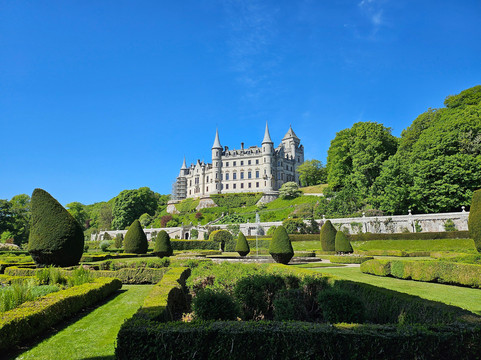
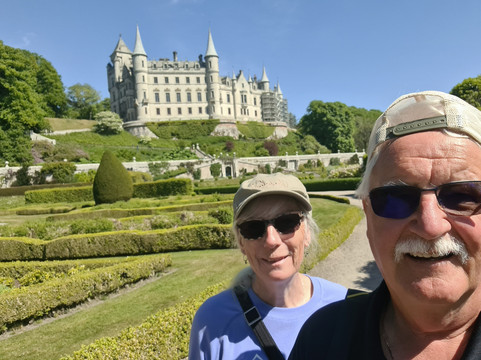
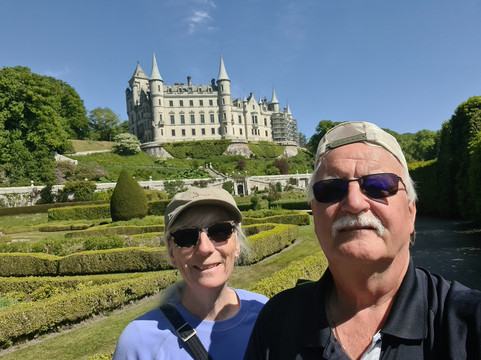
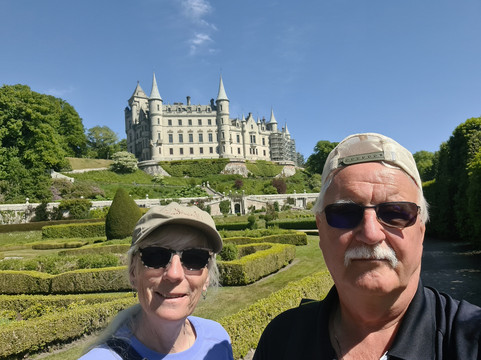
Arriving mid morning the large car park was close to full, but we still managed to find parking. It is then about a five minute stroll to the castle along a path and then onto the driveway. Although a hot day the mature trees offered plenty of shade. As you approach the castle you quickly see why it's was called the Fairy Castle, as it is nothing like the other Scottish castle we had visit. The Castle, resembles a French chateâu with its towering conical spires, rather than the plain squat rectangular shapes of other castles. The original fortified castle has seen the architectural influences of Sir Charles Barry, who designed London’s Houses of Parliament, and Scotland’s own Sir Robert Lorimer. So it has now emerged as a more modern representation of a castle.
Dunrobin is the most northerly of Scotland’s great houses and the largest in the Northern Highlands with 189 rooms. The castle is also one of Britain’s oldest continuously inhabited houses dating back to the early 1300s, home to the Earls and later, the Dukes of Sutherland.
In all this is a three in one visit, the castle, gardens and a quite fascinating museum. There are also falconry displays during the day. There was one schedule just as we arrived and most visitors were leaving the castle to see it. We saw this as a great opportunity to tour the castle with very few people.
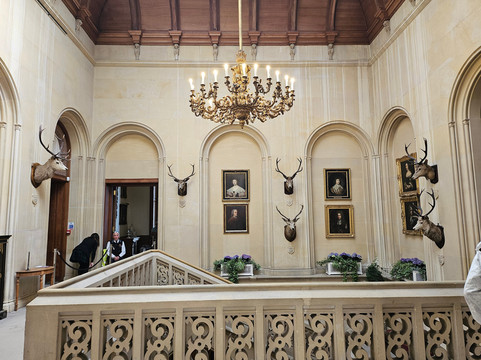
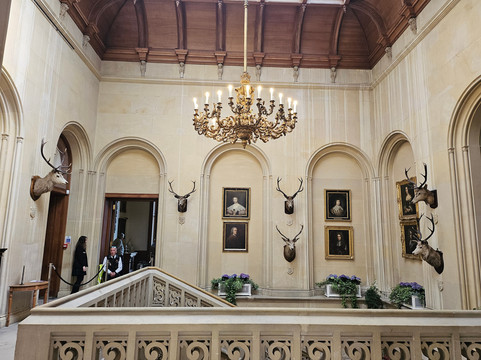
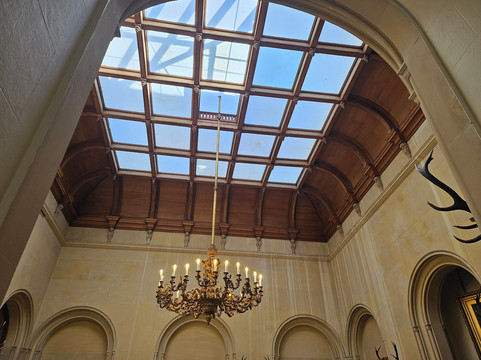
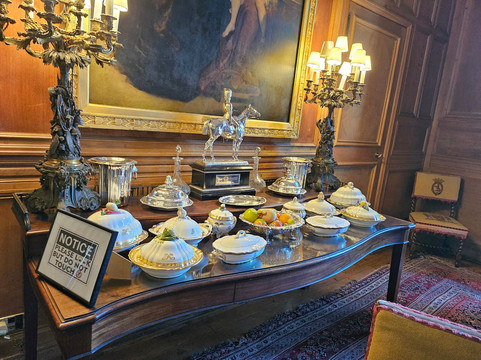
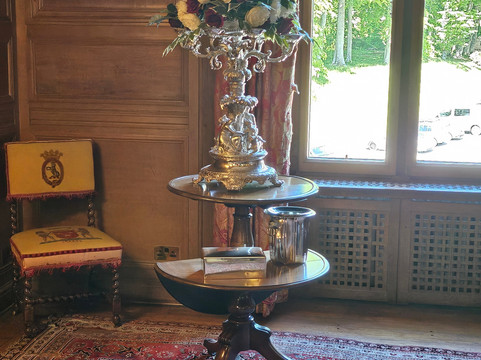
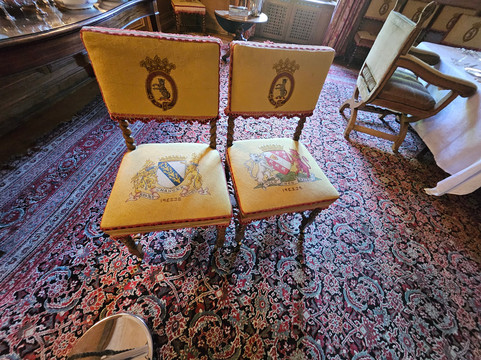
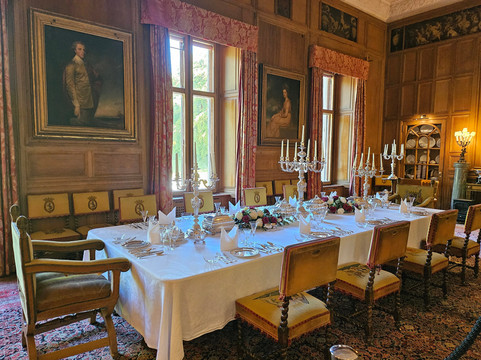
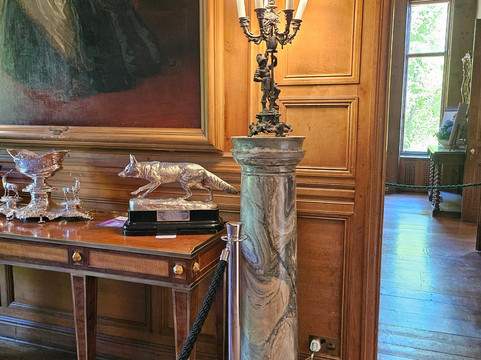
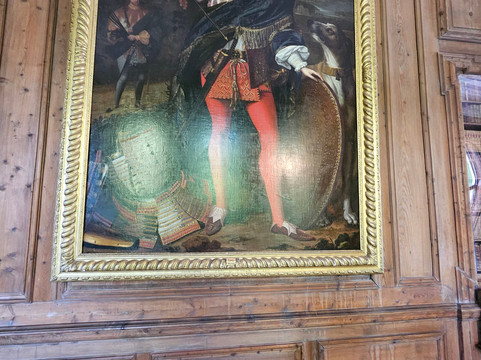
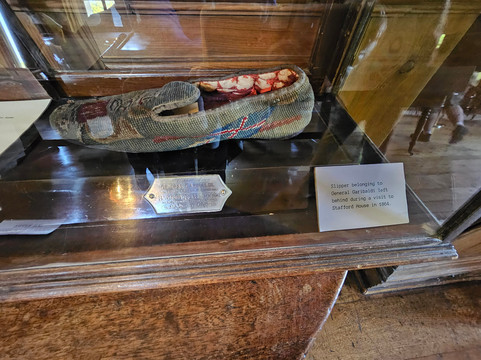
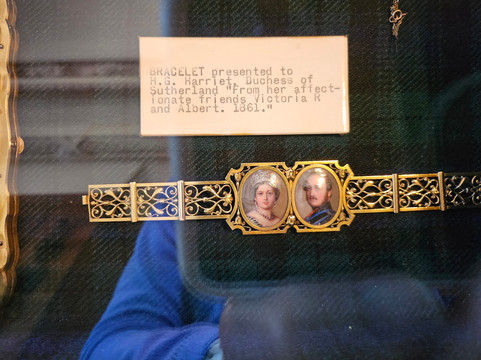
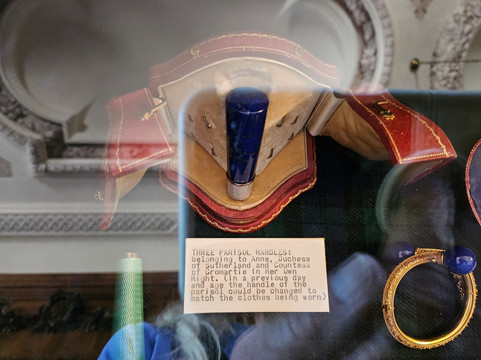
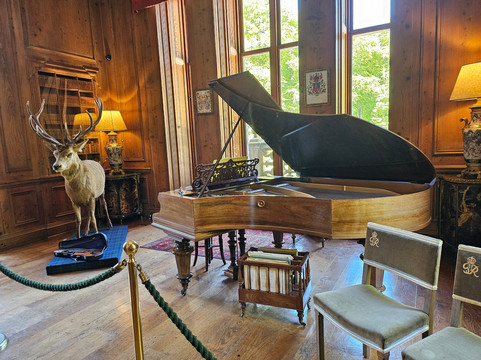
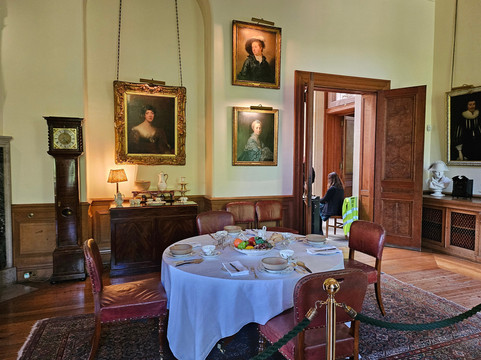
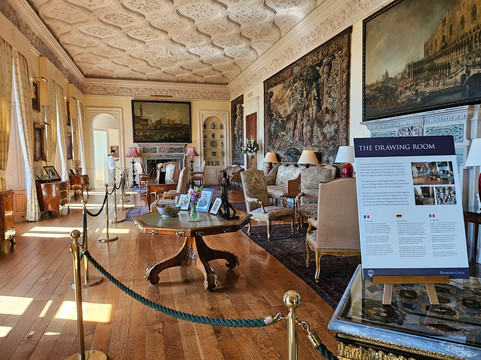
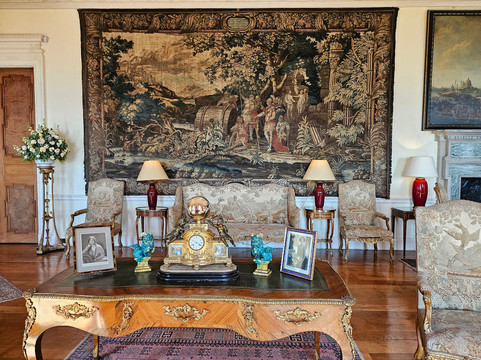
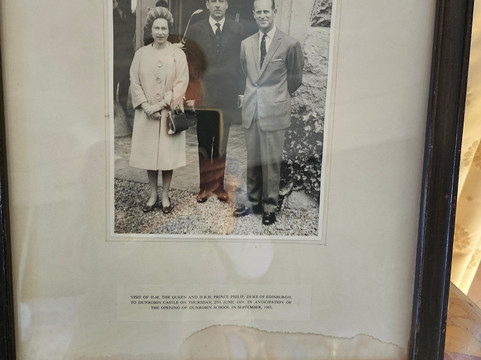
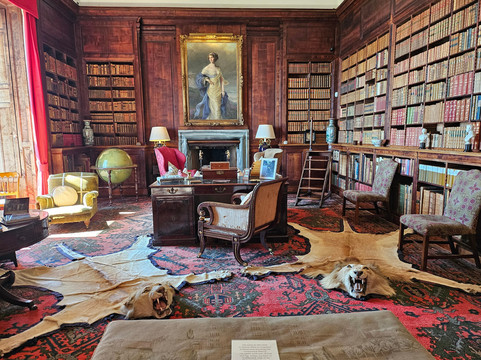
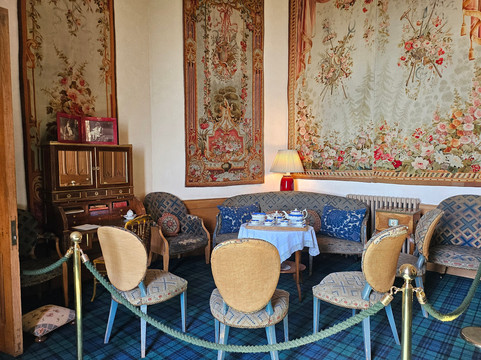
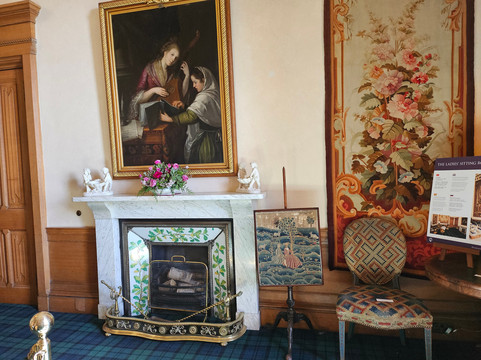
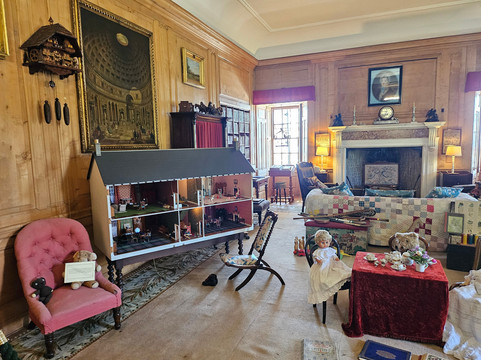
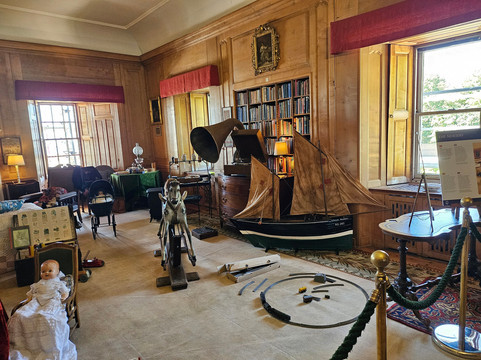
As you wander around the various rooms, decorated in varied and ornate styles there are plenty of information boards for you to peruse, about the room, inhabitants over the ages and the castle's history. Plenty of historical artifacts and visits by royalty, Queens Victoria and Elizabeth. There is an endless story as you walk through the rooms.
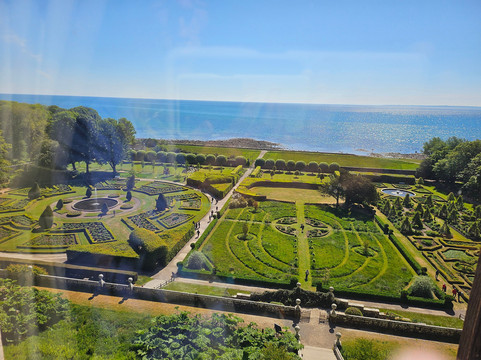
Located on the east coast of the Northern Highlands the castle has a wonderful vista overlooking the Moray Firth. These can be seen from the terrace, but even better from the upper floors of the castle.
Dunrobin Castle has been called home to the Earls and Dukes of Sutherland since the 13th century and was first mentioned as a stronghold of the family in 1401. The Earldom of Sutherland is one of the seven ancient earldoms of Scotland and the Sutherlands were one of the most powerful families in Britain with many important matrimonial and territorial alliances. The Earldom of Sutherland was created in 1235 and a castle appears to have stood on this site since then, possibly on the site of an early medieval fort. The name Dun Robin means Robin’s Hill or Fort in Gaelic and may have come from Robert, the 6th Earl of Sutherland who died in 1427.
The early castle a more traditional castle style. It was actually a fortified, square keep, with walls six feet thick and a vaulted ceiling, looking out from a cliff-top position. The keep stood isolated for some 200 years until a staircase and a high house were added. Over the centuries various additions were made to the castle. It was encased by a series of additions from the 16th century onwards. In 1785 a large extension was constructed. Remarkably this early keep still survives, much altered, within the complex of these later extensions, making Dunrobin one of the oldest inhabited houses in Scotland.
Later in 1845 Sir Charles Barry was tasked to completely re-model the castle. To change it from a castle fort to a more modern stately home that is seen today, in the Scottish Baronial style that had become popular among the Scottish aristocracy, who were inspired by Queen Victoria’s new residence at Balmoral.
Everywhere you go there is very much a French influence with conical spires to the whole project, even the gardens were based on based on Versailles. The initial layout of the gardens was in, the 1850s.
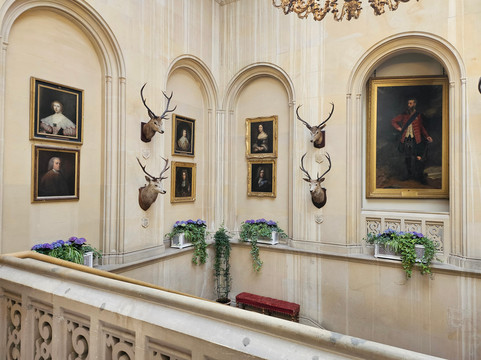
Much of Barry’s interior was destroyed by a fire in 1915 and the interior today is mainly the work of Scottish architect, Sir Robert Lorimer, who altered the top of the main tower and clock tower at the north side of the building to the Scottish Renaissance style.
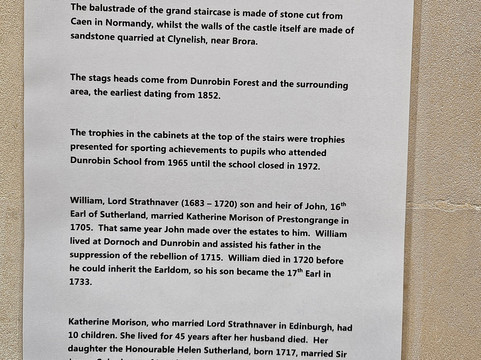
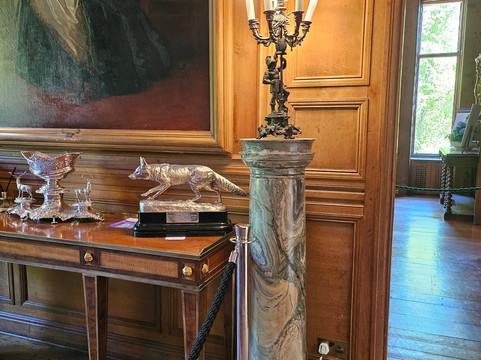
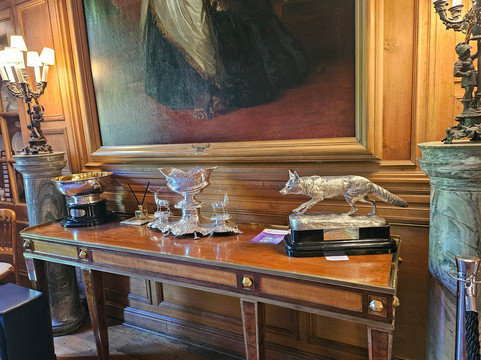
The Castle was used as a naval hospital during the First World War and as a boys’ boarding school from 1965 to 1972. There is still even a display case with trophy's presented to pupils, available to view.
Then once again returning to a family home of the Sutherlands.
Following our easy stroll around the interior of the castle it was on to the gardens. First stop is the terrace which gives one a full panorama of these magnificent gardens. The gardens were laid out in 1850 by the architect Sir Charles Barry, who was responsible for the Victorian extension to the Castle. Inspiration came from the Palace of Versailles in Paris, and they have changed little in the 150 years since they were planted, although new plants are constantly being introduced.
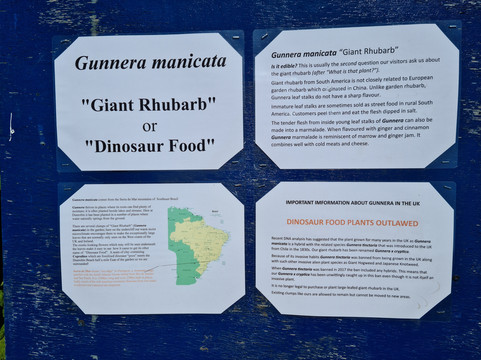
Despite its northerly location, the sheltered gardens are able to support a surprising range of plants, including at the foot of the steps leading to the garden a huge clump of Gunnera manicata, a native rhubarb of South America that has eight foot leaves! Really quite amazing to see. Then it was off to explore the gardens. There is also a croquet lawn so you can have some family fun as you walk around. We were even able to catch the last part of the falconry display and see some of the majestic raptors.
Our tour of the gardens, eventually brought us to the east side where tucked away is a quite fascinating museum.
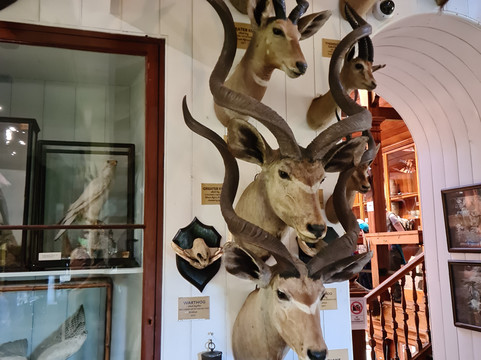
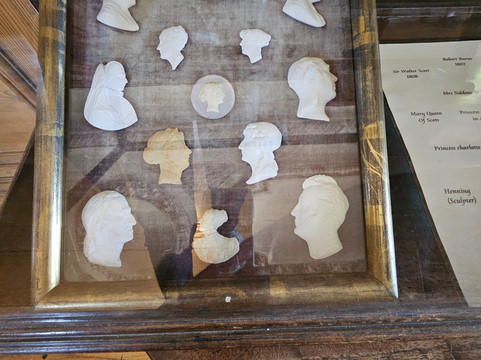
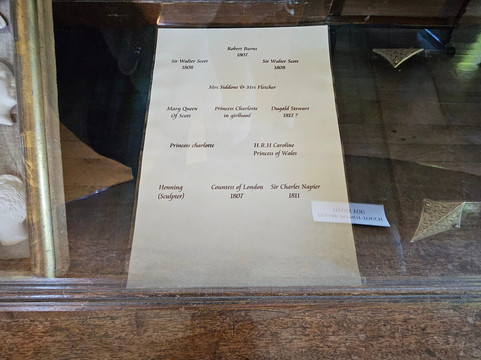
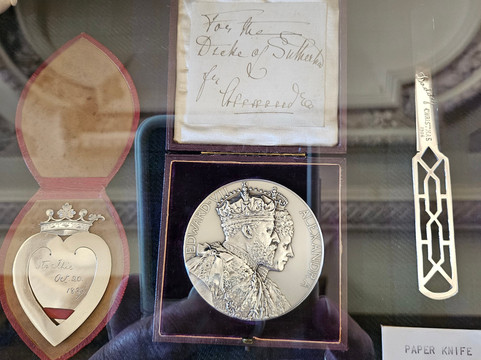
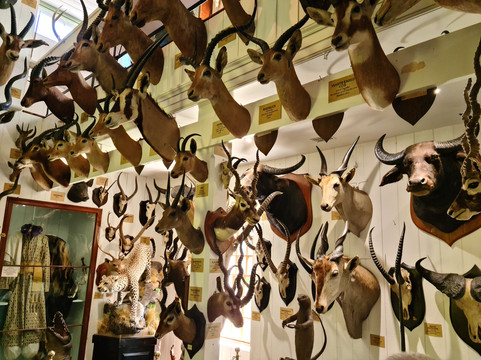
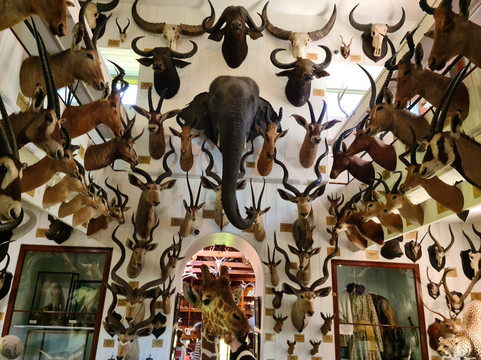
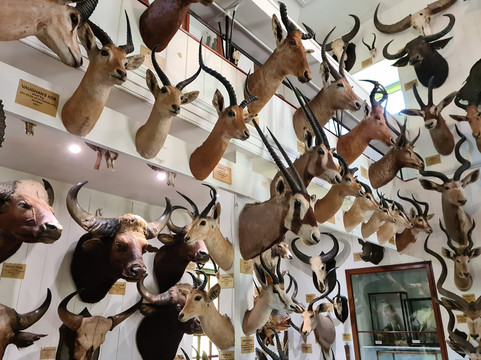
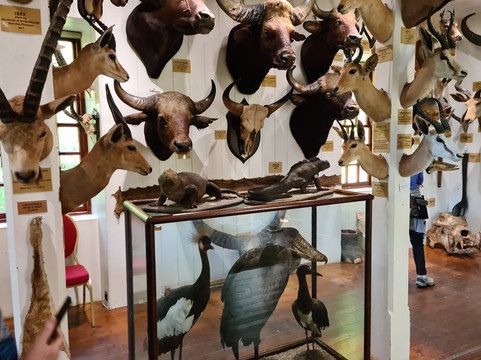
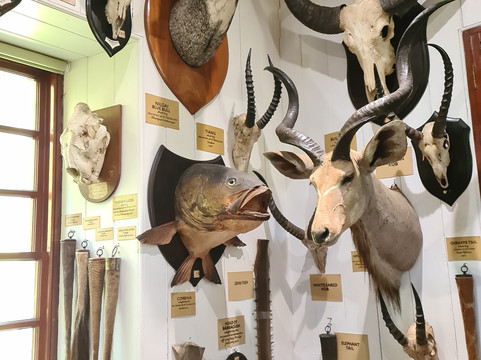
Originally built as a summer house by William, Earl of Sutherland, it was extended by the 3rd Duke. The museum displays the trophy heads of numerous animals shot by the family on safari, in Africa, India and Europe to name a few. The there are numerous ethnographic items collected from around the world a lot from Africa, which we recognised from our travels. There is also a large number of bird species, especially those native to the UK and Europe.
The museum also houses an important collection of archaeological relics. Notable among these are the collection of Pictish symbols stones and cross-slabs, These Pictish Stones form a very important collection, giving an opportunity to study the devices carved on stones 1,500 years ago.
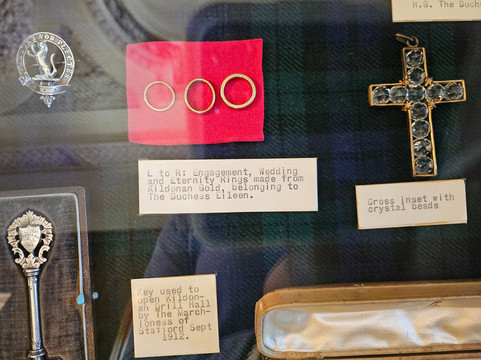
There is also an excellent section on geology, including gold panning at Kildonan, and the coal mine at Brora.
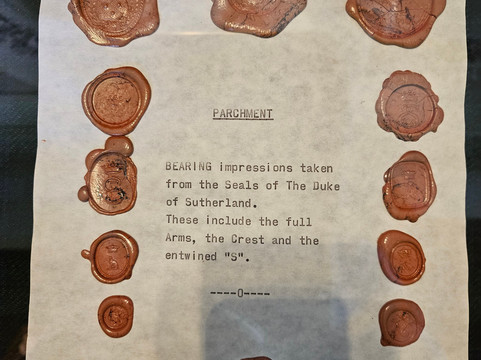
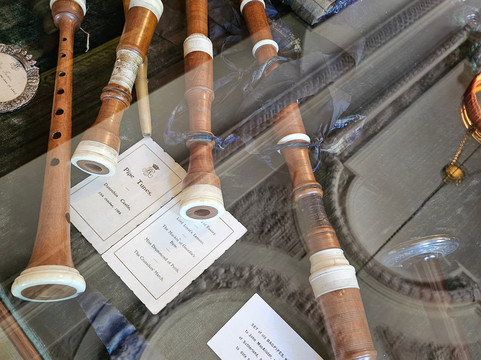
The museum retains its Victorian-early 20th century arrangement, what the Dukes have put together over the centuries is one of the most remarkable private collections in the British Isles.
Having seen castle, gardens and museum it was time to get some lunch. The castle has an excellent café with a quite extensive menu. Although busy, the staff were friendly and our order was served quickly. Their baked potatoes were simply delicious with a variety of toppings. I can't remember having one this good since my students days in Oxford. There was a pub at Woodstock which made baked potatoes like nothing else. They also had a wonderful selection of cakes, which we could not resist.
This was definitely one of the highlights of our Scottish tour and so glad we found out where the fairy castle was.
Since December TripAdvisor has not been adding my contributions so I'm now doing it myself. This Review takes it to 12572 Thank you for reading.
Arriving mid morning the large car park was close to full, but we still managed to find parking. It is then about a five minute stroll to the castle along a path and then onto the driveway. Although a hot day the mature trees offered plenty of shade. As you approach the castle you quickly see why it's was called the Fairy Castle, as it is nothing like the other Scottish castle we had visit. The Castle, resembles a French chateâu with its towering conical spires, rather than the plain squat rectangular shapes of other castles. The original fortified castle has seen the architectural influences of Sir Charles Barry, who designed London’s Houses of Parliament, and Scotland’s own Sir Robert Lorimer. So it has now emerged as a more modern representation of a castle.
Dunrobin is the most northerly of Scotland’s great houses and the largest in the Northern Highlands with 189 rooms. The castle is also one of Britain’s oldest continuously inhabited houses dating back to the early 1300s, home to the Earls and later, the Dukes of Sutherland.
In all this is a three in one visit, the castle, gardens and a quite fascinating museum. There are also falconry displays during the day. There was one schedule just as we arrived and most visitors were leaving the castle to see it. We saw this as a great opportunity to tour the castle with very few people.
As you wander around the various rooms, decorated in varied and ornate styles there are plenty of information boards for you to peruse, about the room, inhabitants over the ages and the castle's history. Plenty of historical artifacts and visits by royalty, Queens Victoria and Elizabeth. There is an endless story as you walk through the rooms.
Located on the east coast of the Northern Highlands the castle has a wonderful vista overlooking the Moray Firth. These can be seen from the terrace, but even better from the upper floors of the castle.
Dunrobin Castle has been called home to the Earls and Dukes of Sutherland since the 13th century and was first mentioned as a stronghold of the family in 1401. The Earldom of Sutherland is one of the seven ancient earldoms of Scotland and the Sutherlands were one of the most powerful families in Britain with many important matrimonial and territorial alliances. The Earldom of Sutherland was created in 1235 and a castle appears to have stood on this site since then, possibly on the site of an early medieval fort. The name Dun Robin means Robin’s Hill or Fort in Gaelic and may have come from Robert, the 6th Earl of Sutherland who died in 1427.
The early castle a more traditional castle style. It was actually a fortified, square keep, with walls six feet thick and a vaulted ceiling, looking out from a cliff-top position. The keep stood isolated for some 200 years until a staircase and a high house were added. Over the centuries various additions were made to the castle. It was encased by a series of additions from the 16th century onwards. In 1785 a large extension was constructed. Remarkably this early keep still survives, much altered, within the complex of these later extensions, making Dunrobin one of the oldest inhabited houses in Scotland.
Later in 1845 Sir Charles Barry was tasked to completely re-model the castle. To change it from a castle fort to a more modern stately home that is seen today, in the Scottish Baronial style that had become popular among the Scottish aristocracy, who were inspired by Queen Victoria’s new residence at Balmoral.
Everywhere you go there is very much a French influence with conical spires to the whole project, even the gardens were based on based on Versailles. The initial layout of the gardens was in, the 1850s.
Much of Barry’s interior was destroyed by a fire in 1915 and the interior today is mainly the work of Scottish architect, Sir Robert Lorimer, who altered the top of the main tower and clock tower at the north side of the building to the Scottish Renaissance style.
The Castle was used as a naval hospital during the First World War and as a boys’ boarding school from 1965 to 1972. There is still even a display case with trophy's presented to pupils, available to view.
Then once again returning to a family home of the Sutherlands.
Following our easy stroll around the interior of the castle it was on to the gardens. First stop is the terrace which gives one a full panorama of these magnificent gardens. The gardens were laid out in 1850 by the architect Sir Charles Barry, who was responsible for the Victorian extension to the Castle. Inspiration came from the Palace of Versailles in Paris, and they have changed little in the 150 years since they were planted, although new plants are constantly being introduced.
Despite its northerly location, the sheltered gardens are able to support a surprising range of plants, including at the foot of the steps leading to the garden a huge clump of Gunnera manicata, a native rhubarb of South America that has eight foot leaves! Really quite amazing to see. Then it was off to explore the gardens. There is also a croquet lawn so you can have some family fun as you walk around. We were even able to catch the last part of the falconry display and see some of the majestic raptors.
Our tour of the gardens, eventually brought us to the east side where tucked away is a quite fascinating museum.
Originally built as a summer house by William, Earl of Sutherland, it was extended by the 3rd Duke. The museum displays the trophy heads of numerous animals shot by the family on safari, in Africa, India and Europe to name a few. The there are numerous ethnographic items collected from around the world a lot from Africa, which we recognised from our travels. There is also a large number of bird species, especially those native to the UK and Europe.
The museum also houses an important collection of archaeological relics. Notable among these are the collection of Pictish symbols stones and cross-slabs, These Pictish Stones form a very important collection, giving an opportunity to study the devices carved on stones 1,500 years ago.
There is also an excellent section on geology, including gold panning at Kildonan, and the coal mine at Brora.
The museum retains its Victorian-early 20th century arrangement, what the Dukes have put together over the centuries is one of the most remarkable private collections in the British Isles.
Having seen castle, gardens and museum it was time to get some lunch. The castle has an excellent café with a quite extensive menu. Although busy, the staff were friendly and our order was served quickly. Their baked potatoes were simply delicious with a variety of toppings. I can't remember having one this good since my students days in Oxford. There was a pub at Woodstock which made baked potatoes like nothing else. They also had a wonderful selection of cakes, which we could not resist.
This was definitely one of the highlights of our Scottish tour and so glad we found out where the fairy castle was.
Since December TripAdvisor has not been adding my contributions so I'm now doing it myself. This Review takes it to 12572 Thank you for reading.
翻译:我们在苏格兰参观了不少城堡,也遇到了许多其他游客并和他们聊了天。他们总是问我们是否去过仙女城堡(Fairy Castle)。直到我们做了些功课,才发现邓罗宾城堡(Dunrobin Castle)正好在我们北上的路线上,之前没有人提到过它。于是我们迅速调整了行程,前往邓罗宾城堡。
我们上午十点左右到达,大型停车场几乎停满了车,但我们还是找到了停车位。沿着小路走大约五分钟,然后进入车道,就到了城堡。虽然天气炎热,但茂密的树木提供了充足的阴凉。走近城堡,你很快就会明白它为什么被称为仙女城堡,因为它与我们之前参观过的其他苏格兰城堡截然不同。这座城堡更像是一座法式城堡,有着高耸的圆锥形尖顶,而不是其他城堡那种矮胖的矩形外观。这座最初的防御城堡融合了查尔斯·巴里爵士(伦敦议会大厦的设计者)和苏格兰本土建筑师罗伯特·洛里默爵士的建筑风格。如今,它已成为一座更具现代感的城堡。
邓罗宾城堡是苏格兰最北端的几座宏伟宅邸之一,也是北部高地最大的城堡,拥有189个房间。这座城堡也是英国最古老的持续有人居住的宅邸之一,其历史可以追溯到14世纪初,曾是伯爵和后来的萨瑟兰公爵的府邸。
总而言之,这是一次三合一的游览:城堡、花园和一个非常引人入胜的博物馆。白天还有猎鹰表演。我们到达时正好有一个参观时间表,大多数游客都离开城堡去参观博物馆。我们认为这是一个绝佳的机会,可以避开人群,独自参观城堡。
漫步在装饰风格各异、华丽繁复的房间中,您可以浏览许多信息板,了解房间的介绍、历代住户的故事以及城堡的历史。这里收藏着许多历史文物,还有维多利亚女王和伊丽莎白女王等皇室成员的到访记录。漫步于各个房间,仿佛置身于一个永无止境的故事之中。
这座城堡坐落于苏格兰北部高地的东海岸,拥有俯瞰莫雷湾的壮丽景色。从露台上可以欣赏到这些美景,但从城堡的上层俯瞰则更为壮观。
自13世纪以来,邓罗宾城堡一直是萨瑟兰伯爵和公爵的府邸,最早于1401年被提及为该家族的要塞。萨瑟兰伯爵领地是苏格兰七个古老伯爵领地之一,萨瑟兰家族是英国最强大的家族之一,拥有许多重要的联姻和领土联盟。萨瑟兰伯爵领地成立于1235年,此后似乎一直有一座城堡矗立于此,很可能是在一座早期中世纪堡垒的遗址上。邓罗宾(Dun Robin)在盖尔语中意为“罗宾山”或“罗宾堡”,可能源于1427年去世的第六代萨瑟兰伯爵罗伯特。
早期的城堡风格更为传统。它实际上是一座坚固的方形主堡,城墙厚达六英尺,拥有拱形天花板,耸立于悬崖之巅。这座主堡孤零零地矗立了约两百年,直到后来增建了楼梯和高楼。几个世纪以来,城堡不断扩建,自16世纪起,它被一系列的附属建筑所环绕。1785年,城堡进行了大规模的扩建。令人惊奇的是,这座早期的主堡至今仍保存完好,尽管经过多次改建,依然屹立于后来的扩建建筑群之中,这使得邓罗宾城堡成为苏格兰最古老的有人居住的房屋之一。
1845年,查尔斯·巴里爵士受命对城堡进行彻底改造,将其从一座城堡要塞改造成如今我们所见的更为现代的庄园式住宅,采用当时在苏格兰贵族中流行的苏格兰男爵式风格。这种风格深受维多利亚女王在巴尔莫勒尔堡的新居启发。
无论走到哪里,都能感受到浓厚的法式风情,整个建筑都以圆锥形尖顶为特色,就连花园的设计也借鉴了凡尔赛宫。花园的最初布局可以追溯到19世纪50年代。
巴里城堡的大部分内部装饰在1915年的一场大火中被毁,如今的内部主要出自苏格兰建筑师罗伯特·洛里默爵士之手。他将主塔和北侧钟楼的顶部改建成了苏格兰文艺复兴风格。
第一次世界大战期间,城堡曾被用作海军医院;1965年至1972年间,这里又被用作男子寄宿学校。如今,城堡内仍然保留着一个展示柜,陈列着当年颁发给学生的奖杯,供游客参观。
之后,我们再次回到萨瑟兰家族的故居。
在城堡内部轻松漫步之后,我们前往花园。第一站是露台,在这里可以饱览这座壮丽花园的全景。花园由建筑师查尔斯·巴里爵士于1850年设计,他也是维多利亚时代城堡扩建工程的负责人。花园的设计灵感来源于巴黎凡尔赛宫,自种植以来的150年间几乎没有改变。尽管不断有新的植物被引进。
尽管地处北部,这座花园却因地处避风处而生长着种类繁多的植物,令人惊讶。在通往花园的台阶脚下,生长着一大丛大黄(Gunnera manicata),这种原产于南美洲的大黄叶片竟长达八英尺!真是令人叹为观止。之后,我们便开始探索花园。这里还有一块槌球草坪,您可以一边漫步一边享受家庭乐趣。我们甚至还赶上了猎鹰表演的最后部分,看到了几只威风凛凛的猛禽。
花园之旅最终将我们带到了东侧,那里隐藏着一座引人入胜的博物馆。
这座建筑最初由萨瑟兰伯爵威廉建造,作为避暑别墅,后由第三代公爵扩建。博物馆展出了萨瑟兰家族在非洲、印度和欧洲等地狩猎旅行时猎获的众多动物头骨标本。这里收藏着来自世界各地的众多民族志物品,其中很多来自非洲,我们在旅行中也见过。此外,这里还有大量的鸟类标本,特别是英国和欧洲的本土鸟类。
博物馆还收藏着重要的考古文物。其中最引人注目的是皮克特人符号石和十字石板。这些皮克特石刻构成了一项非常重要的收藏,让我们有机会研究1500年前刻在石头上的图案。
博物馆还有一个很棒的地质学展区,展示了基尔多南的淘金历史和布罗拉的煤矿。
博物馆保留了维多利亚时代至20世纪初的布局,几个世纪以来,公爵们精心收集的藏品堪称不列颠群岛最杰出的私人收藏之一。
参观完城堡、花园和博物馆后,我们该去吃午饭了。城堡里有一家很棒的咖啡馆,菜单种类繁多。虽然很忙,但服务员都很友好,我们的餐点很快就上来了。他们的烤土豆简直太美味了,配料丰富多样。自从在牛津读书以来,我就没吃过这么好吃的烤土豆了。伍德斯托克有一家酒吧,他们做的烤土豆堪称一绝。他们还有各种各样的蛋糕,我们根本无法抗拒。
这绝对是我们苏格兰之旅的一大亮点,而且我们也很庆幸找到了那座童话城堡。
自从去年12月以来,TripAdvisor 就没再添加我的评论了,所以我现在自己来写。这篇评论使我的评论总数达到了12572条。感谢阅读。
我们上午十点左右到达,大型停车场几乎停满了车,但我们还是找到了停车位。沿着小路走大约五分钟,然后进入车道,就到了城堡。虽然天气炎热,但茂密的树木提供了充足的阴凉。走近城堡,你很快就会明白它为什么被称为仙女城堡,因为它与我们之前参观过的其他苏格兰城堡截然不同。这座城堡更像是一座法式城堡,有着高耸的圆锥形尖顶,而不是其他城堡那种矮胖的矩形外观。这座最初的防御城堡融合了查尔斯·巴里爵士(伦敦议会大厦的设计者)和苏格兰本土建筑师罗伯特·洛里默爵士的建筑风格。如今,它已成为一座更具现代感的城堡。
邓罗宾城堡是苏格兰最北端的几座宏伟宅邸之一,也是北部高地最大的城堡,拥有189个房间。这座城堡也是英国最古老的持续有人居住的宅邸之一,其历史可以追溯到14世纪初,曾是伯爵和后来的萨瑟兰公爵的府邸。
总而言之,这是一次三合一的游览:城堡、花园和一个非常引人入胜的博物馆。白天还有猎鹰表演。我们到达时正好有一个参观时间表,大多数游客都离开城堡去参观博物馆。我们认为这是一个绝佳的机会,可以避开人群,独自参观城堡。
漫步在装饰风格各异、华丽繁复的房间中,您可以浏览许多信息板,了解房间的介绍、历代住户的故事以及城堡的历史。这里收藏着许多历史文物,还有维多利亚女王和伊丽莎白女王等皇室成员的到访记录。漫步于各个房间,仿佛置身于一个永无止境的故事之中。
这座城堡坐落于苏格兰北部高地的东海岸,拥有俯瞰莫雷湾的壮丽景色。从露台上可以欣赏到这些美景,但从城堡的上层俯瞰则更为壮观。
自13世纪以来,邓罗宾城堡一直是萨瑟兰伯爵和公爵的府邸,最早于1401年被提及为该家族的要塞。萨瑟兰伯爵领地是苏格兰七个古老伯爵领地之一,萨瑟兰家族是英国最强大的家族之一,拥有许多重要的联姻和领土联盟。萨瑟兰伯爵领地成立于1235年,此后似乎一直有一座城堡矗立于此,很可能是在一座早期中世纪堡垒的遗址上。邓罗宾(Dun Robin)在盖尔语中意为“罗宾山”或“罗宾堡”,可能源于1427年去世的第六代萨瑟兰伯爵罗伯特。
早期的城堡风格更为传统。它实际上是一座坚固的方形主堡,城墙厚达六英尺,拥有拱形天花板,耸立于悬崖之巅。这座主堡孤零零地矗立了约两百年,直到后来增建了楼梯和高楼。几个世纪以来,城堡不断扩建,自16世纪起,它被一系列的附属建筑所环绕。1785年,城堡进行了大规模的扩建。令人惊奇的是,这座早期的主堡至今仍保存完好,尽管经过多次改建,依然屹立于后来的扩建建筑群之中,这使得邓罗宾城堡成为苏格兰最古老的有人居住的房屋之一。
1845年,查尔斯·巴里爵士受命对城堡进行彻底改造,将其从一座城堡要塞改造成如今我们所见的更为现代的庄园式住宅,采用当时在苏格兰贵族中流行的苏格兰男爵式风格。这种风格深受维多利亚女王在巴尔莫勒尔堡的新居启发。
无论走到哪里,都能感受到浓厚的法式风情,整个建筑都以圆锥形尖顶为特色,就连花园的设计也借鉴了凡尔赛宫。花园的最初布局可以追溯到19世纪50年代。
巴里城堡的大部分内部装饰在1915年的一场大火中被毁,如今的内部主要出自苏格兰建筑师罗伯特·洛里默爵士之手。他将主塔和北侧钟楼的顶部改建成了苏格兰文艺复兴风格。
第一次世界大战期间,城堡曾被用作海军医院;1965年至1972年间,这里又被用作男子寄宿学校。如今,城堡内仍然保留着一个展示柜,陈列着当年颁发给学生的奖杯,供游客参观。
之后,我们再次回到萨瑟兰家族的故居。
在城堡内部轻松漫步之后,我们前往花园。第一站是露台,在这里可以饱览这座壮丽花园的全景。花园由建筑师查尔斯·巴里爵士于1850年设计,他也是维多利亚时代城堡扩建工程的负责人。花园的设计灵感来源于巴黎凡尔赛宫,自种植以来的150年间几乎没有改变。尽管不断有新的植物被引进。
尽管地处北部,这座花园却因地处避风处而生长着种类繁多的植物,令人惊讶。在通往花园的台阶脚下,生长着一大丛大黄(Gunnera manicata),这种原产于南美洲的大黄叶片竟长达八英尺!真是令人叹为观止。之后,我们便开始探索花园。这里还有一块槌球草坪,您可以一边漫步一边享受家庭乐趣。我们甚至还赶上了猎鹰表演的最后部分,看到了几只威风凛凛的猛禽。
花园之旅最终将我们带到了东侧,那里隐藏着一座引人入胜的博物馆。
这座建筑最初由萨瑟兰伯爵威廉建造,作为避暑别墅,后由第三代公爵扩建。博物馆展出了萨瑟兰家族在非洲、印度和欧洲等地狩猎旅行时猎获的众多动物头骨标本。这里收藏着来自世界各地的众多民族志物品,其中很多来自非洲,我们在旅行中也见过。此外,这里还有大量的鸟类标本,特别是英国和欧洲的本土鸟类。
博物馆还收藏着重要的考古文物。其中最引人注目的是皮克特人符号石和十字石板。这些皮克特石刻构成了一项非常重要的收藏,让我们有机会研究1500年前刻在石头上的图案。
博物馆还有一个很棒的地质学展区,展示了基尔多南的淘金历史和布罗拉的煤矿。
博物馆保留了维多利亚时代至20世纪初的布局,几个世纪以来,公爵们精心收集的藏品堪称不列颠群岛最杰出的私人收藏之一。
参观完城堡、花园和博物馆后,我们该去吃午饭了。城堡里有一家很棒的咖啡馆,菜单种类繁多。虽然很忙,但服务员都很友好,我们的餐点很快就上来了。他们的烤土豆简直太美味了,配料丰富多样。自从在牛津读书以来,我就没吃过这么好吃的烤土豆了。伍德斯托克有一家酒吧,他们做的烤土豆堪称一绝。他们还有各种各样的蛋糕,我们根本无法抗拒。
这绝对是我们苏格兰之旅的一大亮点,而且我们也很庆幸找到了那座童话城堡。
自从去年12月以来,TripAdvisor 就没再添加我的评论了,所以我现在自己来写。这篇评论使我的评论总数达到了12572条。感谢阅读。

© 2026 Tripadvisor 版权所有。
部分照片由 VFM Leonardo 提供。
TripAdvisor公司对外部网站的内容一概不负责。优惠价格中不含税和其他费用。
ICP证:沪B2-20200433
沪ICP备20013175号
 沪公网安备31010502005427号
鹰程信息技术(上海)有限公司