下载App
资质规则
旅行
账户

MOHAMED S
Armenia over the ages
History Museum of Armenia的点评
点评:The museum was first established in 1921 with its name changing several times till it was finally taking the present name in 1921.
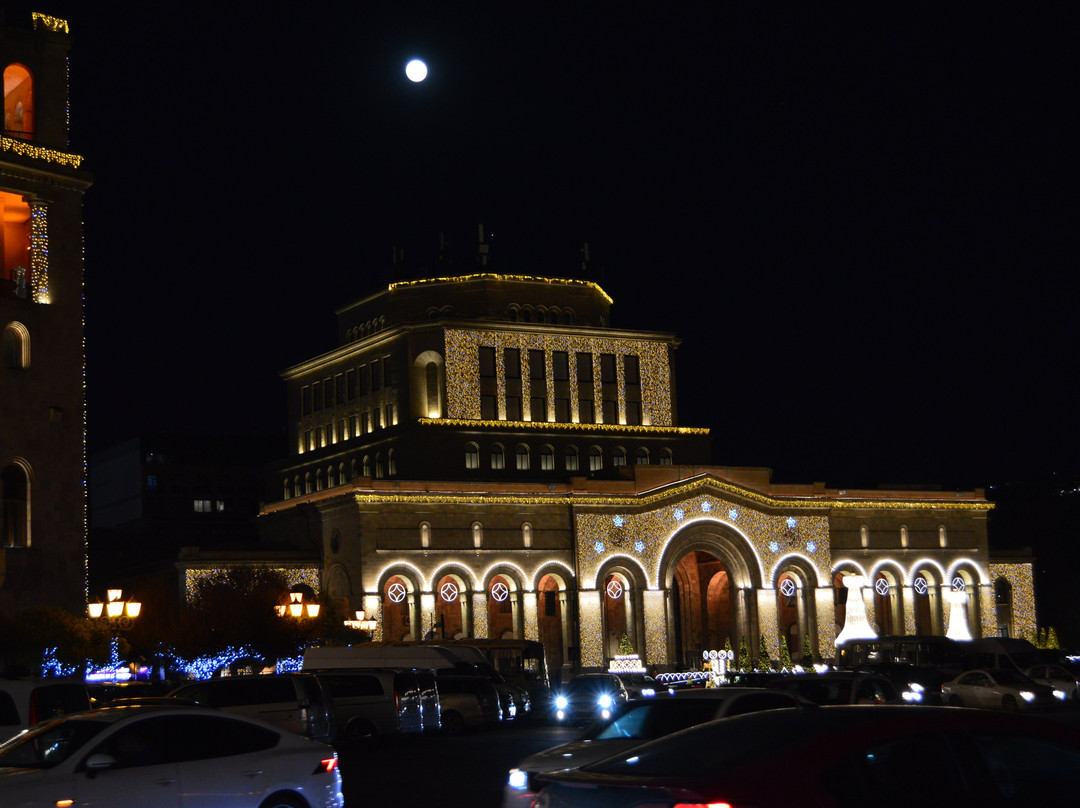
The current building, overlooking the main square in Yerevan, the republic square, houses 2 museums, the History Museum of Armenia as well as the National Gallery of Armenia. Tickets are available for each museum separately or combined.
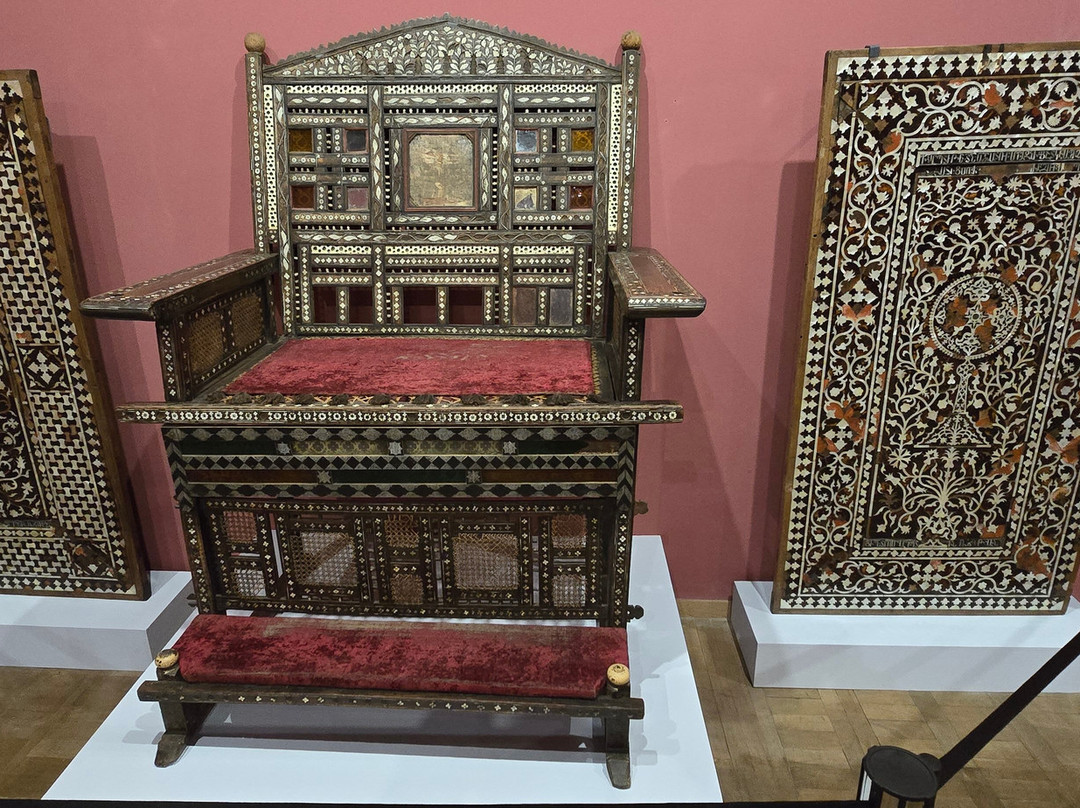
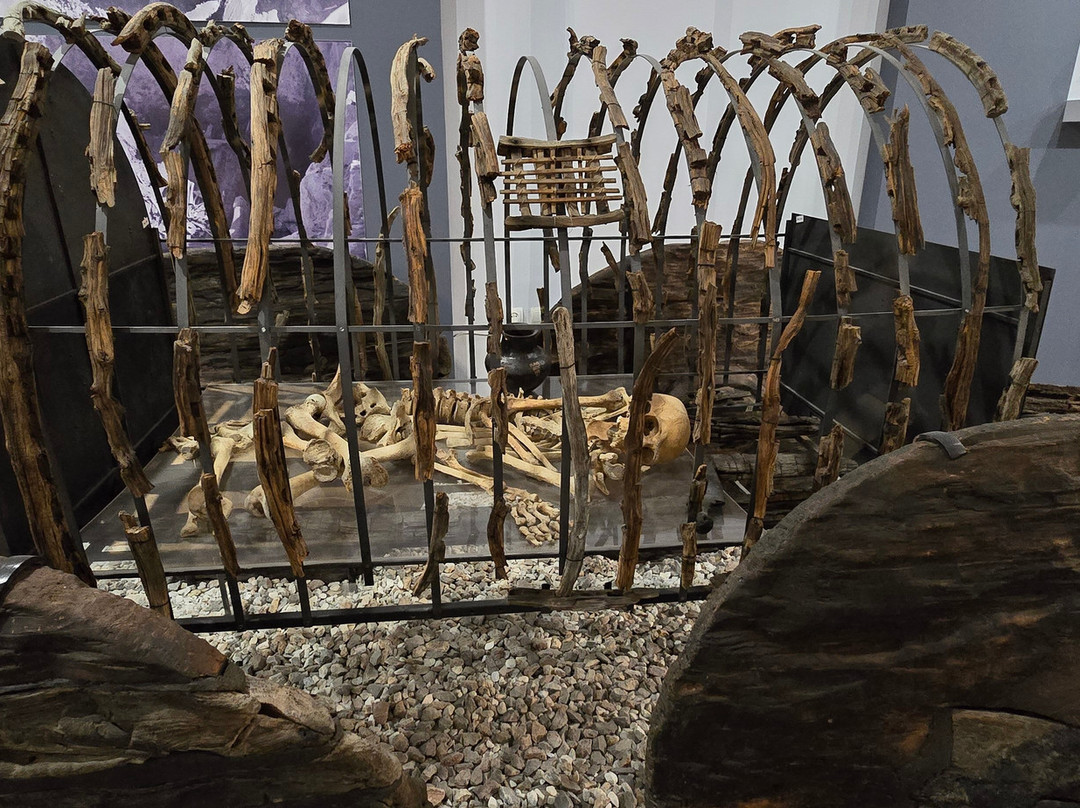
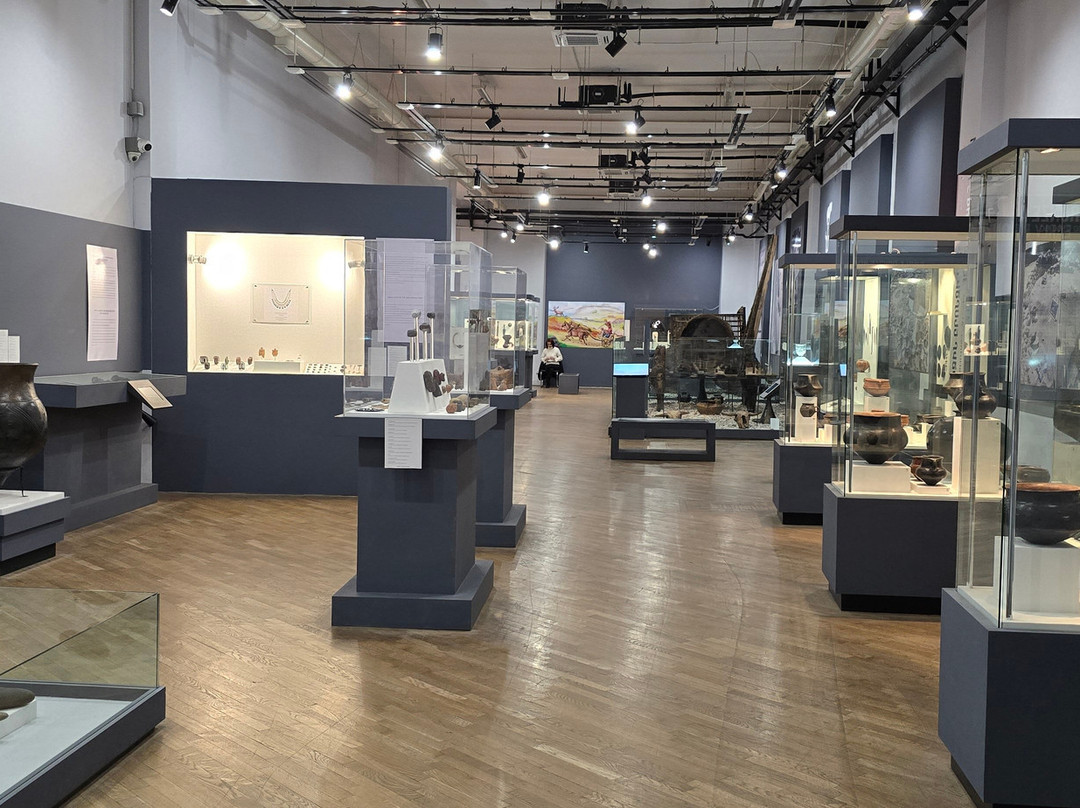
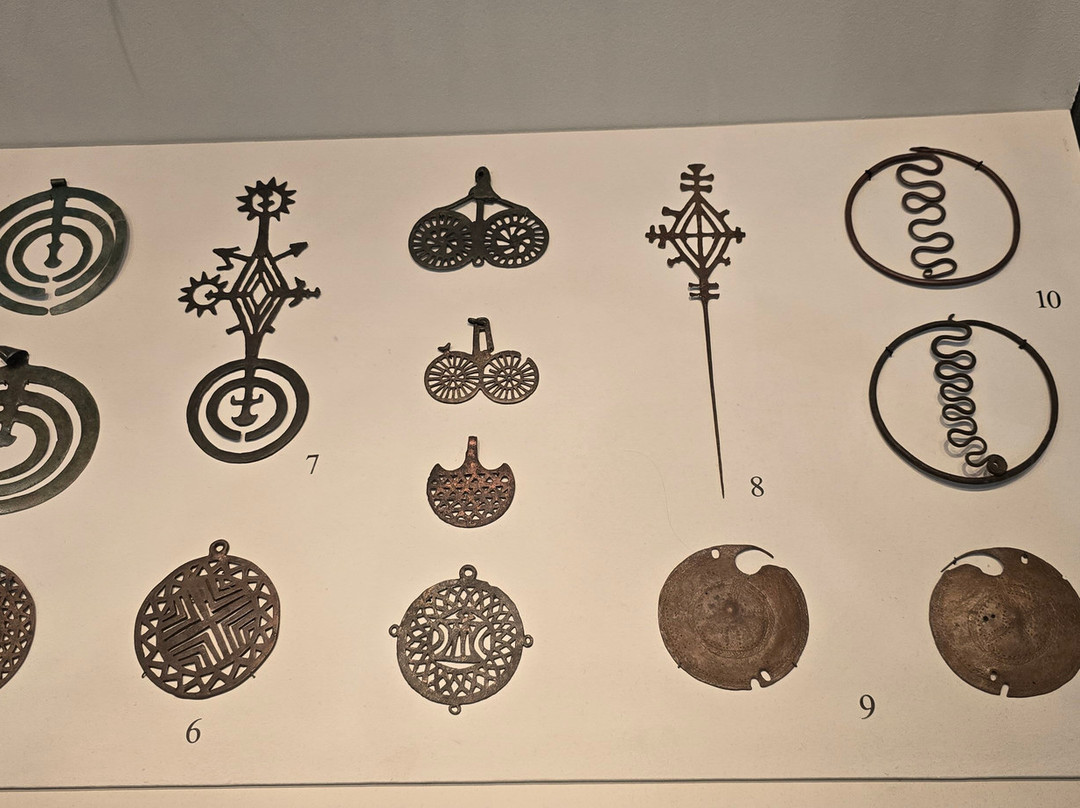
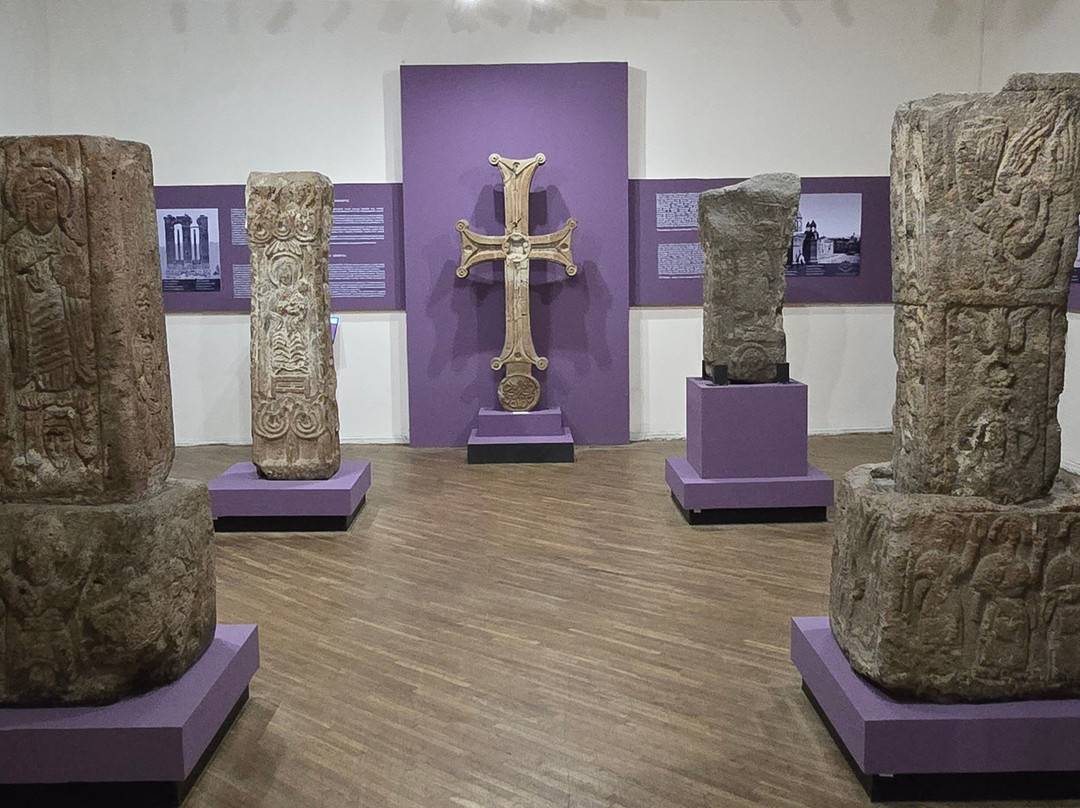
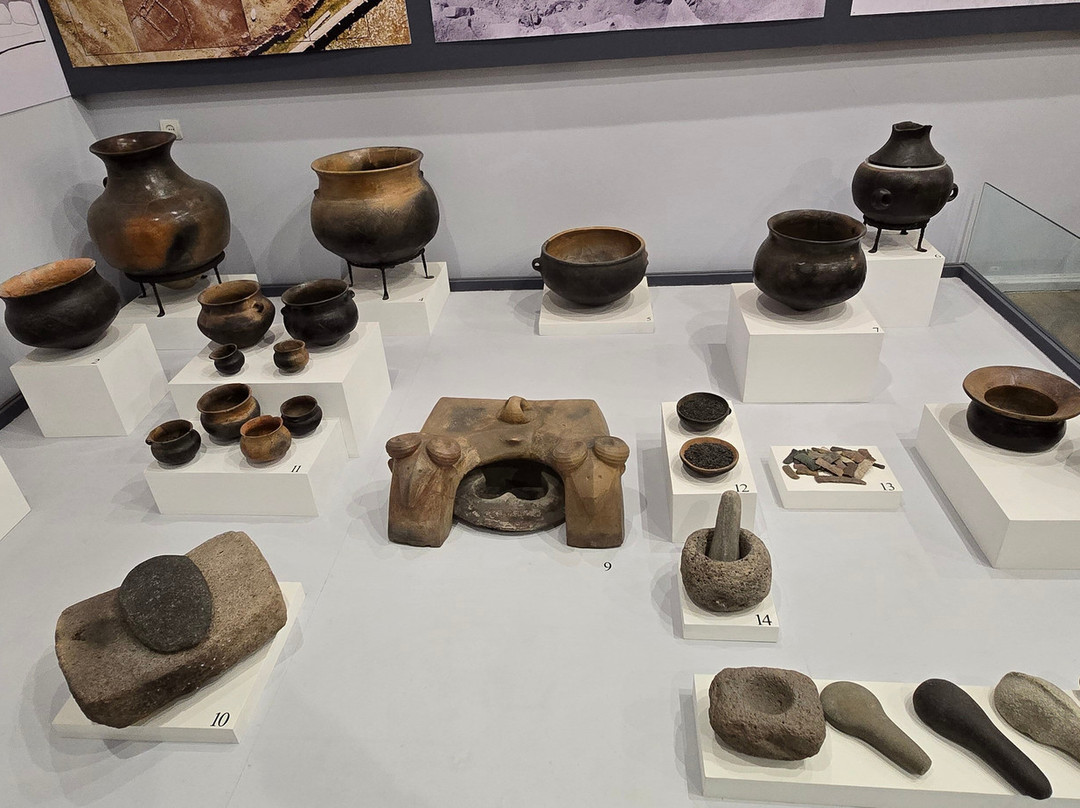
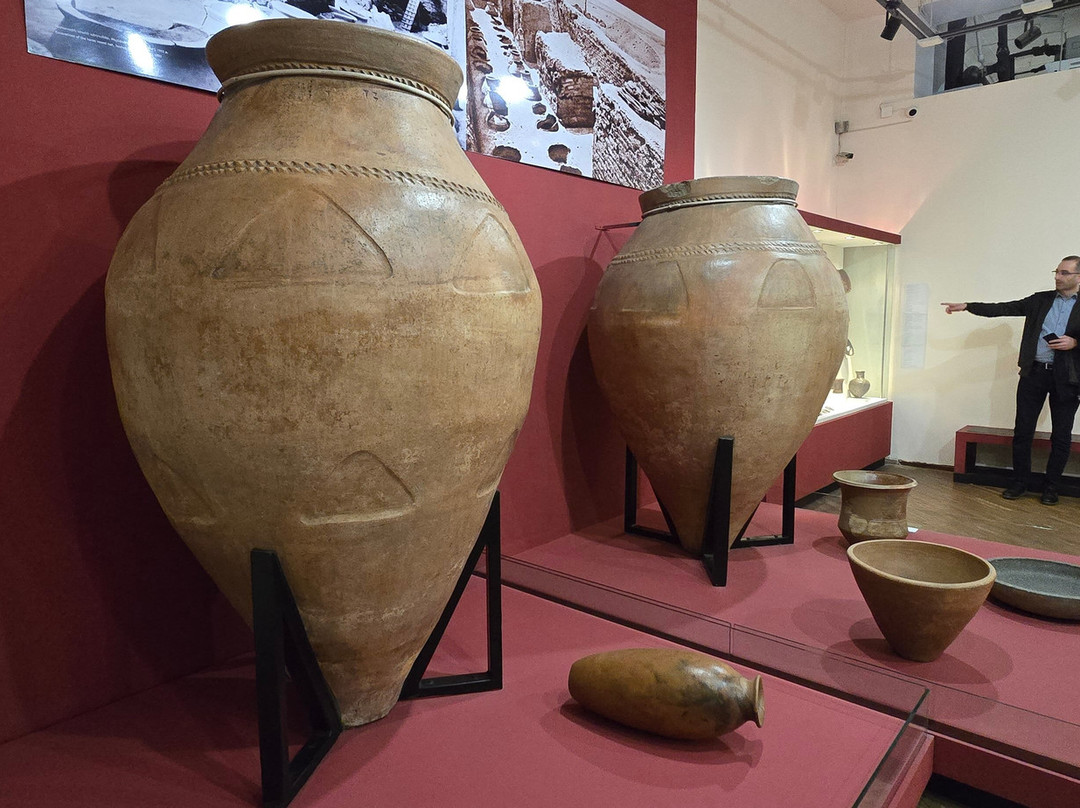
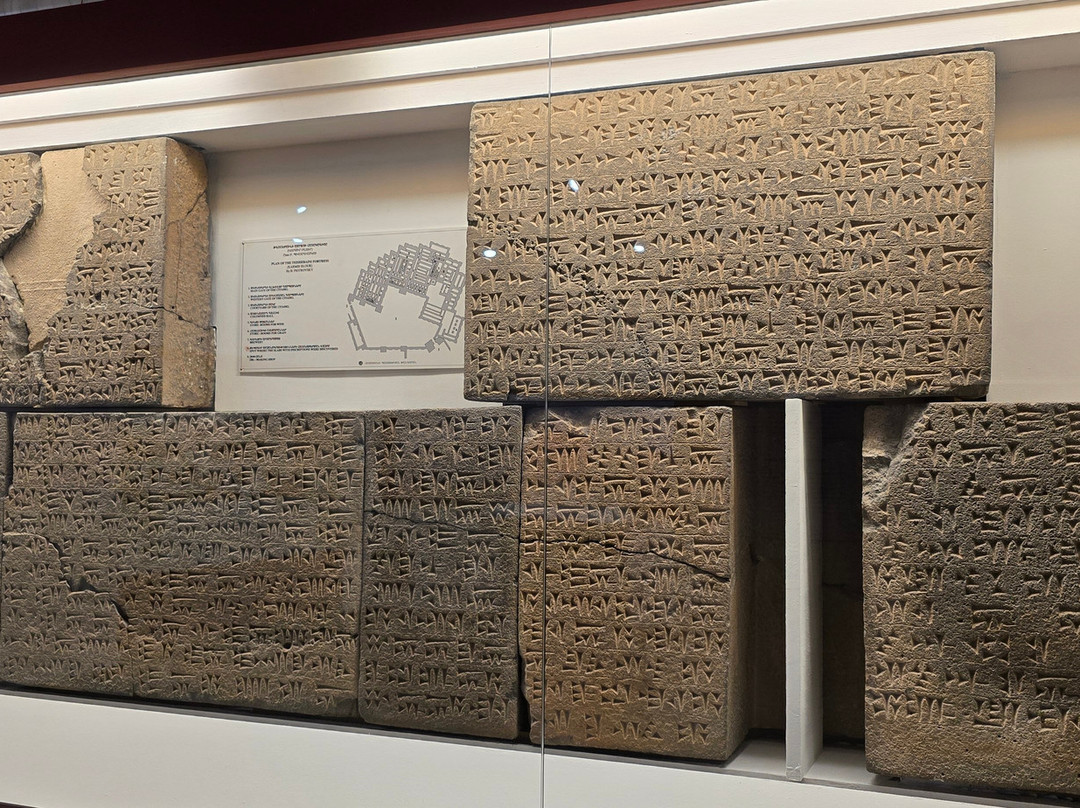
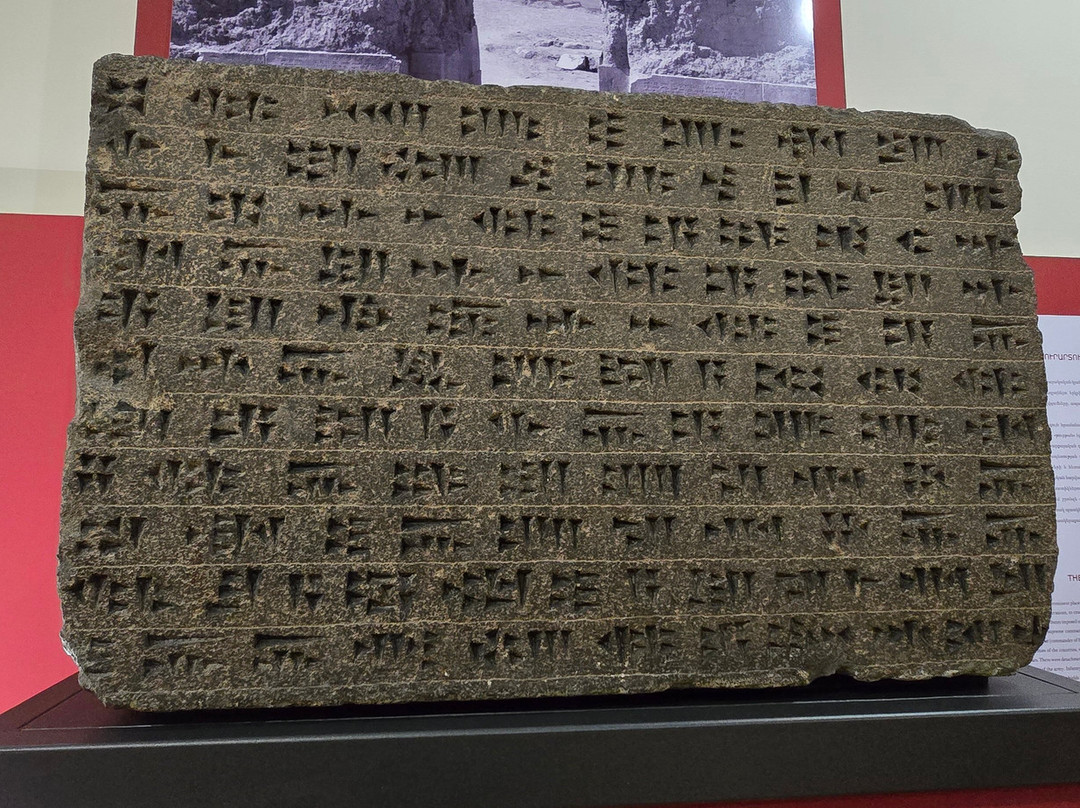
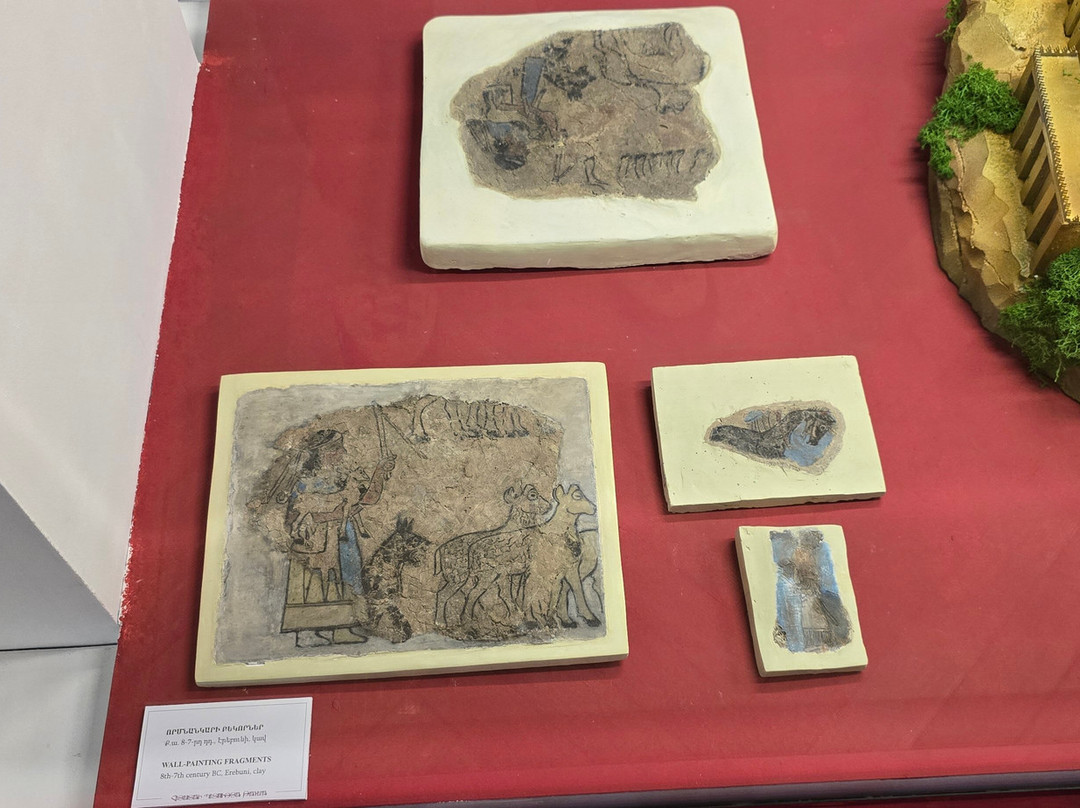
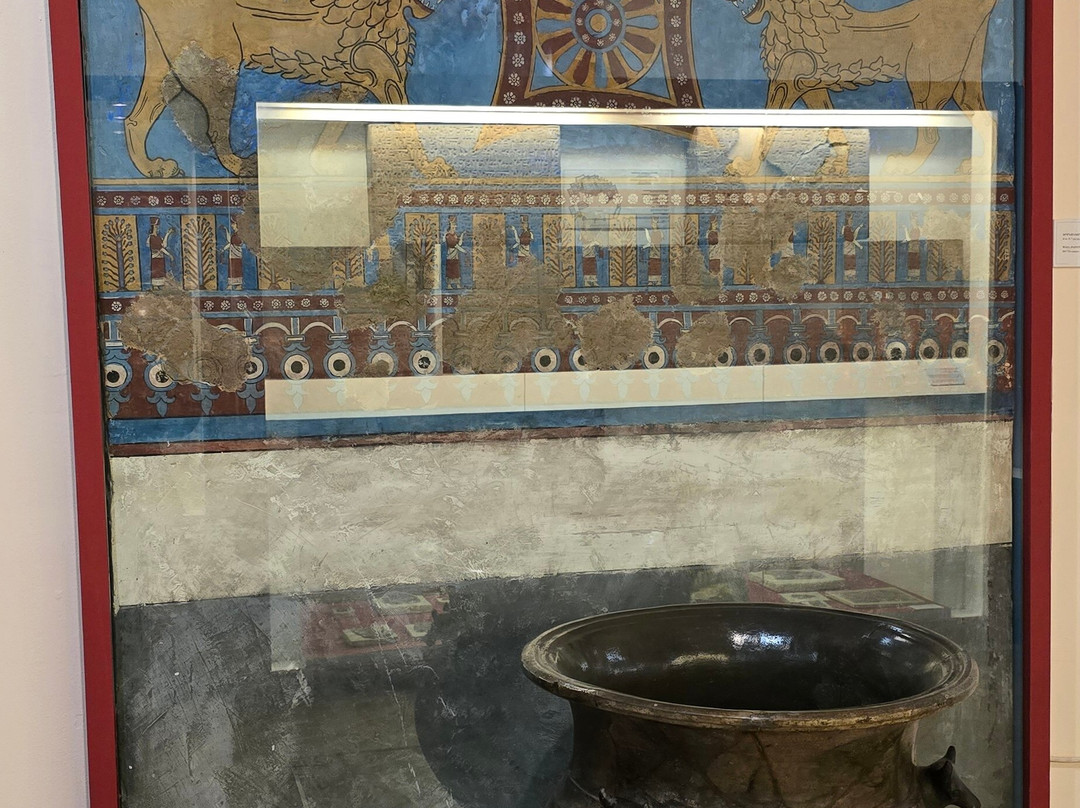
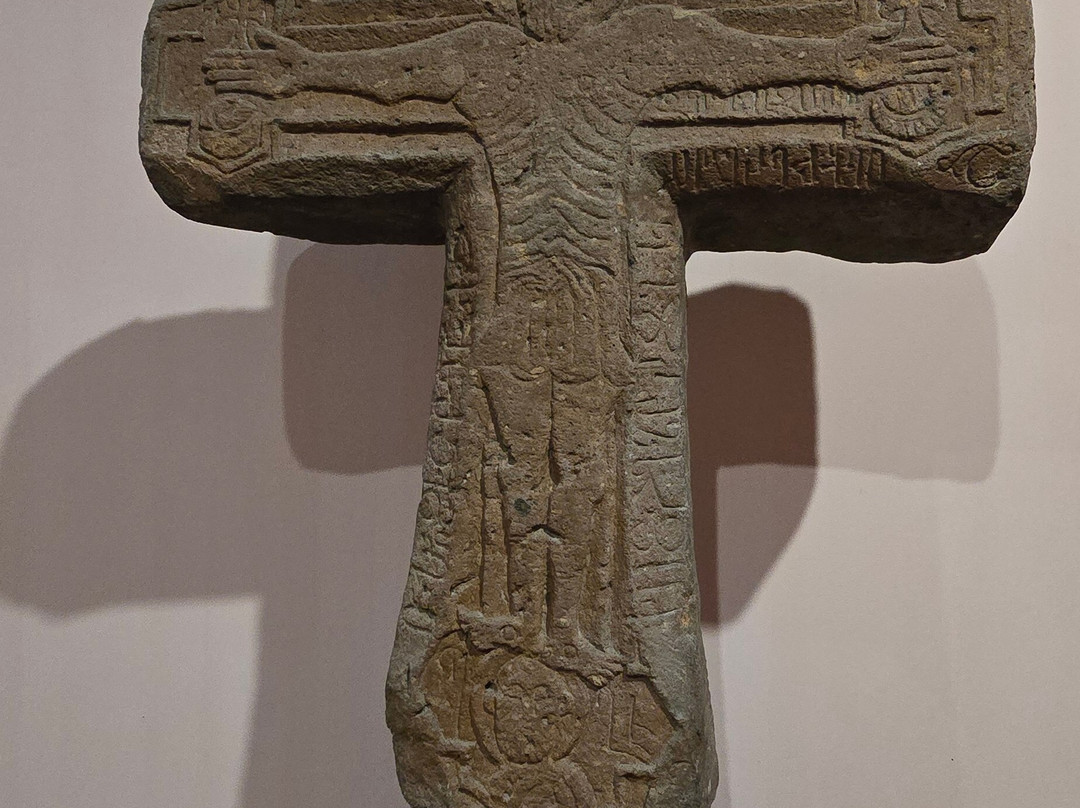
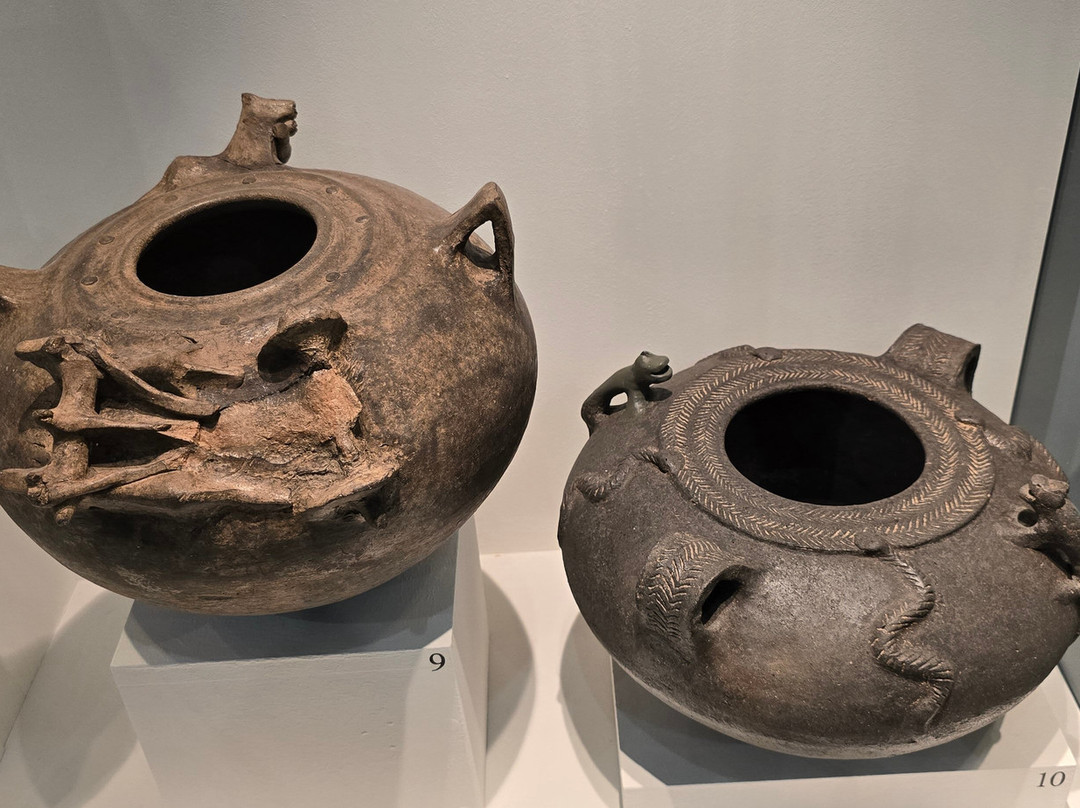
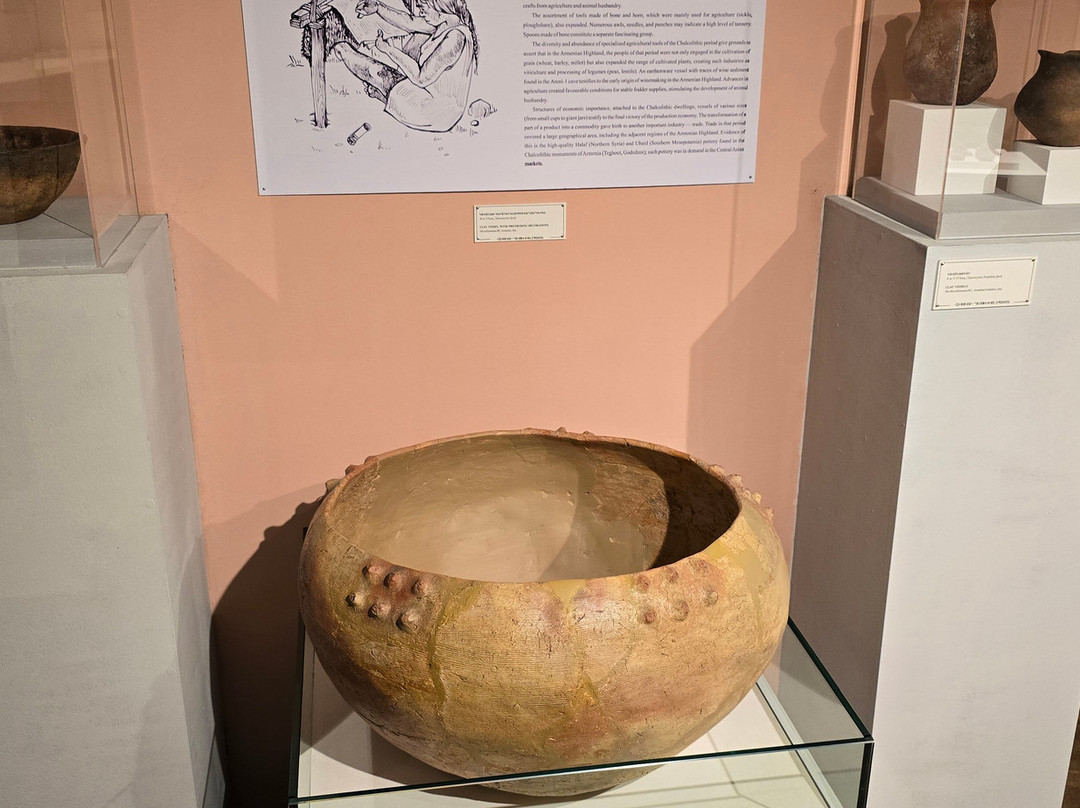
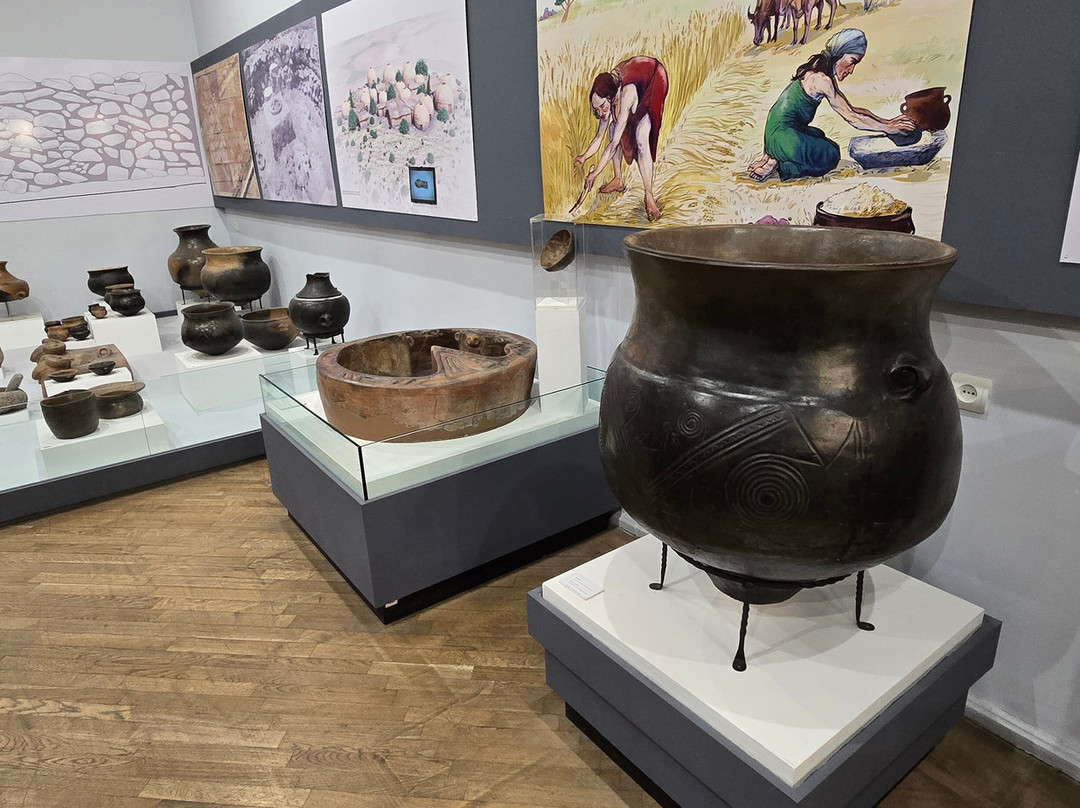
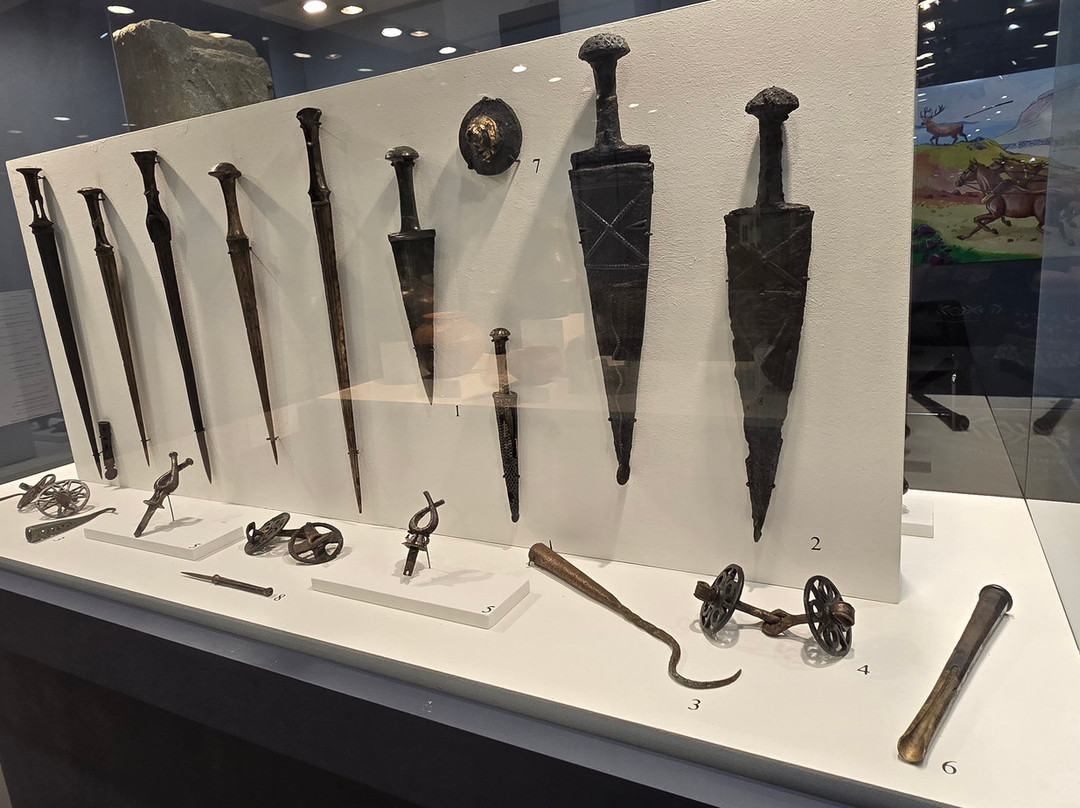
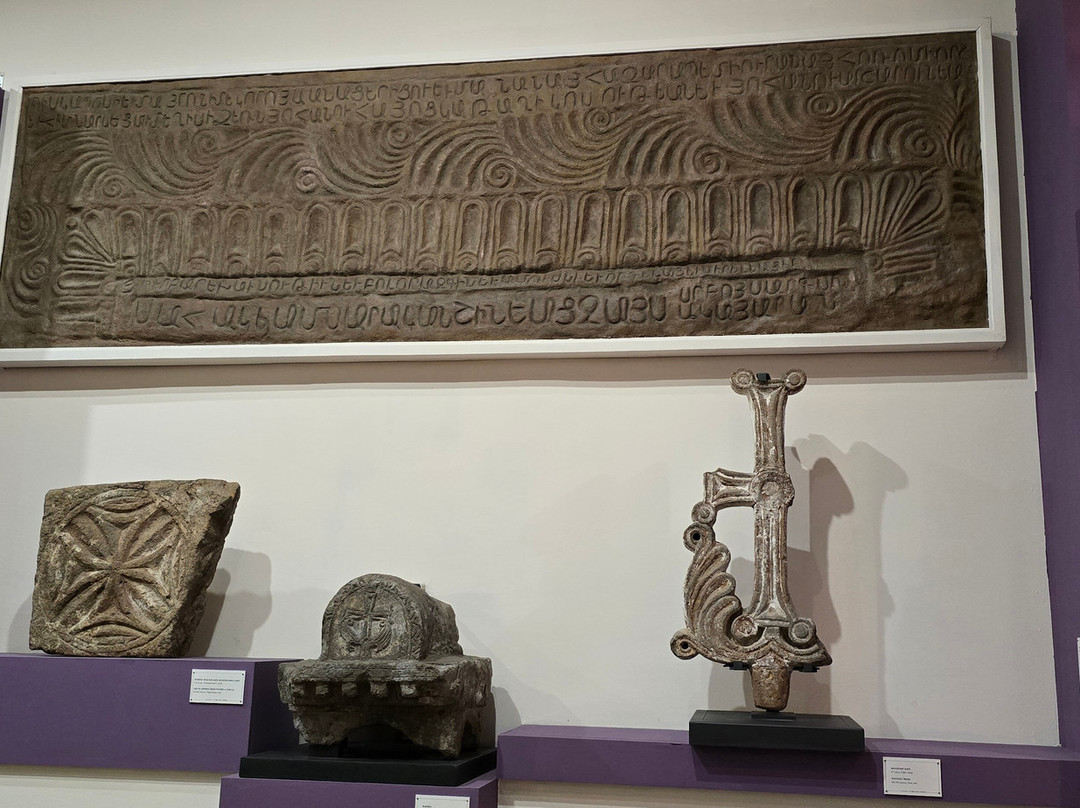
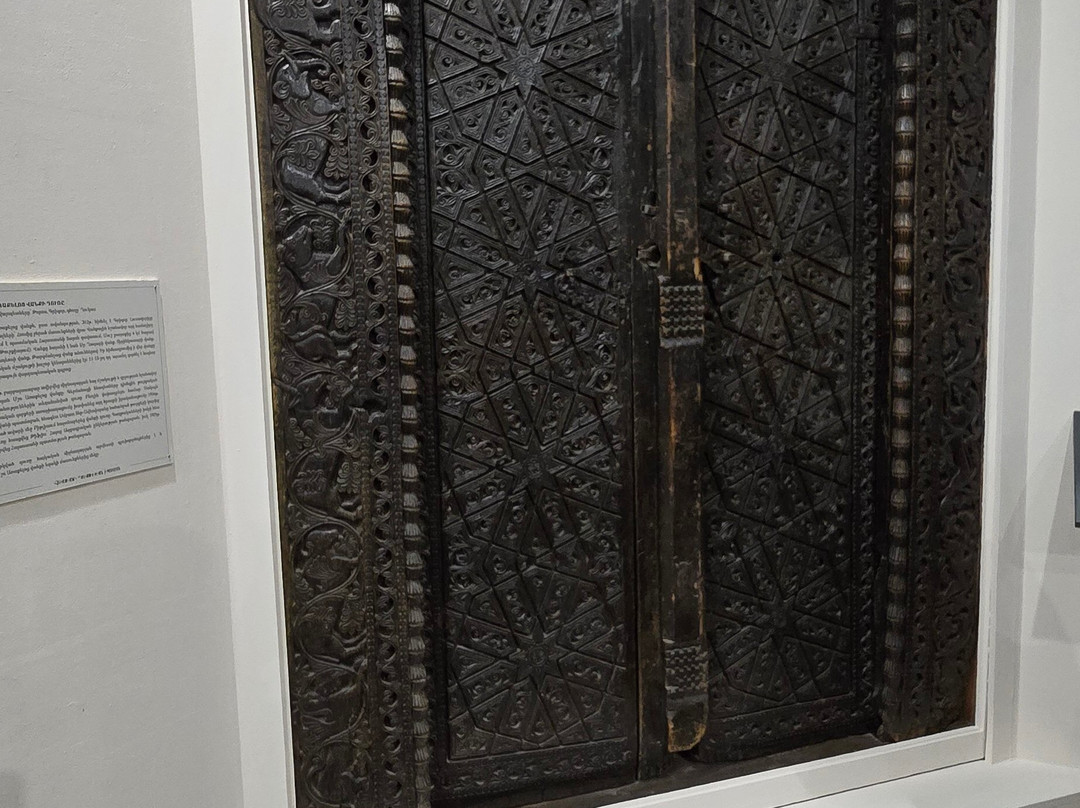
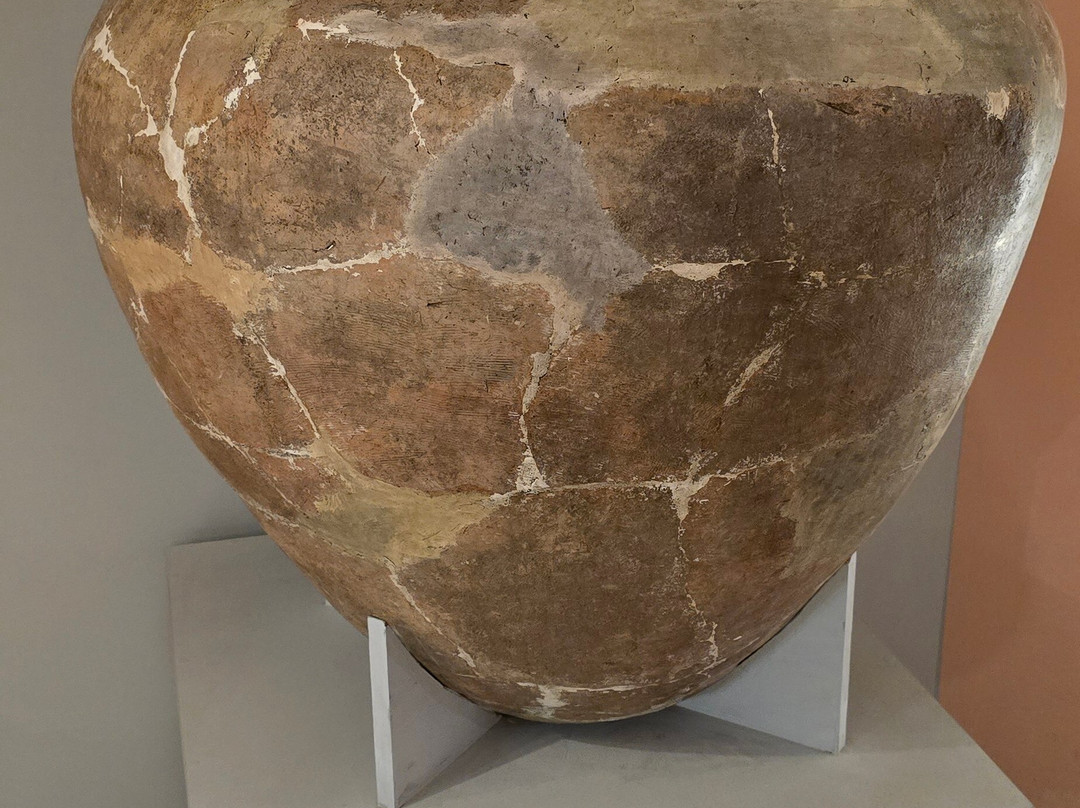
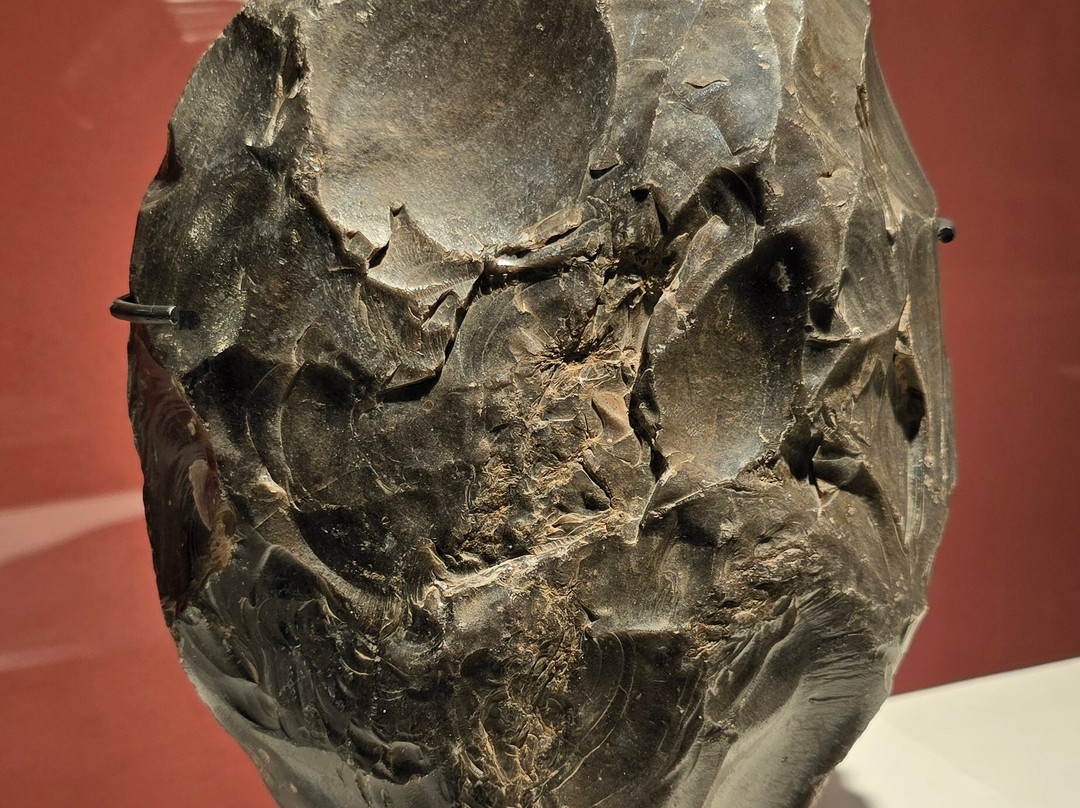
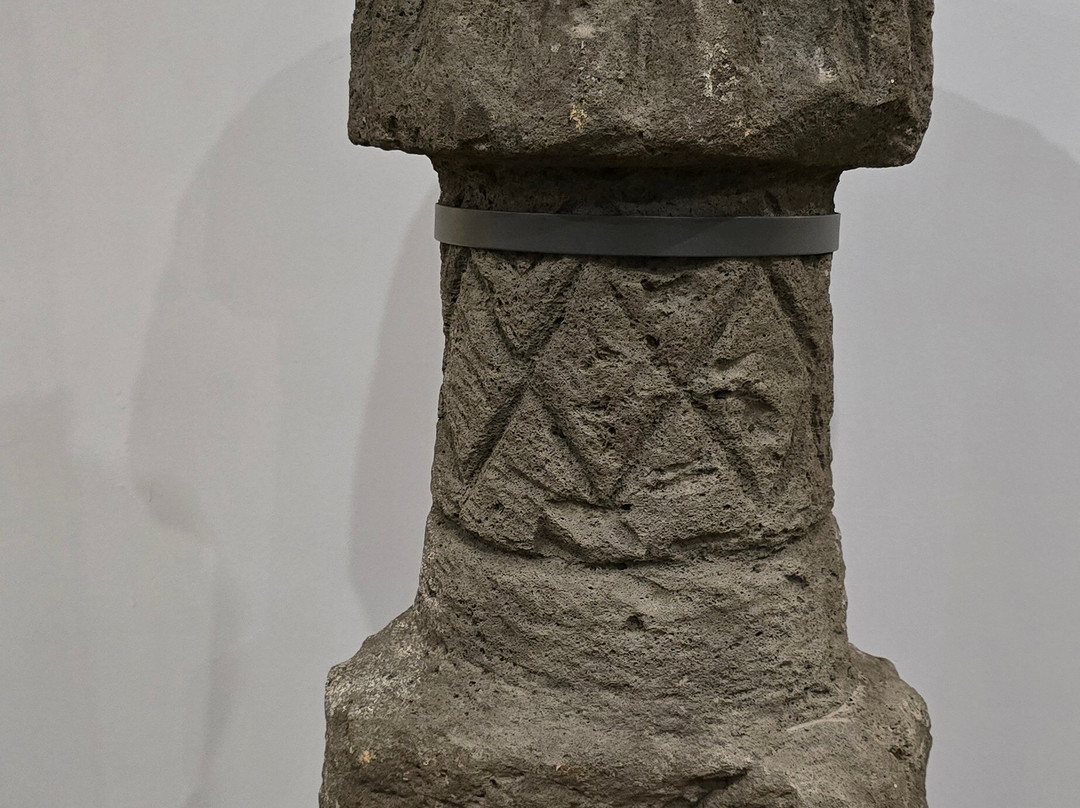
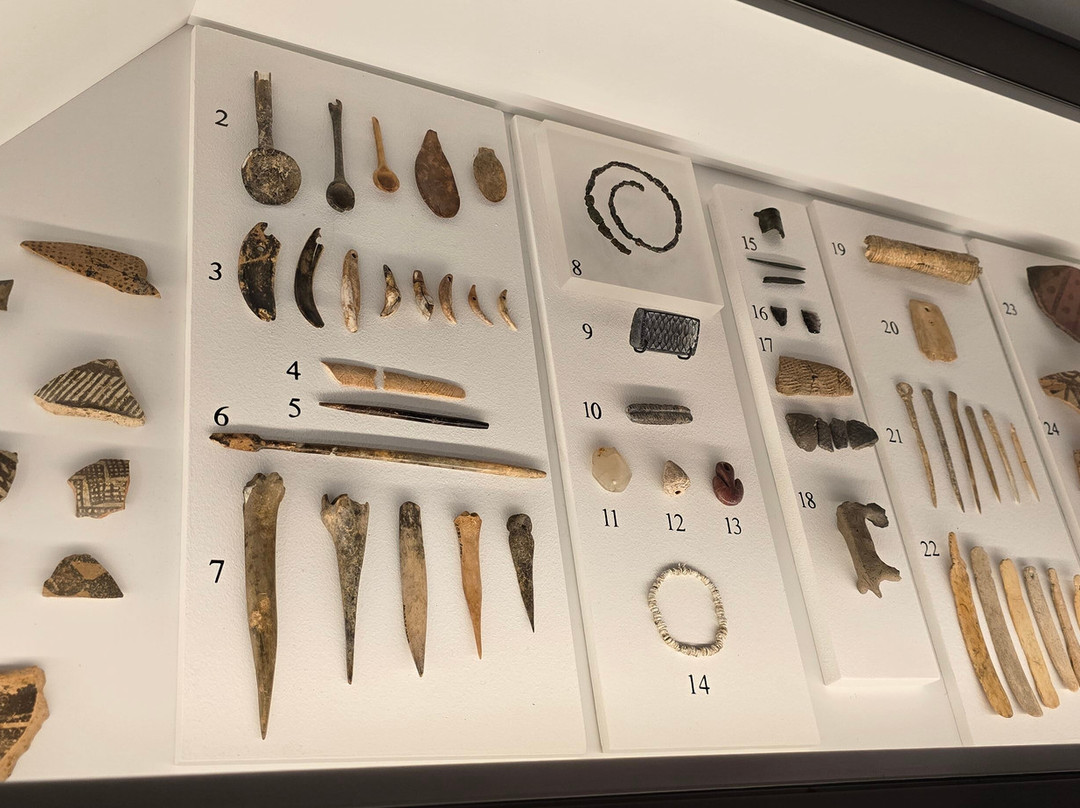
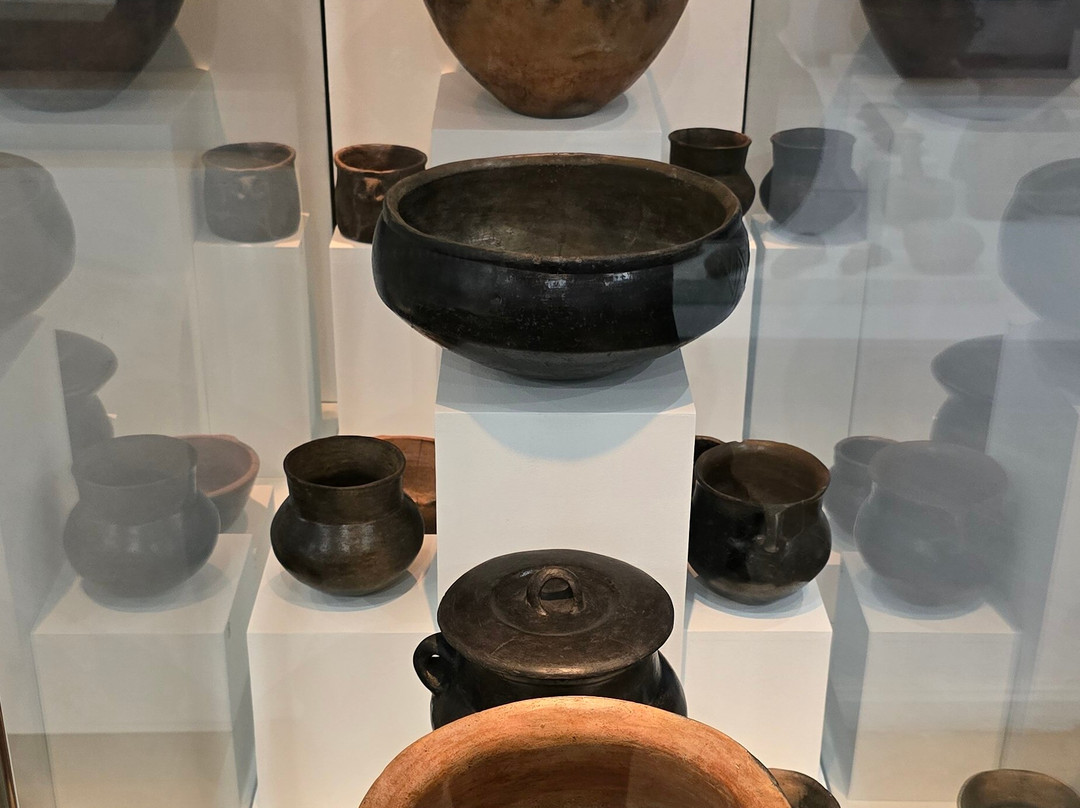
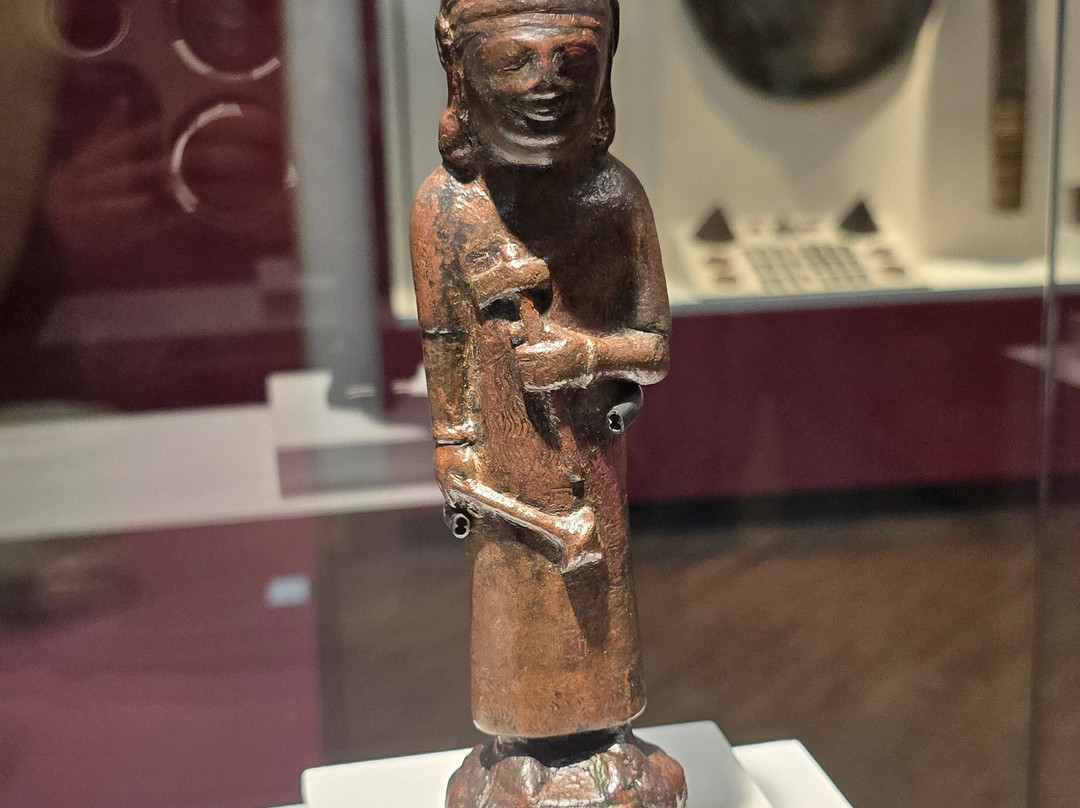
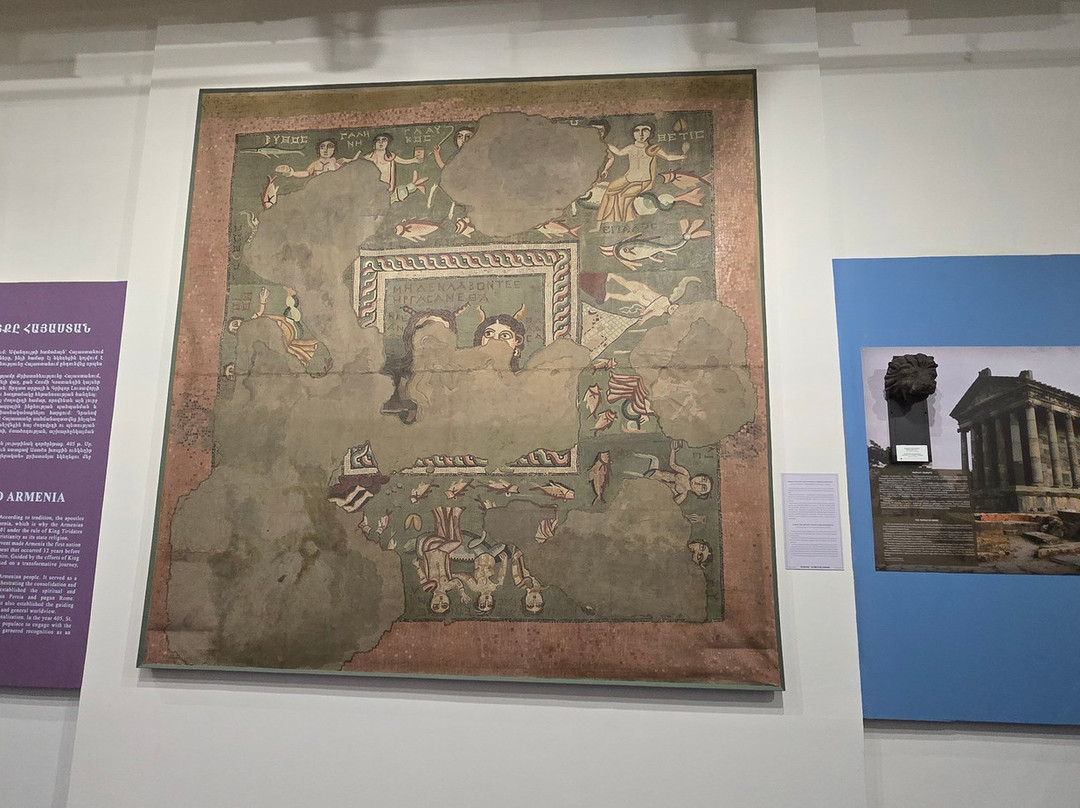
The museum collections are exhibited chronologically, from the paleolithic simple tools, till the medieval ages through bronze and iron ages, Urartu period, Achaemenid period and Hellenistic period.
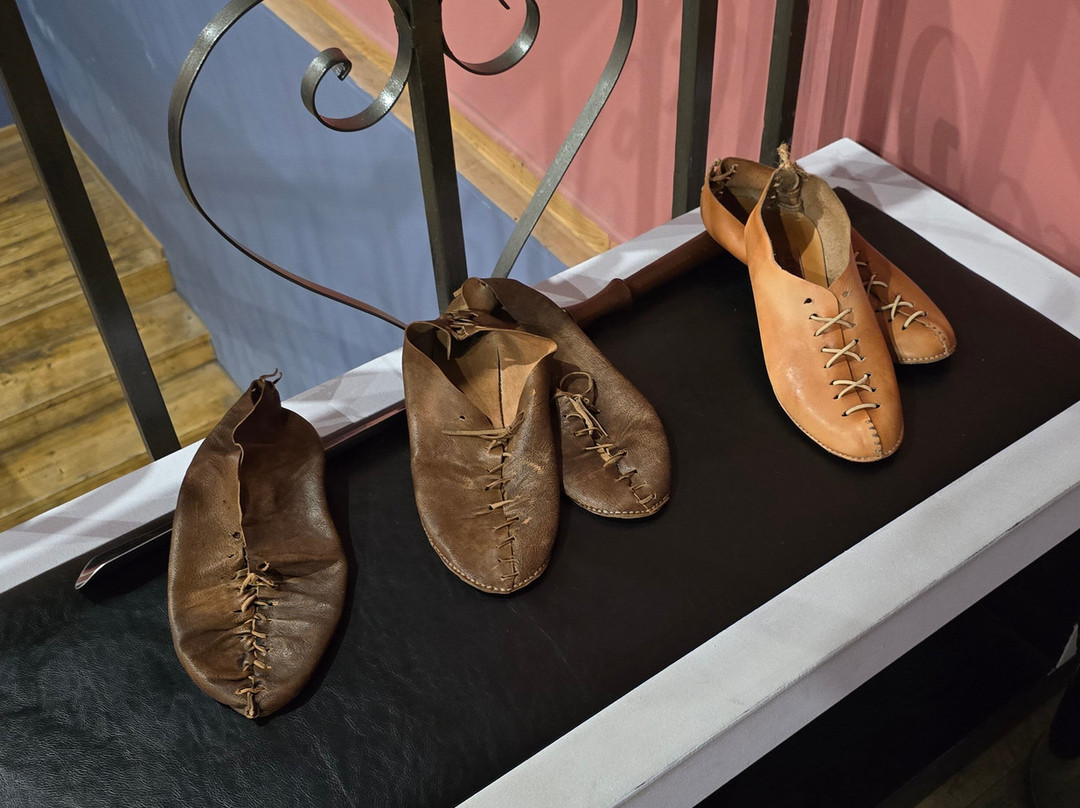
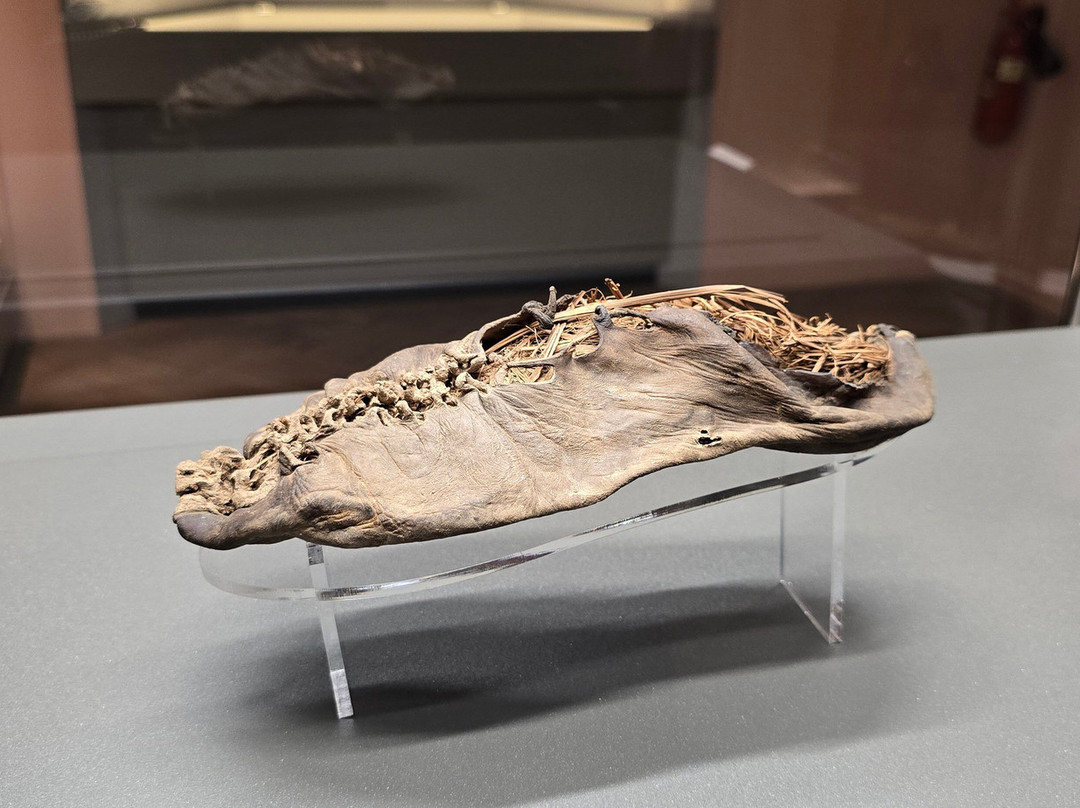
The most famous of all is the oldest leather shoe in the world dating back to 5500 years ago, discovered only in 2008 in the archaeological site of Areni-1, which makes it a couple of centuries older than the shoe of Otzi found in Italy. An identical replica is right beside it in order to allow the visitors to touch it and feel it. Some other replicas are available at the exit to be tried on, maybe we find the 5500 years old Cinderella!
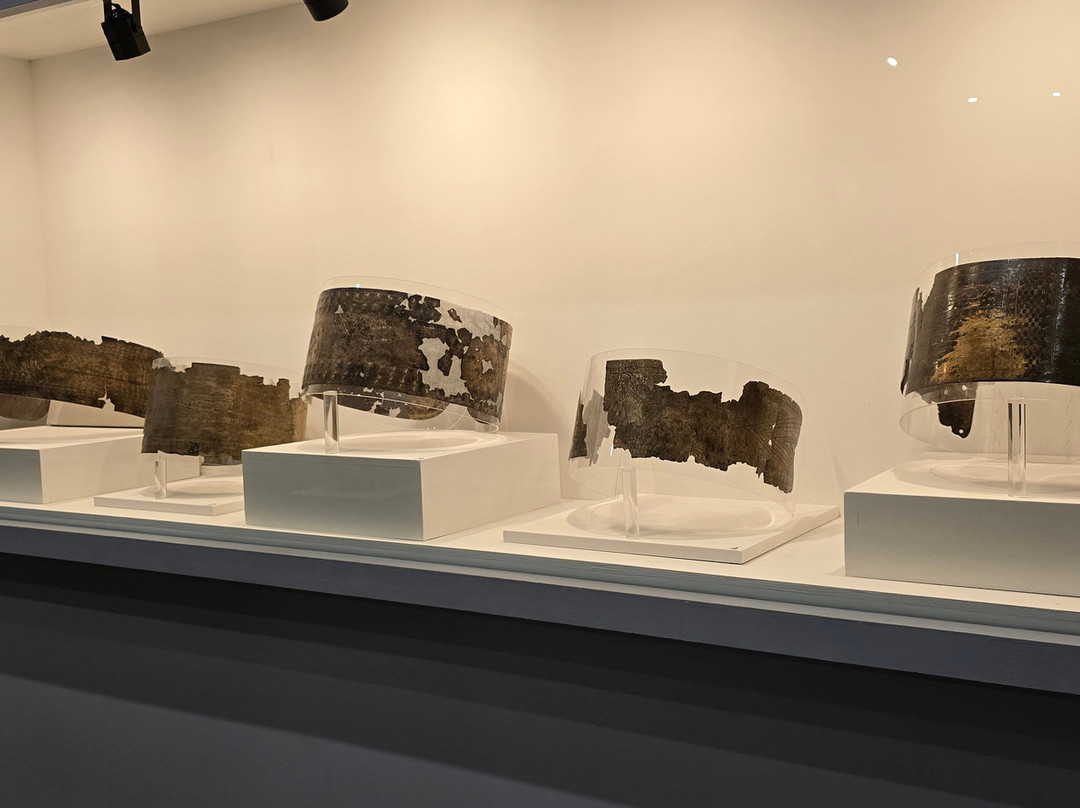
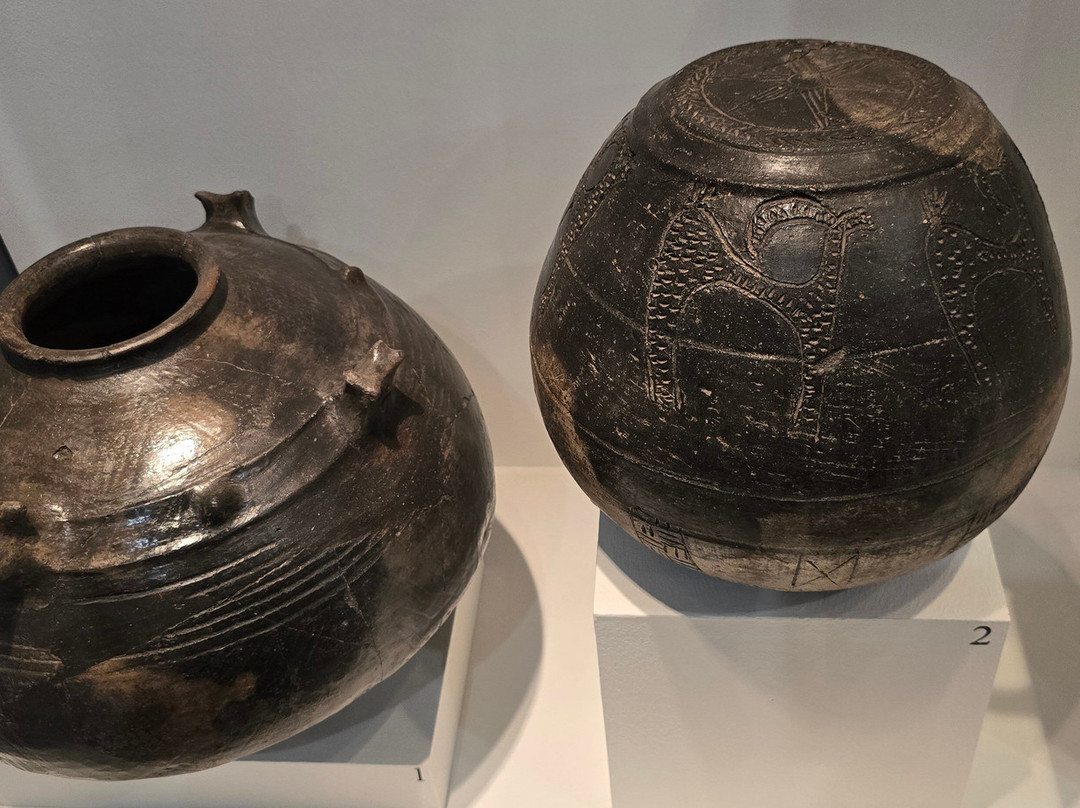
Other replicas also exist for some of the exhibited artifacts, with my favorite, an iron age highly crafted cup.
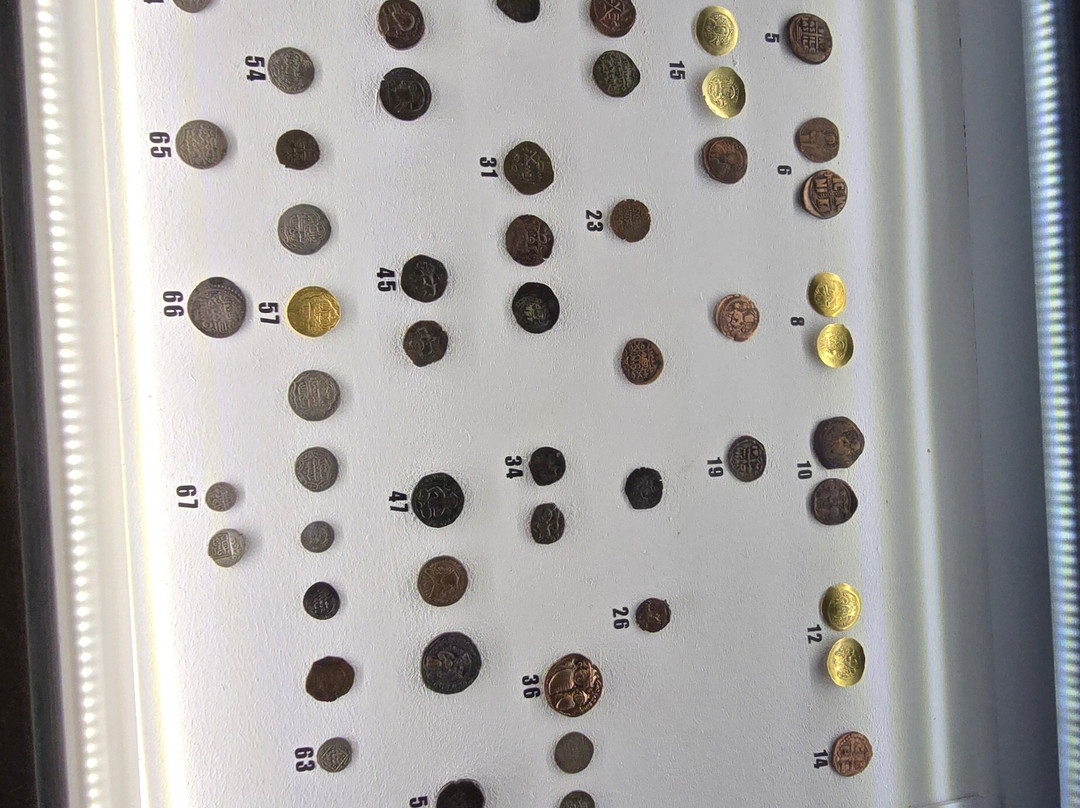
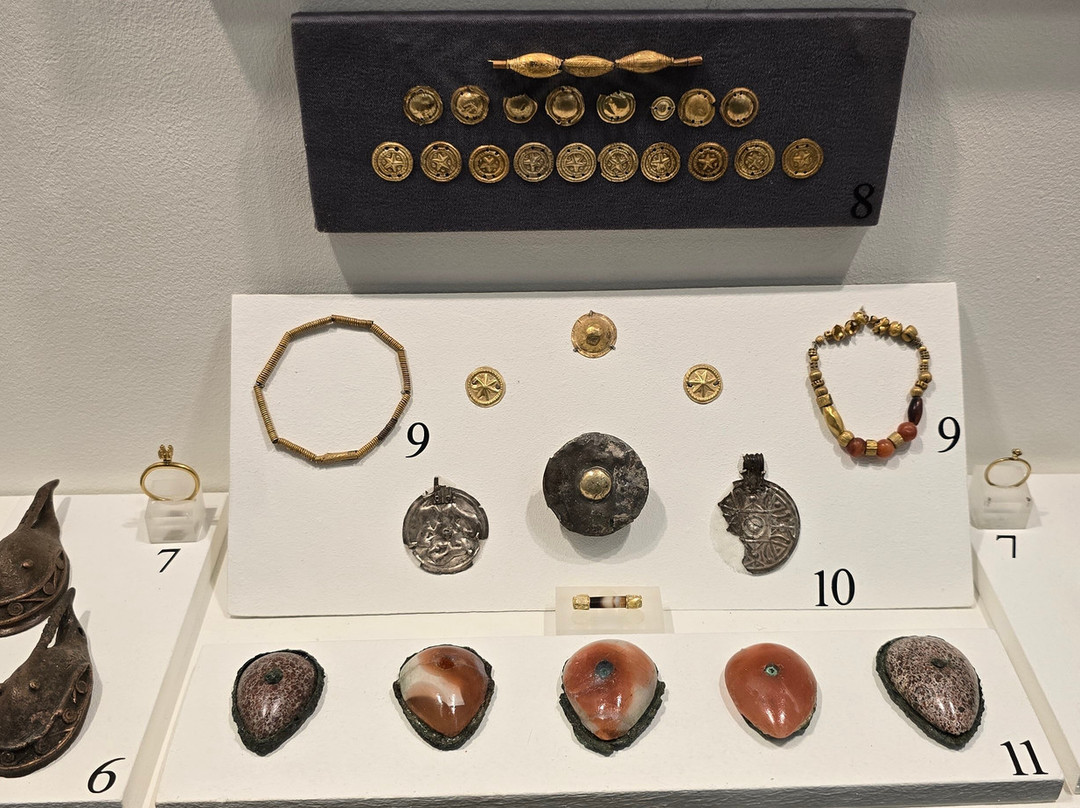
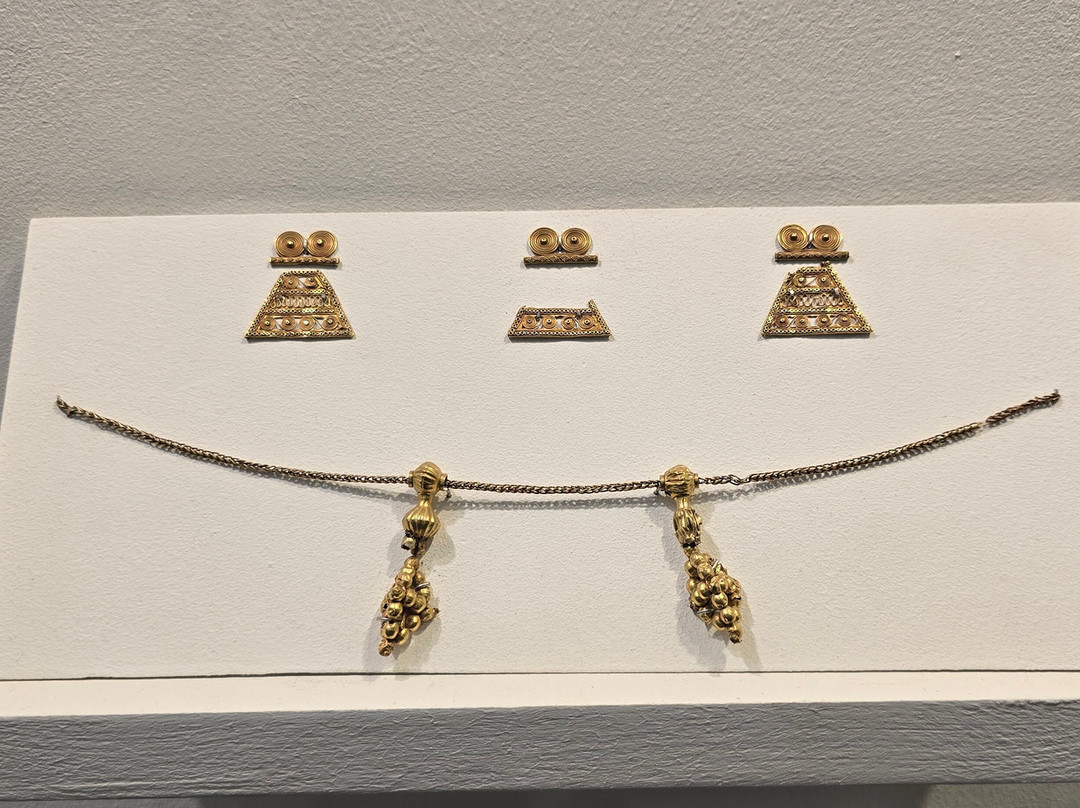
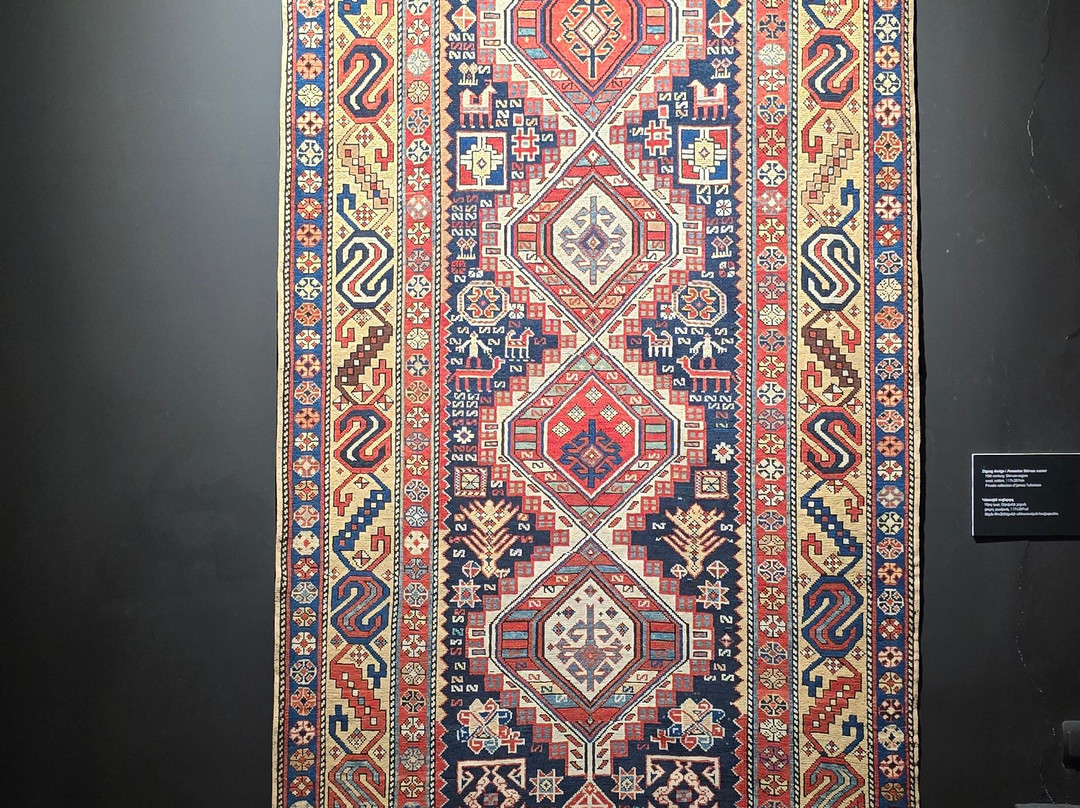
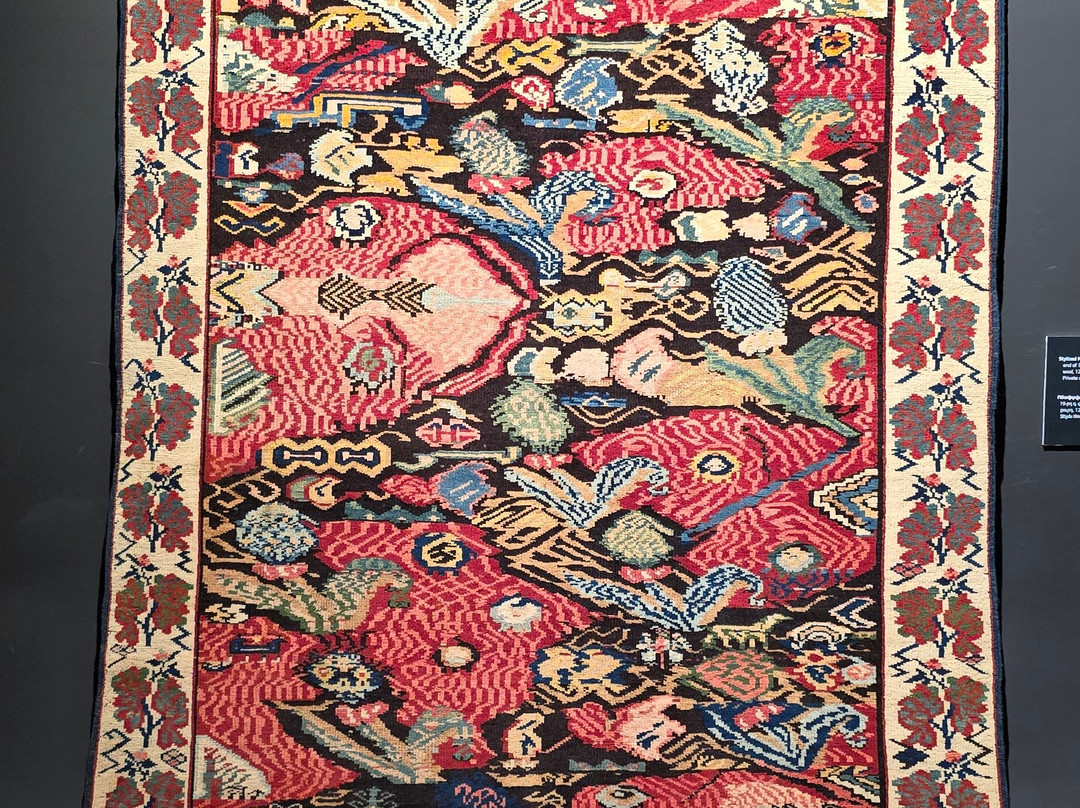
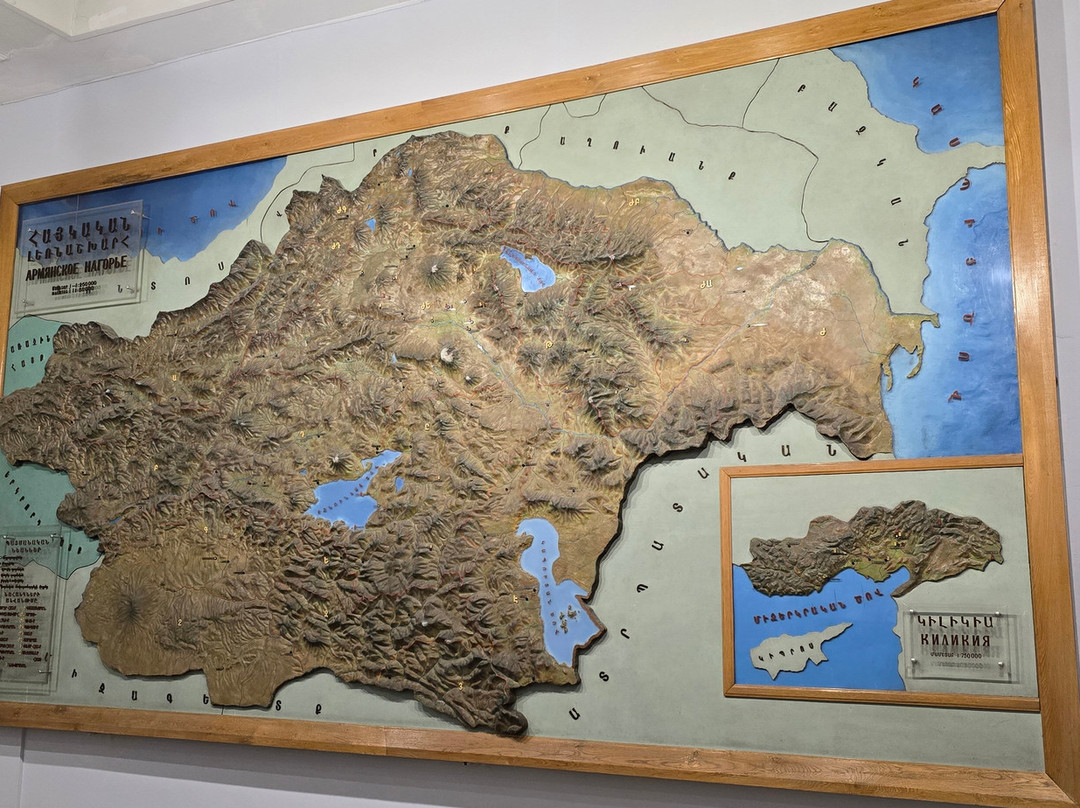
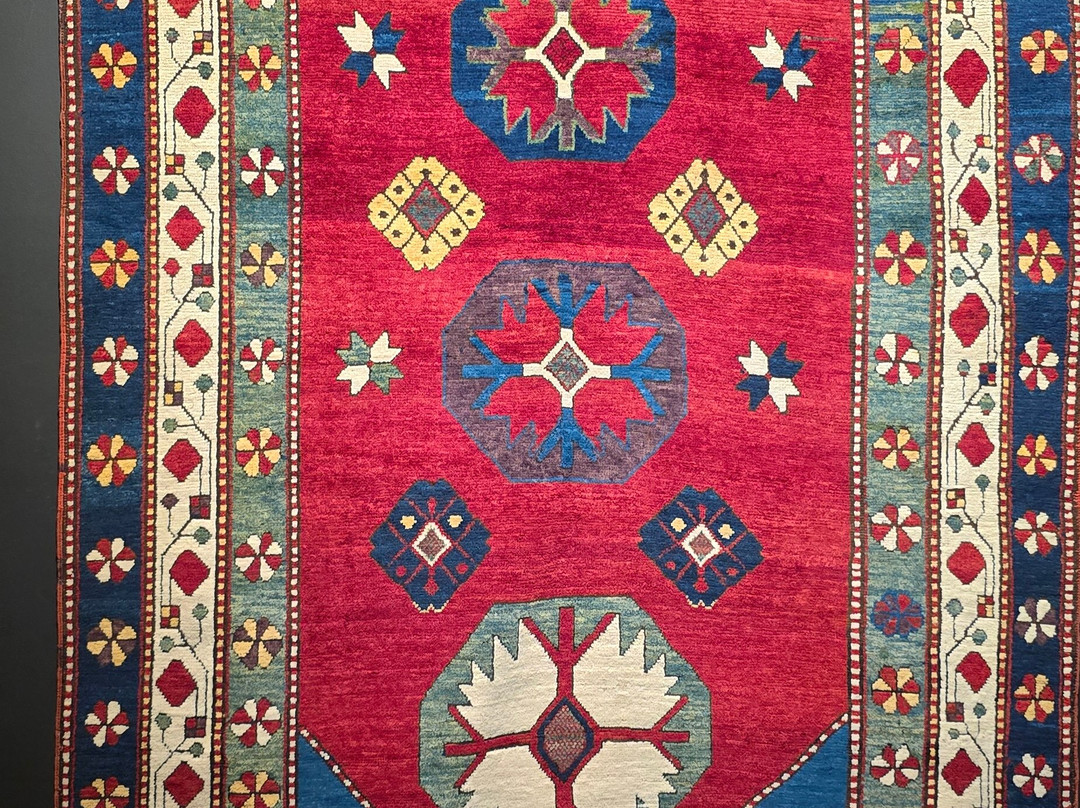
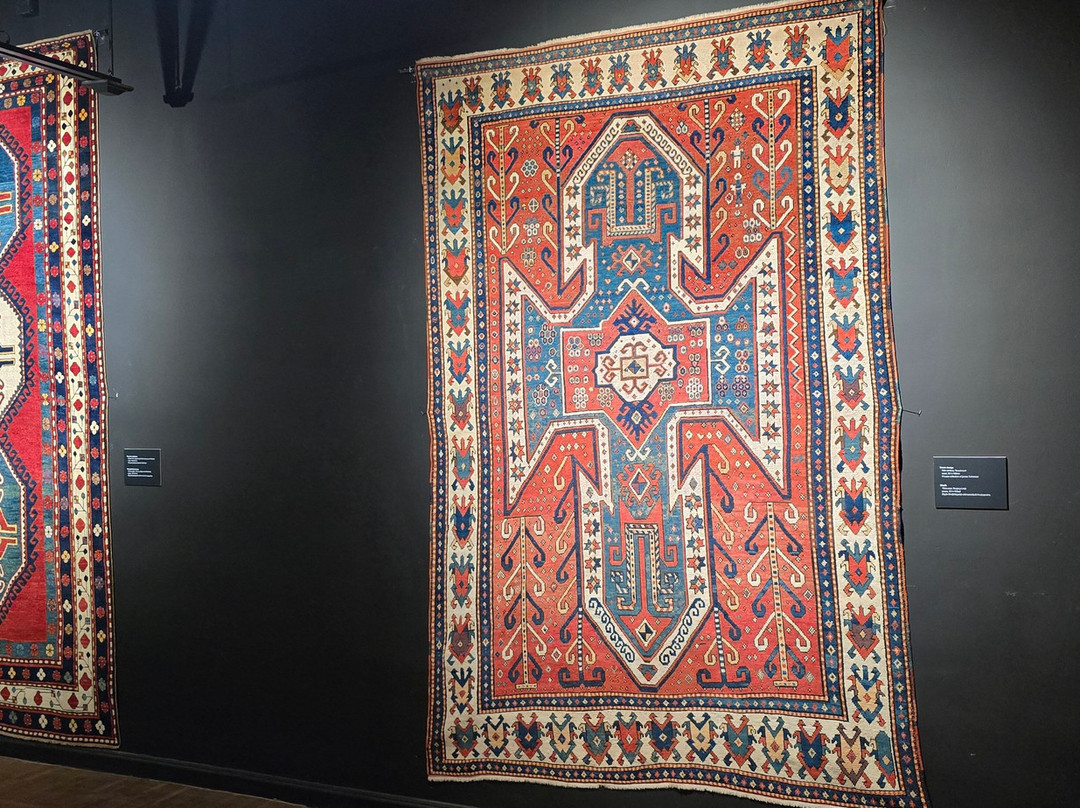
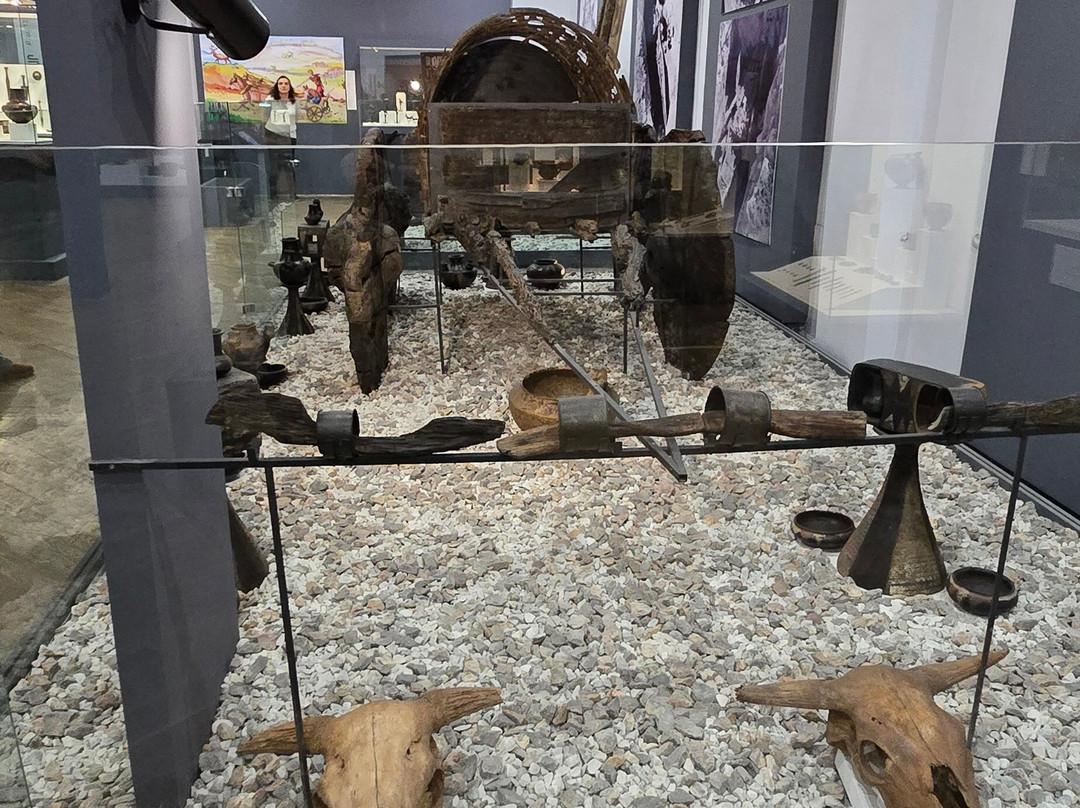
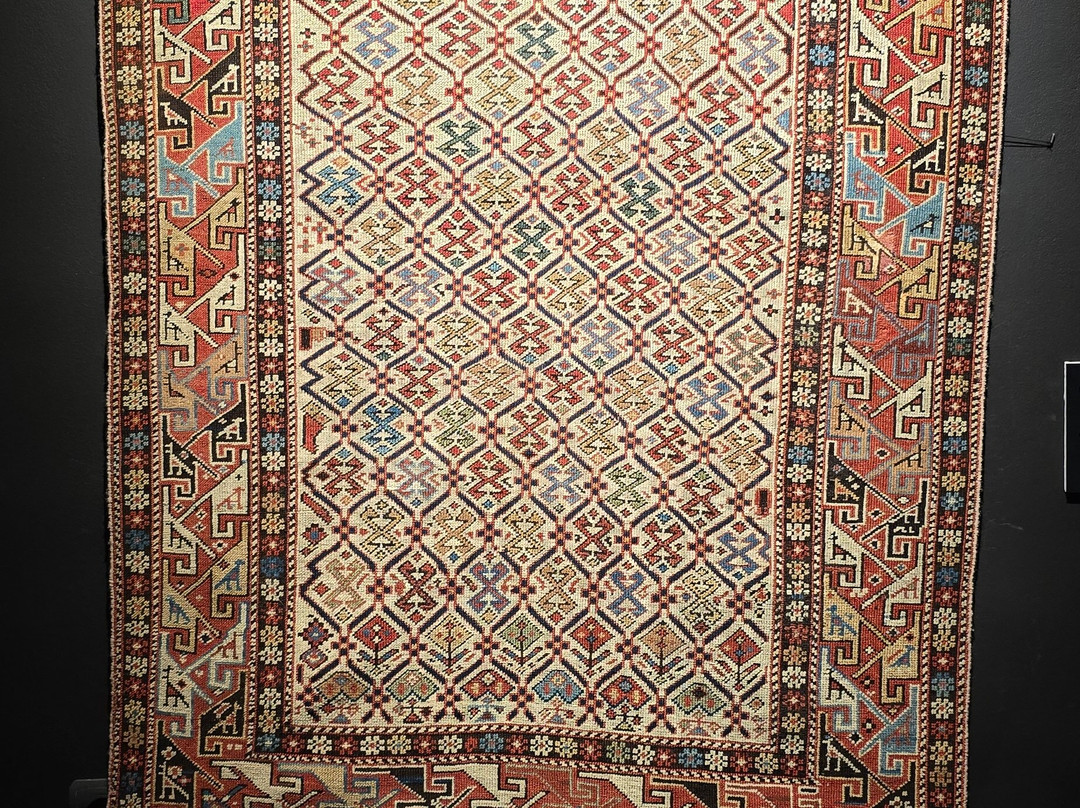
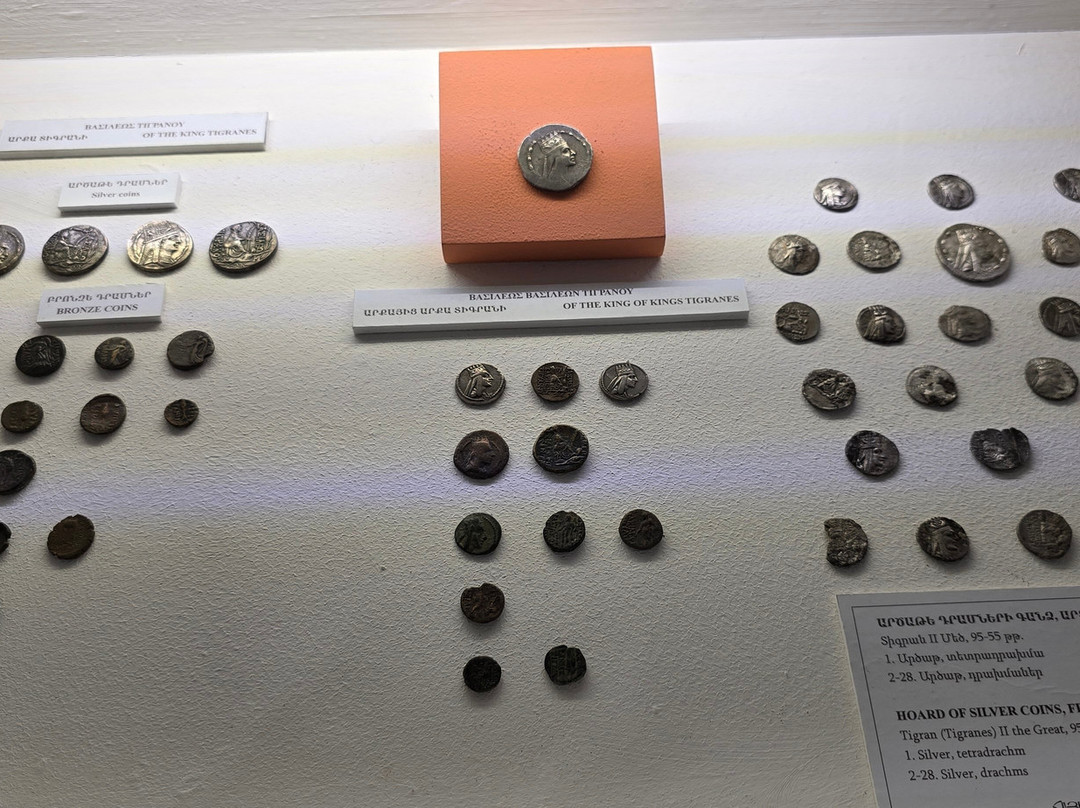
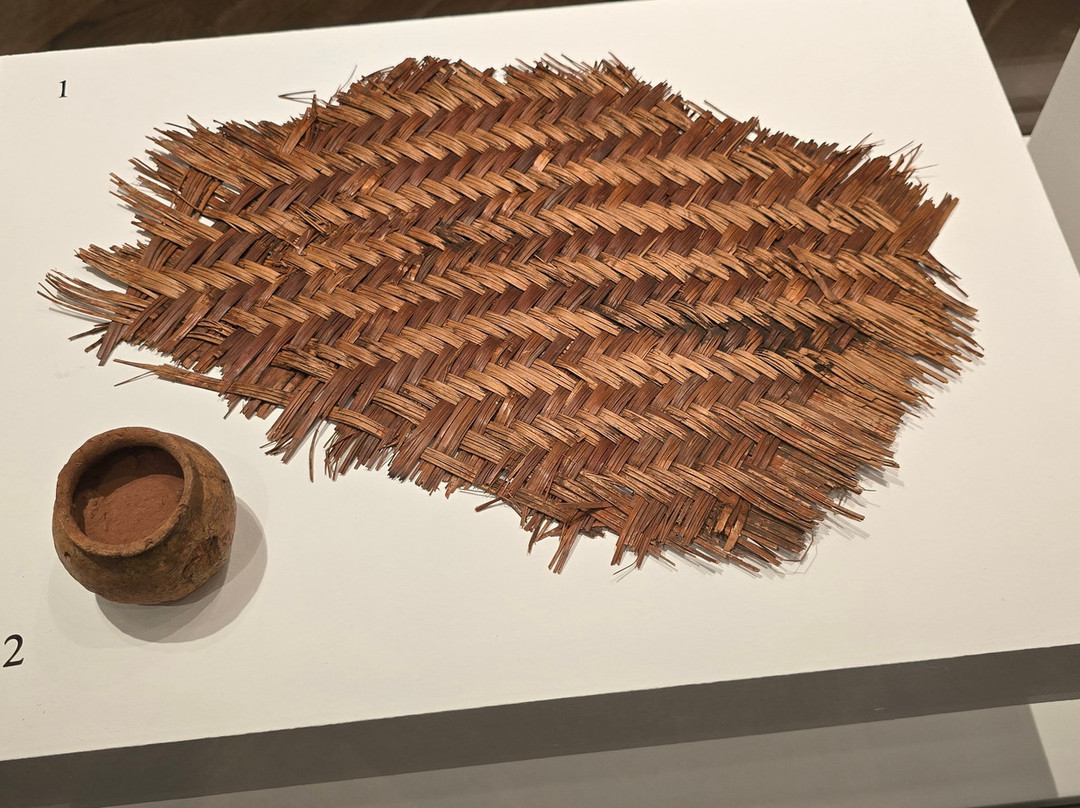
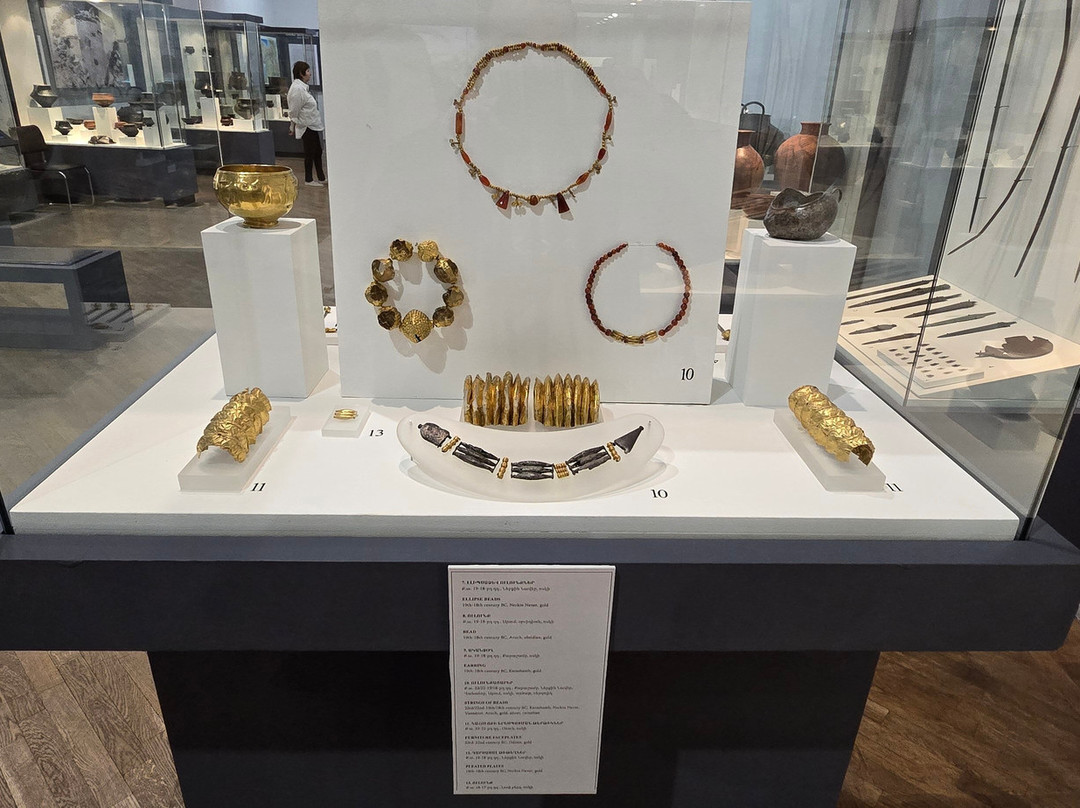
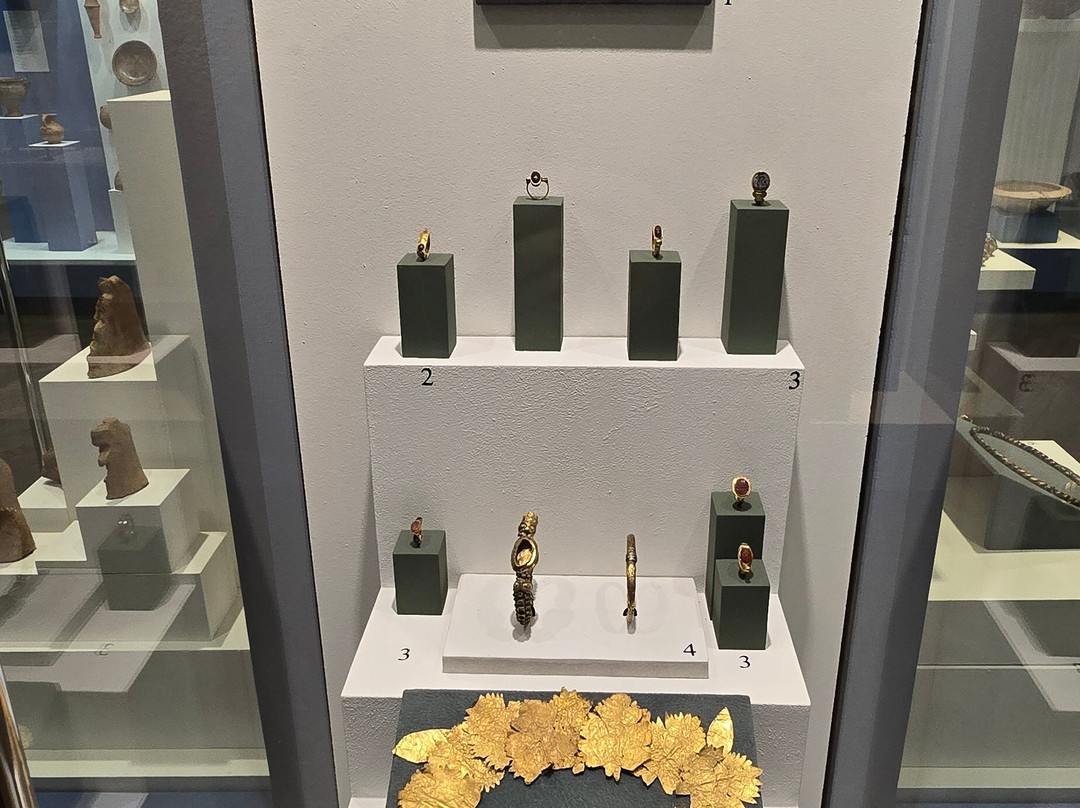
There is also a good collection of rugs, coins, jewelries, chariots and some maps showing the territory of the Armenians aver the ages.
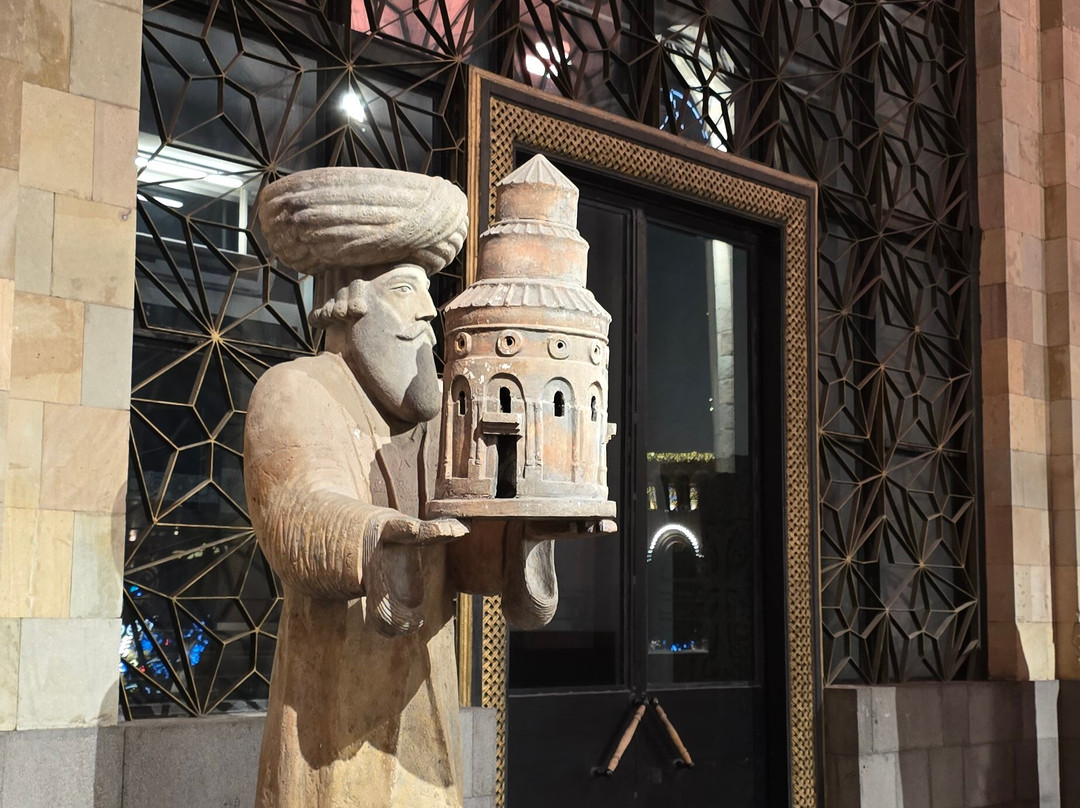
Right outside at the entrance, there is a 1993 replica of the statue of Armenian King Gagik I who ruled Armenia at the end of the tenth century, showing him standing and presenting a model of the church of St. Gregory, which he had commissioned to be built in Ani, while wearing an arab outfit and turban which reflects his ties with the abbasid rulers. Unfortunately the original statue was lost in WWI and an alleged piece of it somehow resides now in a turkish museum.
The current building, overlooking the main square in Yerevan, the republic square, houses 2 museums, the History Museum of Armenia as well as the National Gallery of Armenia. Tickets are available for each museum separately or combined.
The museum collections are exhibited chronologically, from the paleolithic simple tools, till the medieval ages through bronze and iron ages, Urartu period, Achaemenid period and Hellenistic period.
The most famous of all is the oldest leather shoe in the world dating back to 5500 years ago, discovered only in 2008 in the archaeological site of Areni-1, which makes it a couple of centuries older than the shoe of Otzi found in Italy. An identical replica is right beside it in order to allow the visitors to touch it and feel it. Some other replicas are available at the exit to be tried on, maybe we find the 5500 years old Cinderella!
Other replicas also exist for some of the exhibited artifacts, with my favorite, an iron age highly crafted cup.
There is also a good collection of rugs, coins, jewelries, chariots and some maps showing the territory of the Armenians aver the ages.
Right outside at the entrance, there is a 1993 replica of the statue of Armenian King Gagik I who ruled Armenia at the end of the tenth century, showing him standing and presenting a model of the church of St. Gregory, which he had commissioned to be built in Ani, while wearing an arab outfit and turban which reflects his ties with the abbasid rulers. Unfortunately the original statue was lost in WWI and an alleged piece of it somehow resides now in a turkish museum.
翻译:该博物馆始建于1921年,名称几经变更,最终于1921年定名为现名。
现址建筑俯瞰埃里温共和国广场,内设两座博物馆:亚美尼亚历史博物馆和亚美尼亚国家美术馆。游客可单独购买各博物馆的门票,也可购买联票。
博物馆藏品按时间顺序展出,从旧石器时代的简易工具,到中世纪、青铜时代、铁器时代、乌拉尔图时期、阿契美尼德王朝时期以及希腊化时期。
其中最著名的藏品是世界上最古老的皮鞋,距今已有5500年历史,于2008年在阿雷尼-1考古遗址被发现,比在意大利发现的奥茨冰人鞋还要古老几个世纪。旁边陈列着一双一模一样的复制品,供游客触摸感受。出口处还有一些复制品可供试穿,说不定我们能找到5500年前的灰姑娘呢!
一些展品也有复制品,其中我最喜欢的是一件铁器时代工艺精湛的杯子。
这里还收藏了丰富的地毯、钱币、珠宝、战车以及一些展现亚美尼亚历代疆域的地图。
入口处外,矗立着一座1993年复制的亚美尼亚国王加吉克一世的雕像。加吉克一世于十世纪末统治亚美尼亚,雕像中他身着阿拉伯服饰,头戴头巾,手持圣格雷戈里教堂的模型,这座教堂是他委托在阿尼建造的,这体现了他与阿拔斯王朝统治者的联系。可惜的是,原雕像在一战中遗失,据说它的一块碎片如今收藏于一家土耳其博物馆。
现址建筑俯瞰埃里温共和国广场,内设两座博物馆:亚美尼亚历史博物馆和亚美尼亚国家美术馆。游客可单独购买各博物馆的门票,也可购买联票。
博物馆藏品按时间顺序展出,从旧石器时代的简易工具,到中世纪、青铜时代、铁器时代、乌拉尔图时期、阿契美尼德王朝时期以及希腊化时期。
其中最著名的藏品是世界上最古老的皮鞋,距今已有5500年历史,于2008年在阿雷尼-1考古遗址被发现,比在意大利发现的奥茨冰人鞋还要古老几个世纪。旁边陈列着一双一模一样的复制品,供游客触摸感受。出口处还有一些复制品可供试穿,说不定我们能找到5500年前的灰姑娘呢!
一些展品也有复制品,其中我最喜欢的是一件铁器时代工艺精湛的杯子。
这里还收藏了丰富的地毯、钱币、珠宝、战车以及一些展现亚美尼亚历代疆域的地图。
入口处外,矗立着一座1993年复制的亚美尼亚国王加吉克一世的雕像。加吉克一世于十世纪末统治亚美尼亚,雕像中他身着阿拉伯服饰,头戴头巾,手持圣格雷戈里教堂的模型,这座教堂是他委托在阿尼建造的,这体现了他与阿拔斯王朝统治者的联系。可惜的是,原雕像在一战中遗失,据说它的一块碎片如今收藏于一家土耳其博物馆。


© 2026 Tripadvisor 版权所有。
部分照片由 VFM Leonardo 提供。
TripAdvisor公司对外部网站的内容一概不负责。优惠价格中不含税和其他费用。
ICP证:沪B2-20200433
沪ICP备20013175号
 沪公网安备31010502005427号
鹰程信息技术(上海)有限公司