下载App
资质规则
旅行
账户
Tualie
Imposing heights and views
Wernerkapelle的点评
点评:“… Above the Byzantine church, halfway up the slope, lies another church in ruins, of the fifteenth century, built of red sandstone, without doors, roof or stained-glass windows; a magnificent skeleton that stands proudly against the sky… to climb by a beautiful starlight, to the ruins of the Gothic church which was dedicated to Saint Werner, who was martyred in Oberwesel...” (excerpts from The Rhine (around 1840), Lettre XVIII by Victor Hugo).
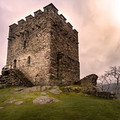
Not so difficult to reach from street level, on the way to Stahleck castle, this chapel dedicated to Werner was built over a pre-existed chapel dedicated Kunibert of Cologne. As fellow reviewers who already wrote most of the history about this chapel, Werner was worshiped as a saint until he was removed in 1963 coinciding with the papacy days of Pope John XXIII.
Right, is just a building skeleton that dates from the High Medieval Age, in Rayonnant style, built to “compensate a victim” but now part of the Romantik Rhine landscape.
Not so difficult to reach from street level, on the way to Stahleck castle, this chapel dedicated to Werner was built over a pre-existed chapel dedicated Kunibert of Cologne. As fellow reviewers who already wrote most of the history about this chapel, Werner was worshiped as a saint until he was removed in 1963 coinciding with the papacy days of Pope John XXIII.
Right, is just a building skeleton that dates from the High Medieval Age, in Rayonnant style, built to “compensate a victim” but now part of the Romantik Rhine landscape.
翻译:“……在拜占庭教堂上方,半山腰处,坐落着另一座十五世纪的教堂遗址,由红色砂岩建成,没有门、屋顶和彩色玻璃窗;它雄伟的骨架傲然屹立于天际……在美丽的星光下攀登,便可到达这座哥特式教堂的遗址,它供奉着在奥伯韦塞尔殉道的圣维尔纳……”(摘自维克多·雨果的《莱茵河》(约1840年),第十八封信)。
从街道前往施塔莱克城堡的路上,并不难到达这座供奉维尔纳的小教堂。它建于一座原先供奉科隆的库尼伯特的小教堂之上。正如其他评论家已经撰写了关于这座小教堂的大部分历史一样,维尔纳一直被尊奉为圣人,直到1963年,也就是教皇约翰二十三世在位期间,他的圣像被移除。
没错,它只是一个可以追溯到中世纪盛期、采用辐射式建筑风格的建筑骨架,建造的目的是“补偿受害者”,但现在已成为浪漫莱茵河景观的一部分。
从街道前往施塔莱克城堡的路上,并不难到达这座供奉维尔纳的小教堂。它建于一座原先供奉科隆的库尼伯特的小教堂之上。正如其他评论家已经撰写了关于这座小教堂的大部分历史一样,维尔纳一直被尊奉为圣人,直到1963年,也就是教皇约翰二十三世在位期间,他的圣像被移除。
没错,它只是一个可以追溯到中世纪盛期、采用辐射式建筑风格的建筑骨架,建造的目的是“补偿受害者”,但现在已成为浪漫莱茵河景观的一部分。

© 2026 Tripadvisor 版权所有。
部分照片由 VFM Leonardo 提供。
TripAdvisor公司对外部网站的内容一概不负责。优惠价格中不含税和其他费用。
ICP证:沪B2-20200433
沪ICP备20013175号
 沪公网安备31010502005427号
鹰程信息技术(上海)有限公司