下载App
资质规则
旅行
账户
Brun066
It isn't any single monument or ruin that creates the magic of this place, but the ensemble as a whole.
米特勒的点评
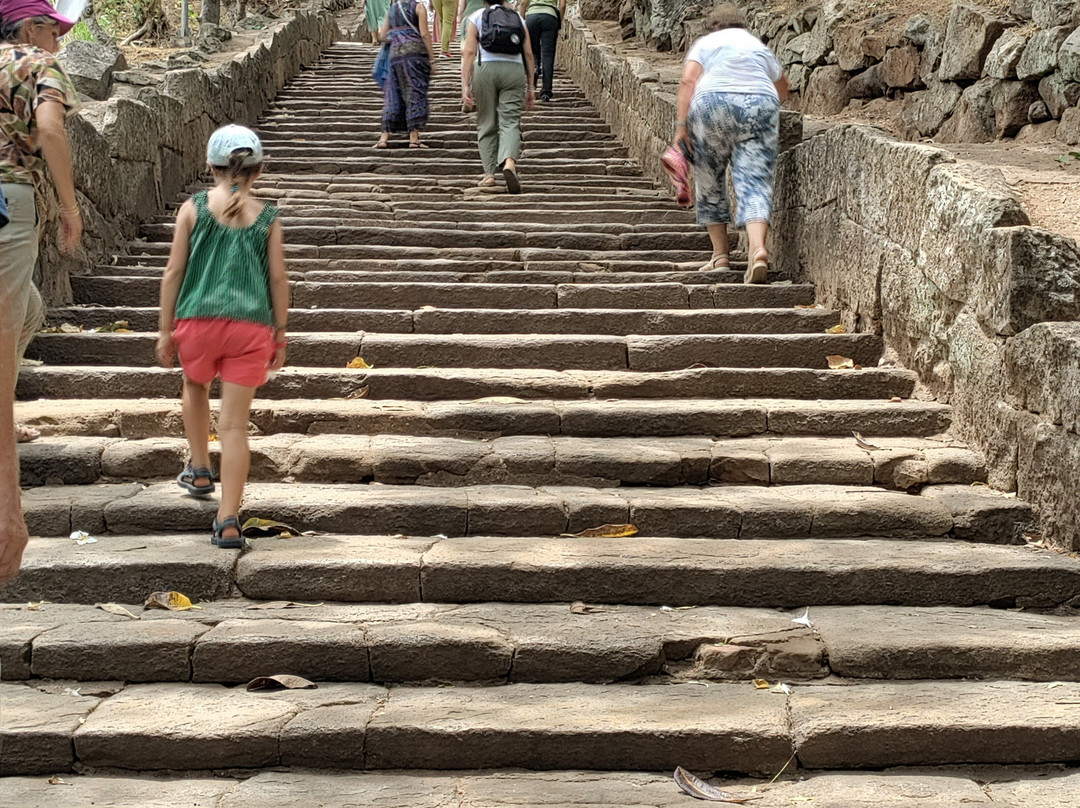
点评:Mihintale doesn't boast ancient monuments of such distinction that they could rival those of nearby Anuradhapura. However, it's set in a landscape of great beauty, typical of the plains in Sri Lanka’s north-central interior.
The site consists of a gently rolling plain, lush with tropical vegetation and dotted with "inselbergs", outcrops of ancient, extremely hard rock (granite and gneiss). These are resilient remnants that withstood an erosion process lasting millions of years; a process that halted when it encountered them.
At Mihintale, the site’s sanctification drew inspiration from these rocky outcrops, using them as the setting for a pivotal event in the island's identity: the beginning of the conversion of the majority of Sri Lanka's population to Buddhism (247 BCE). Thus, the flat summits of the largest outcrops became the foundations for great stupas, while the crevices between the boulders served as shelters for holy hermits... In short, the landscape - already remarkable in its own right - was transformed into a "sacred landscape", the stage for a fundamental religious narrative (unlike the secular narrative that defines the backdrop of Sigiriya).
Travelers will traverse various paths and visit the site's different buildings and points of interest. Yet, the value of each element derives not so much from its own intrinsic artistic qualities, as from its role as a "musical note" in an overarching symphony: one that deserves to be "heard".
翻译:米欣塔勒虽没有能与邻近的阿努拉德普勒相媲美的古老遗迹,但它地处一片极其美丽的景观之中,极具斯里兰卡中北部内陆平原的典型特色。
此地是一片起伏和缓的平原,热带植被繁茂,其间散布着许多“岛山”——即由极为坚硬的古老岩石(花岗岩和片麻岩)构成的岩体。这些是历经数百万年侵蚀仍屹立不倒的岩石残迹;当侵蚀作用遭遇这些岩石时便戛然而止。
在米欣塔莱,该遗址的神圣化过程正是从这些岩石峭壁中汲取灵感,将其作为塑造斯里兰卡民族认同的关键事件的背景:即斯里兰卡大部分民众开始皈依佛教的时刻(公元前247年)。正因如此,那些最大的岩石峭壁上的平坦顶部便成了建造巨大佛塔的基石。那些巨石间的缝隙则成了虔诚的隐士们的栖身之所……简而言之,这片原本就十分迷人的自然景观,随后便演变成了一片“神圣景观”,成为某种重要宗教叙事的舞台(这与构成锡吉里耶历史背景的世俗叙事截然不同)。
游客们将沿着多条路径前行,参观遗址中的各类建筑及景点。然而……每个元素的价值并非源于其自身固有的艺术特质,而是源于它作为整个交响乐中“音符”的角色——一个值得被“聆听”的音符。

© 2026 Tripadvisor 版权所有。
部分照片由 VFM Leonardo 提供。
TripAdvisor公司对外部网站的内容一概不负责。优惠价格中不含税和其他费用。
ICP证:沪B2-20200433
沪ICP备20013175号
 沪公网安备31010502005427号
鹰程信息技术(上海)有限公司