下载App
资质规则
旅行
账户
Brun066
This is the single most impressive toulou, and therefore unlikely to be forgotten.
裕昌楼的点评
点评:Our visit to the Hakka toulous (circular houses) began at Yuchanglou, which is believed to be the largest and oldest of the toulous (its construction dates back to the 14th century).
Yuchanglou is reached from the road by crossing a stream that runs alongside the toulou. The stream can be crossed via a bridge or via a walkway made of large rectangular stones placed on the stream bed: a feature we've also noted elsewhere in the region.
The toulou is truly impressive, occupying nearly 2.5 hectares of land, five floors, and 270 rooms. We moved through the various floors, connected by numerous staircases, to observe the building's imposing features.
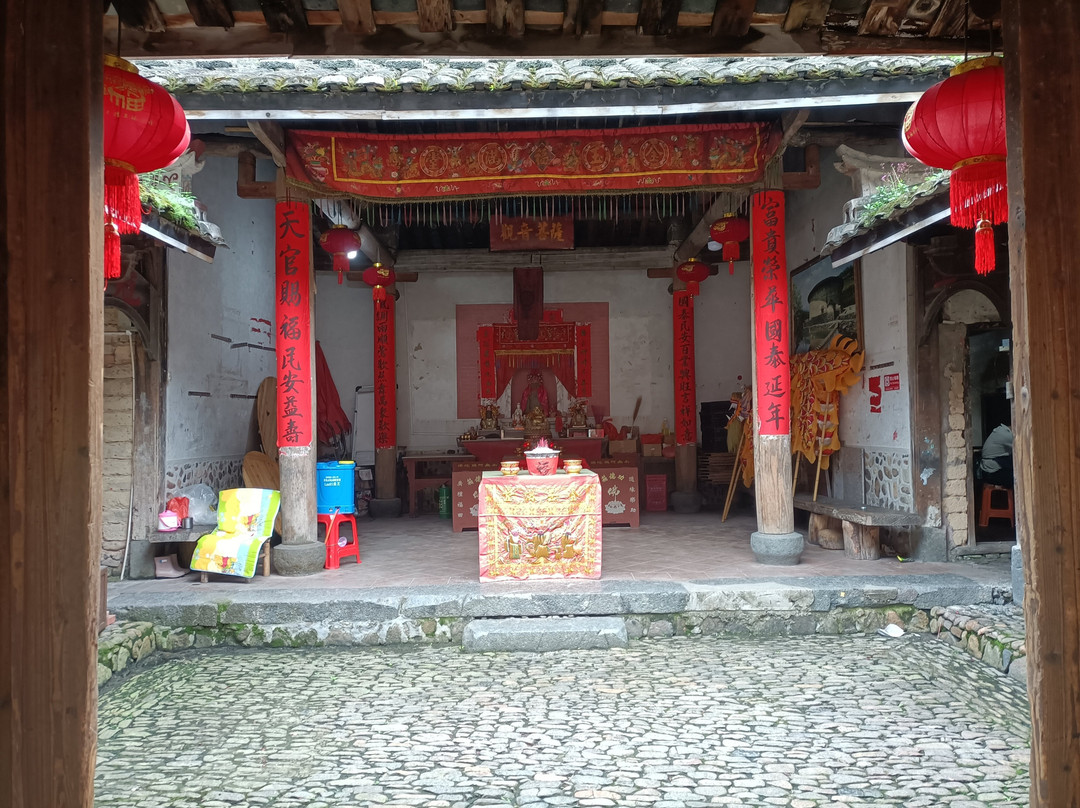
Inside the toulou, the "ancestral hall" is a real eye-catcher: it is located at the center of the circle.
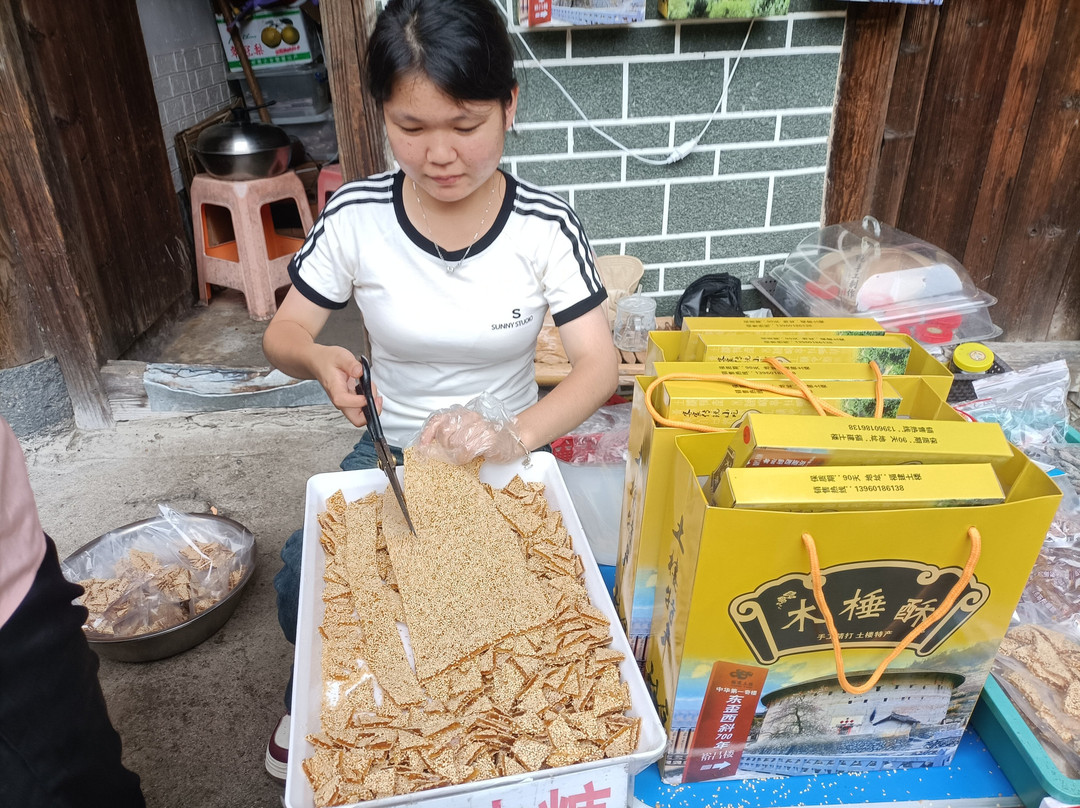
Several rooms on the ground floor are equipped to welcome guests, offering demonstrations of various crafts and sales, and even allowing you to sit inside and enjoy a cup of tea.
In essence, although other toulou are notable for their clustered layout, this is the most impressive single toulou and therefore unlikely to be forgotten.
Yuchanglou is reached from the road by crossing a stream that runs alongside the toulou. The stream can be crossed via a bridge or via a walkway made of large rectangular stones placed on the stream bed: a feature we've also noted elsewhere in the region.
The toulou is truly impressive, occupying nearly 2.5 hectares of land, five floors, and 270 rooms. We moved through the various floors, connected by numerous staircases, to observe the building's imposing features.
Inside the toulou, the "ancestral hall" is a real eye-catcher: it is located at the center of the circle.
Several rooms on the ground floor are equipped to welcome guests, offering demonstrations of various crafts and sales, and even allowing you to sit inside and enjoy a cup of tea.
In essence, although other toulou are notable for their clustered layout, this is the most impressive single toulou and therefore unlikely to be forgotten.
翻译:我们的客家土楼之旅始于裕昌楼,它被认为是土楼中规模最大、历史最悠久的一座(其建造时间可追溯至14世纪)。
从公路出发,穿过土楼旁的一条小溪即可到达裕昌楼。人们可以通过一座桥或一条由铺在河床上的长方形大石块砌成的步道过河:我们在该地区的其他地方也注意到了这一景观。
这座土楼令人印象深刻,占地近2.5公顷,共五层,拥有270个房间。我们穿过由众多楼梯连接的各个楼层,欣赏着建筑的宏伟气势。
在土楼内部,位于圆形中心的“祠堂”格外引人注目。
底层设有几间房间,用于接待客人,提供各种工艺品的展示和销售,甚至还允许客人在里面小憩品茗。
从本质上讲,虽然其他土楼以其集群布局而闻名,但这是令人印象深刻的单个土楼,因此不太可能被遗忘。
从公路出发,穿过土楼旁的一条小溪即可到达裕昌楼。人们可以通过一座桥或一条由铺在河床上的长方形大石块砌成的步道过河:我们在该地区的其他地方也注意到了这一景观。
这座土楼令人印象深刻,占地近2.5公顷,共五层,拥有270个房间。我们穿过由众多楼梯连接的各个楼层,欣赏着建筑的宏伟气势。
在土楼内部,位于圆形中心的“祠堂”格外引人注目。
底层设有几间房间,用于接待客人,提供各种工艺品的展示和销售,甚至还允许客人在里面小憩品茗。
从本质上讲,虽然其他土楼以其集群布局而闻名,但这是令人印象深刻的单个土楼,因此不太可能被遗忘。

© 2026 Tripadvisor 版权所有。
部分照片由 VFM Leonardo 提供。
TripAdvisor公司对外部网站的内容一概不负责。优惠价格中不含税和其他费用。
ICP证:沪B2-20200433
沪ICP备20013175号
 沪公网安备31010502005427号
鹰程信息技术(上海)有限公司