下载App
资质规则
旅行
账户

ah tee s
Spiritual mystique of Longmen
龙门石窟的点评
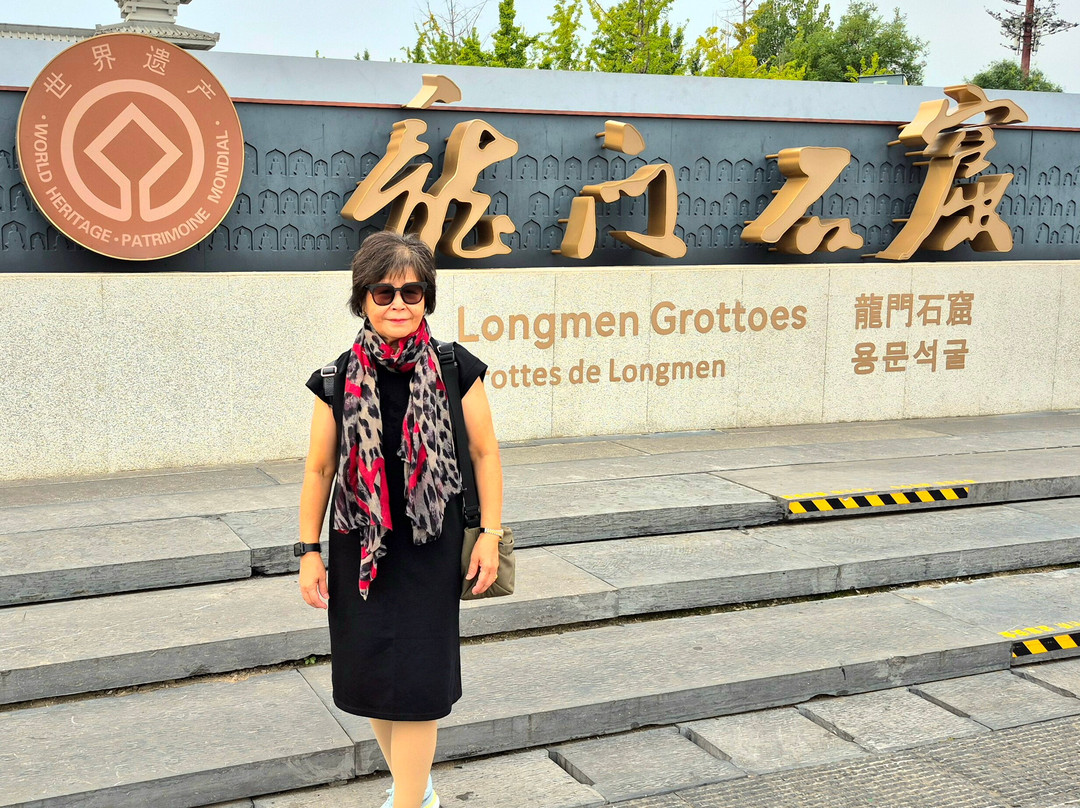
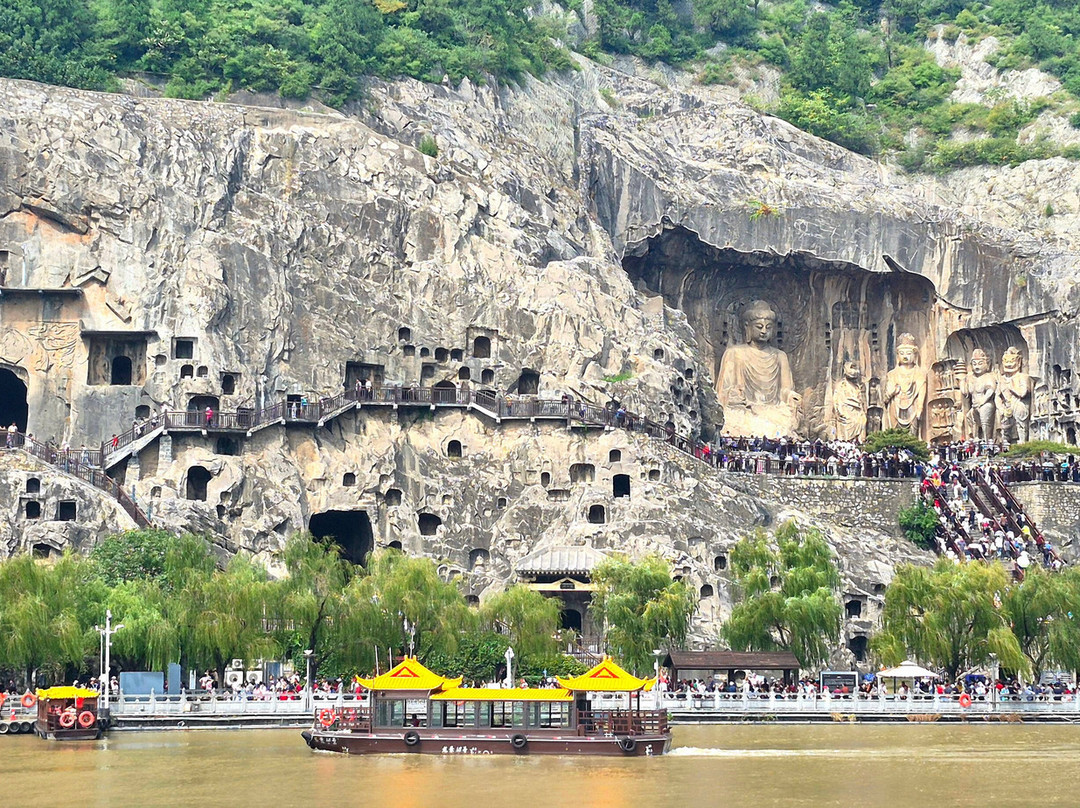
点评:The Longmen Grottoes stand as the pinnacle of Chinese Buddhist stone carving, with more than 110,000 statues carved into limestone cliffs along the Yi River, spanning over 1,400 years of dynastic history. Recognized by UNESCO in 2000 for their “outstanding manifestation of human artistic creativity,” they are celebrated as one of the “Four Great Grottoes of China.”
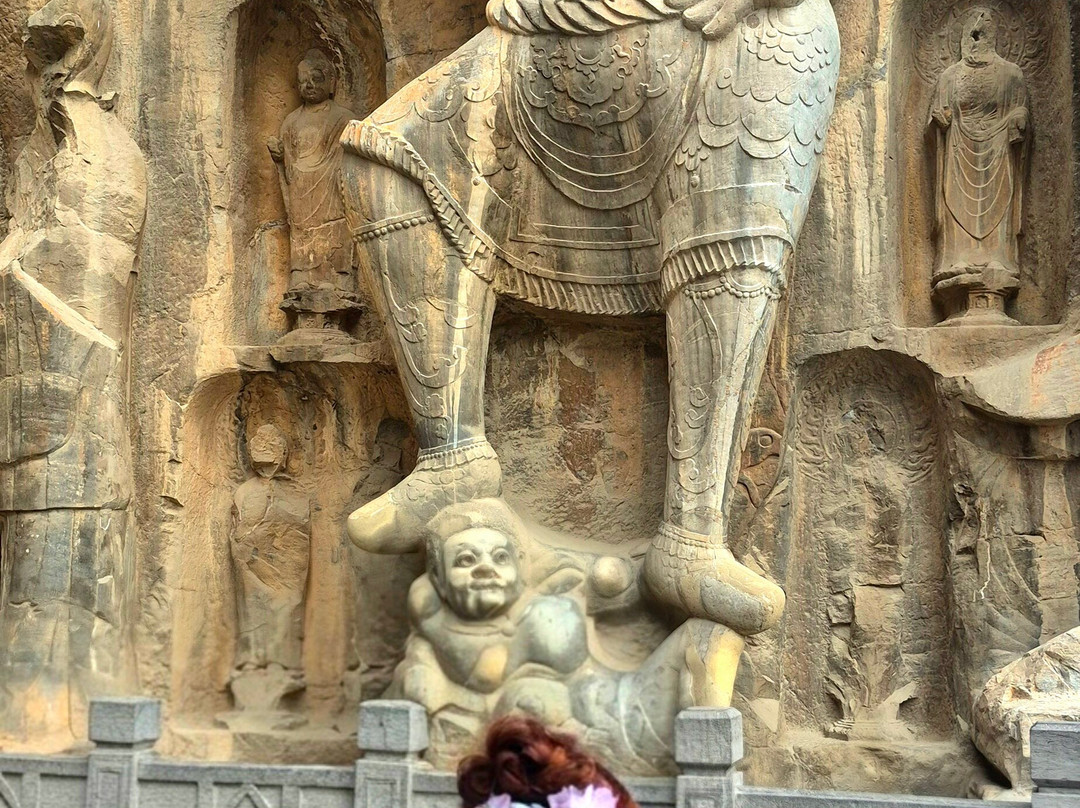
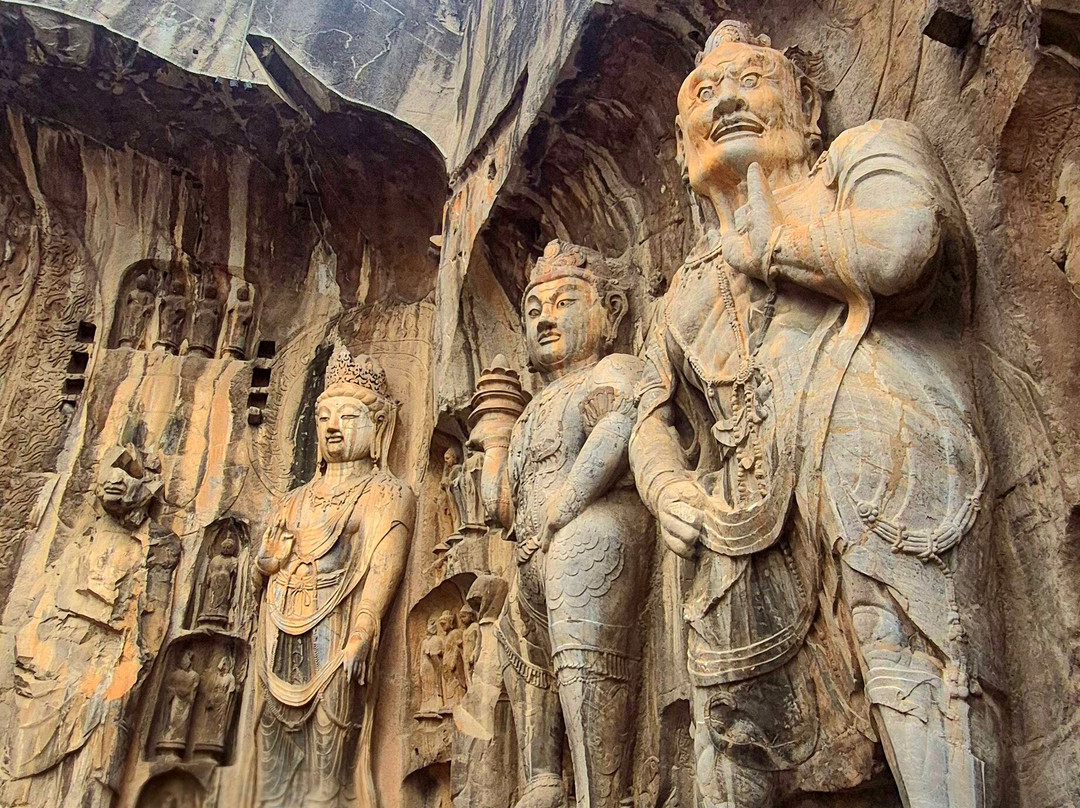
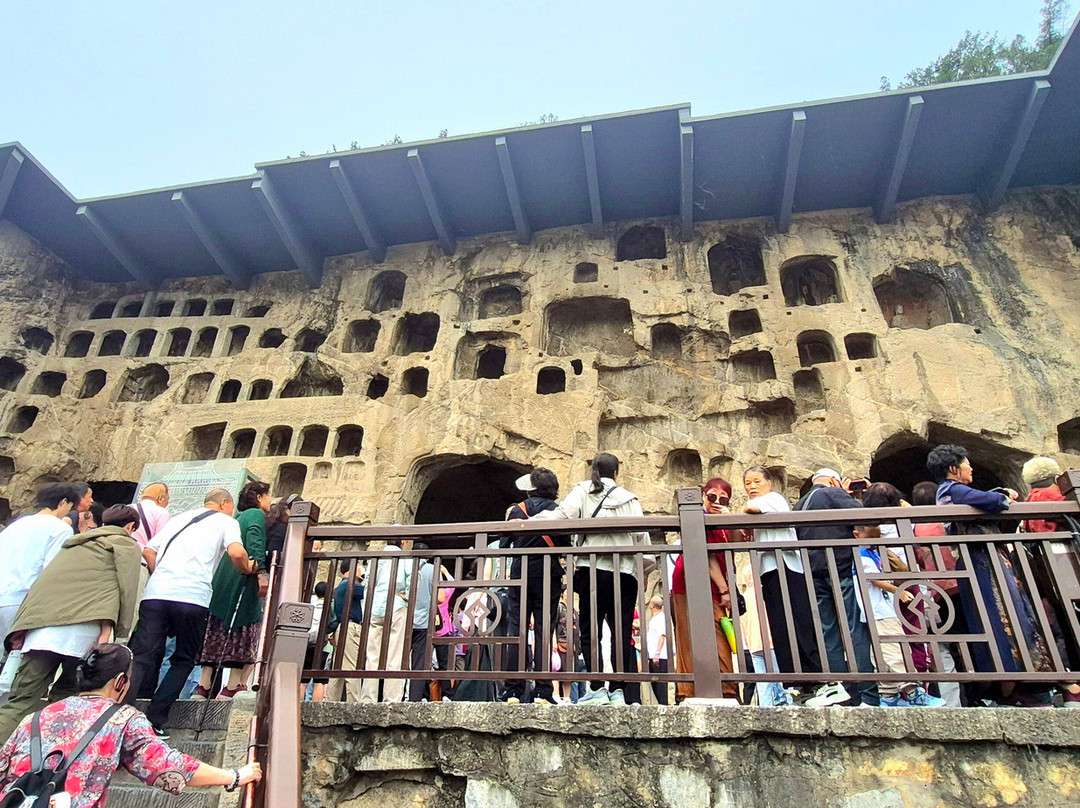
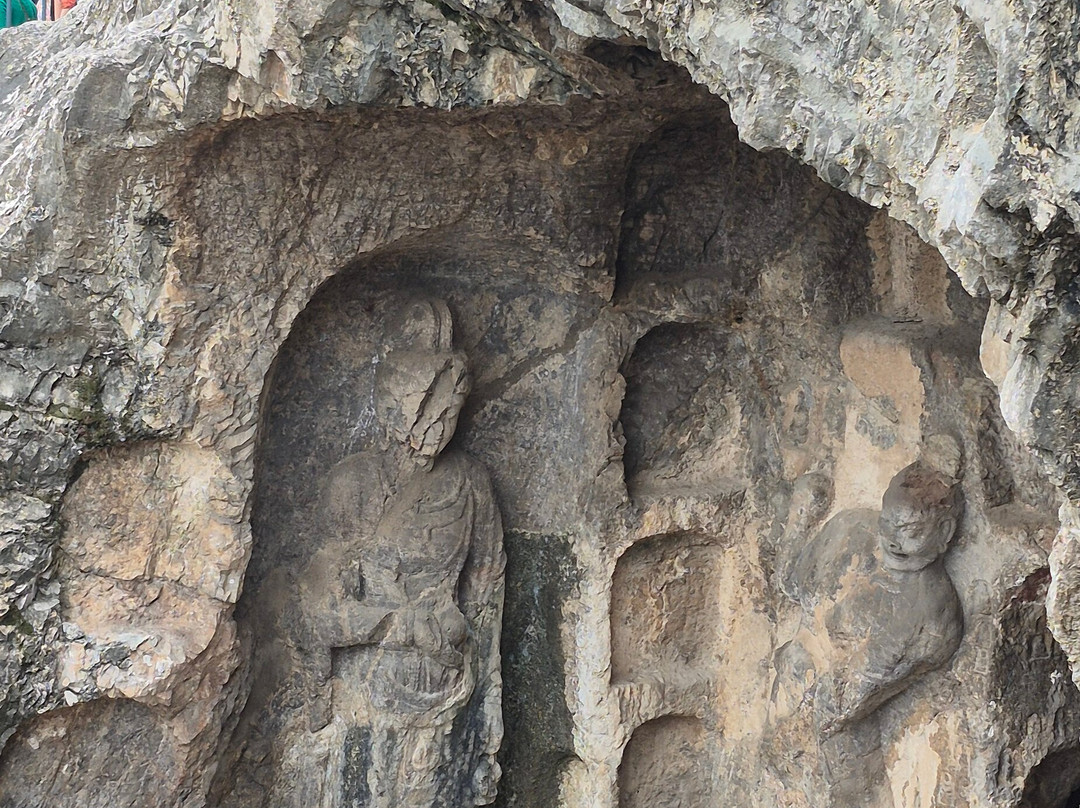
Built across ten dynasties, the grottoes represent the longest continuous grotto project in the world. Along a one‑kilometer stretch of cliff, visitors encounter more than 2,345 caves and niches, housing statues that range from delicate two‑centimeter figures to monumental Buddhas. With 2,800 stelae and inscriptions, the site has earned the title “Forest of Ancient Stelae.” Far beyond religious shrines, the grottoes serve as a comprehensive archive of Chinese civilization, making them one of the most important Buddhist art sites globally.
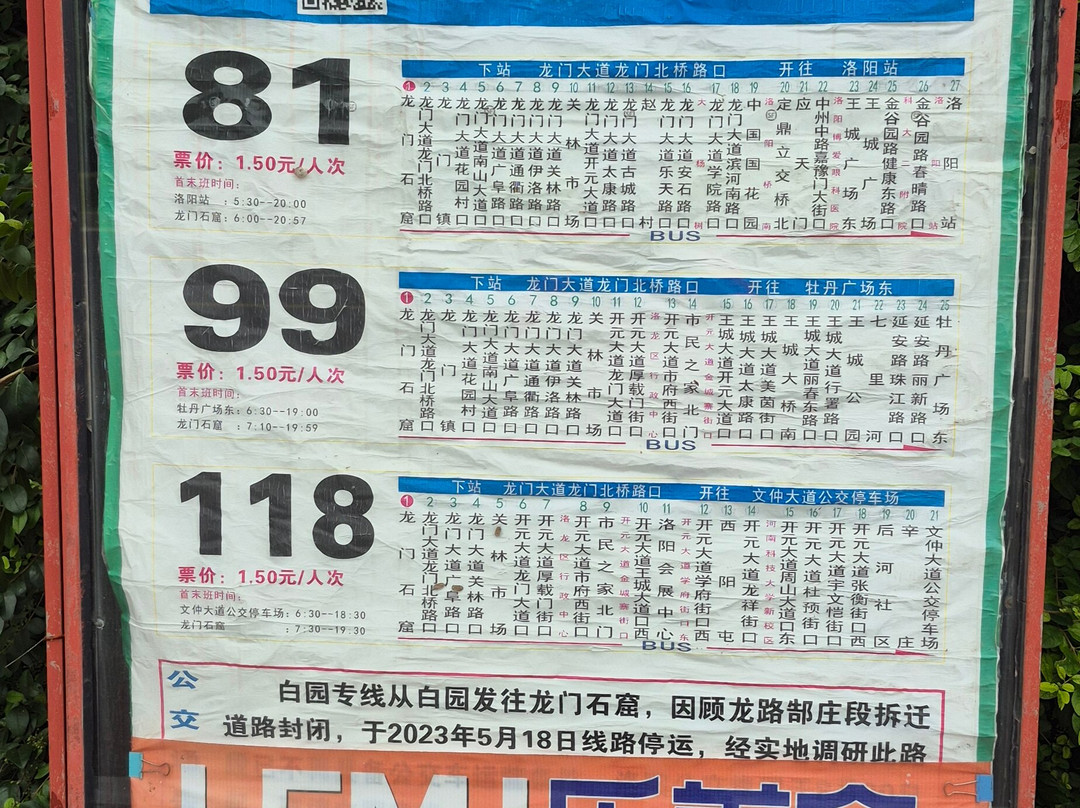
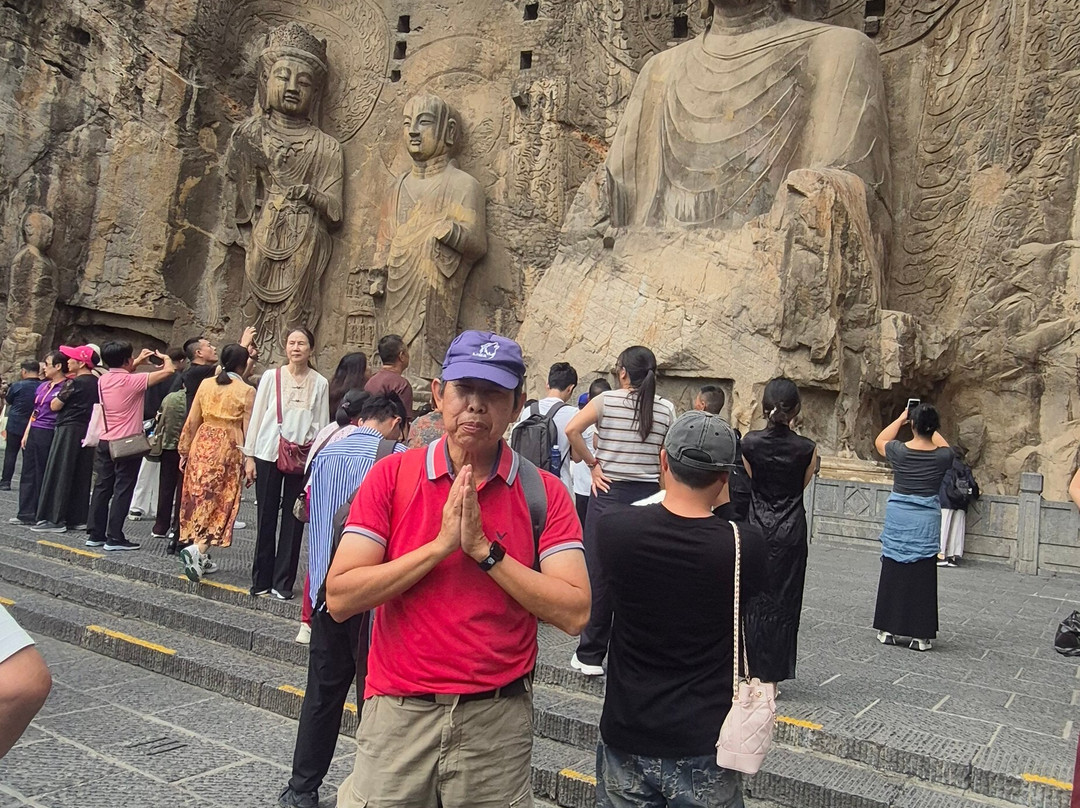
We visited on a Sunday, when the crowds were immense. Boarding bus no. 81 from a stop opposite our hotel, we traveled for about an hour before arriving at the main gate. Online research had assured us that foreign seniors aged 60 and above enjoy free admission. Yet, despite presenting our passports, we were denied entry under that concession and had to purchase tickets at RMB 90 each.
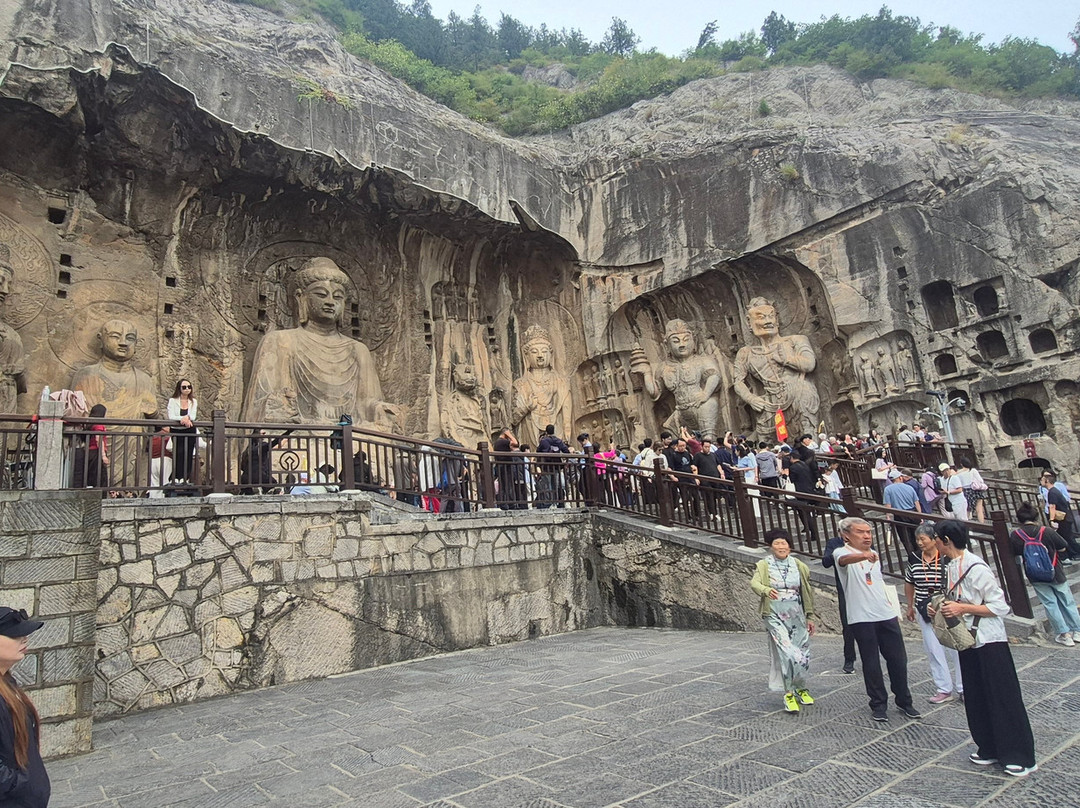
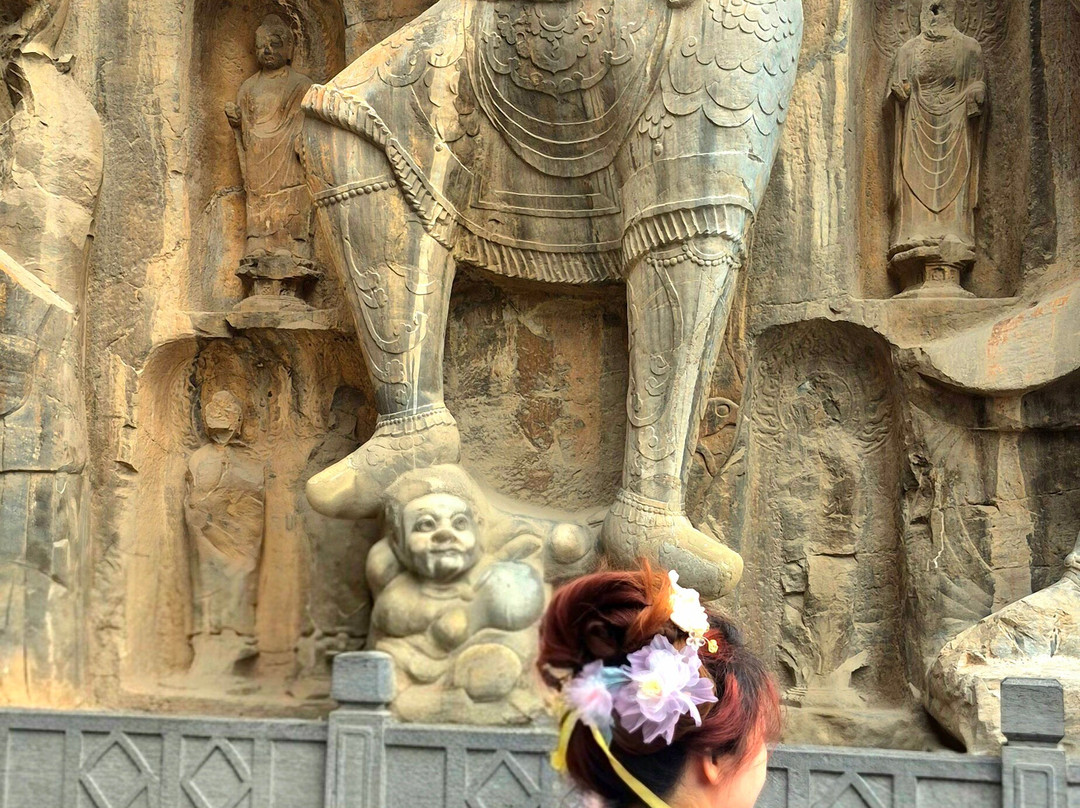
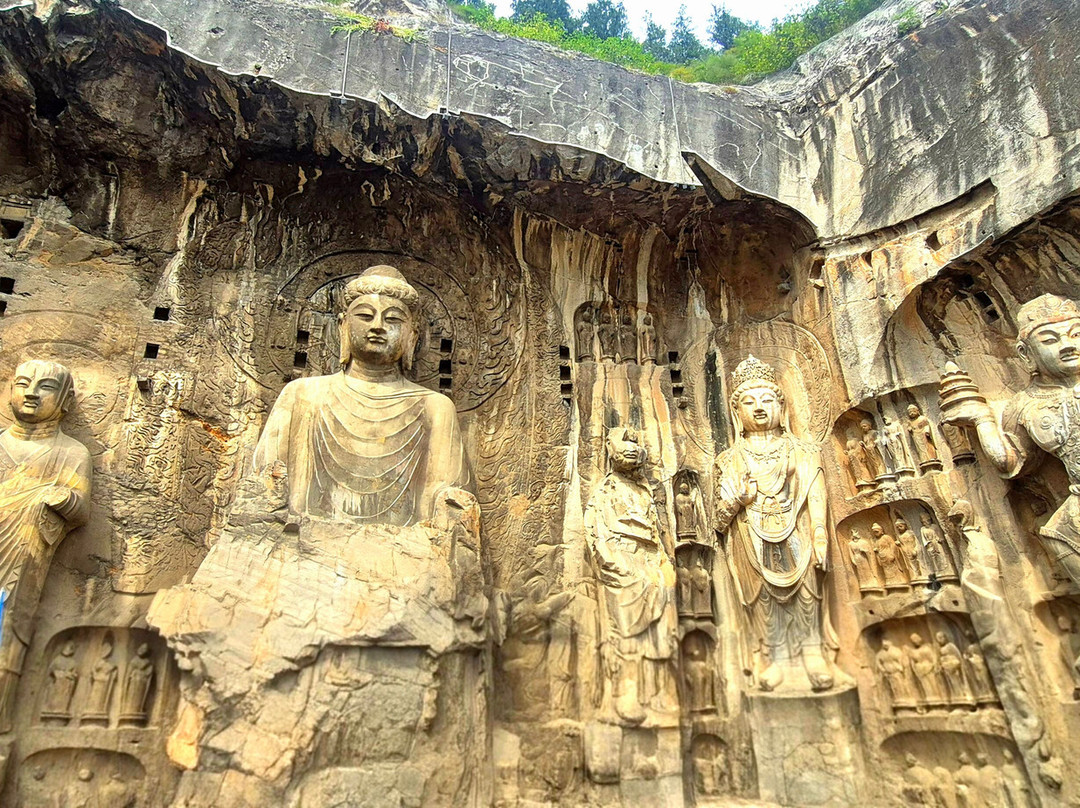
The most iconic part of the Longmen Grottoes is unquestionably the Fengxian Temple, located deeper inside the site. While the front section features many smaller, repetitive niches carved during the Northern Wei period, Fengxian Temple represents the artistic and spiritual climax of the grottoes.
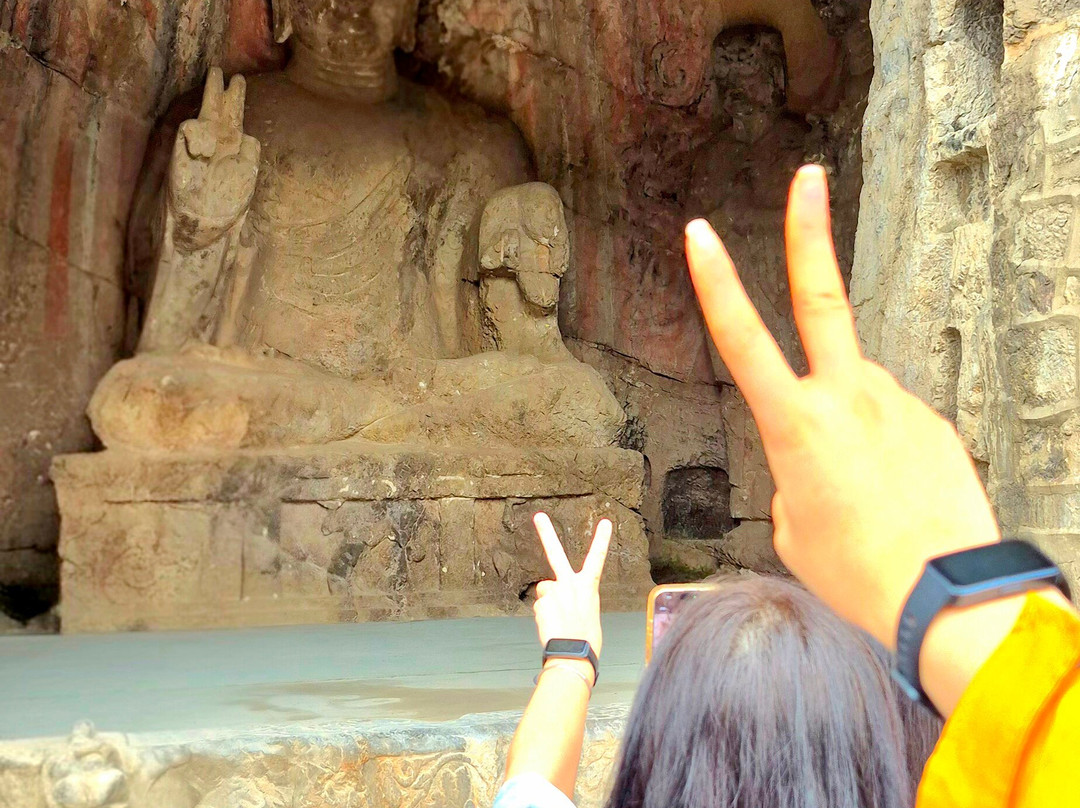
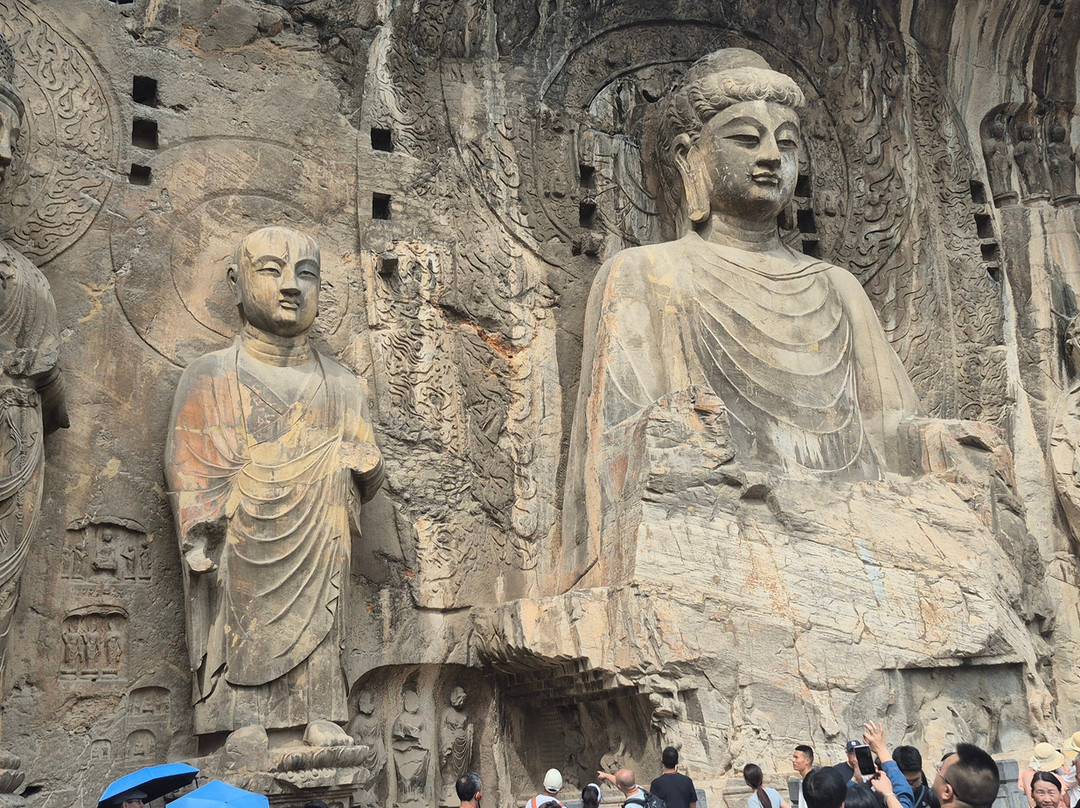
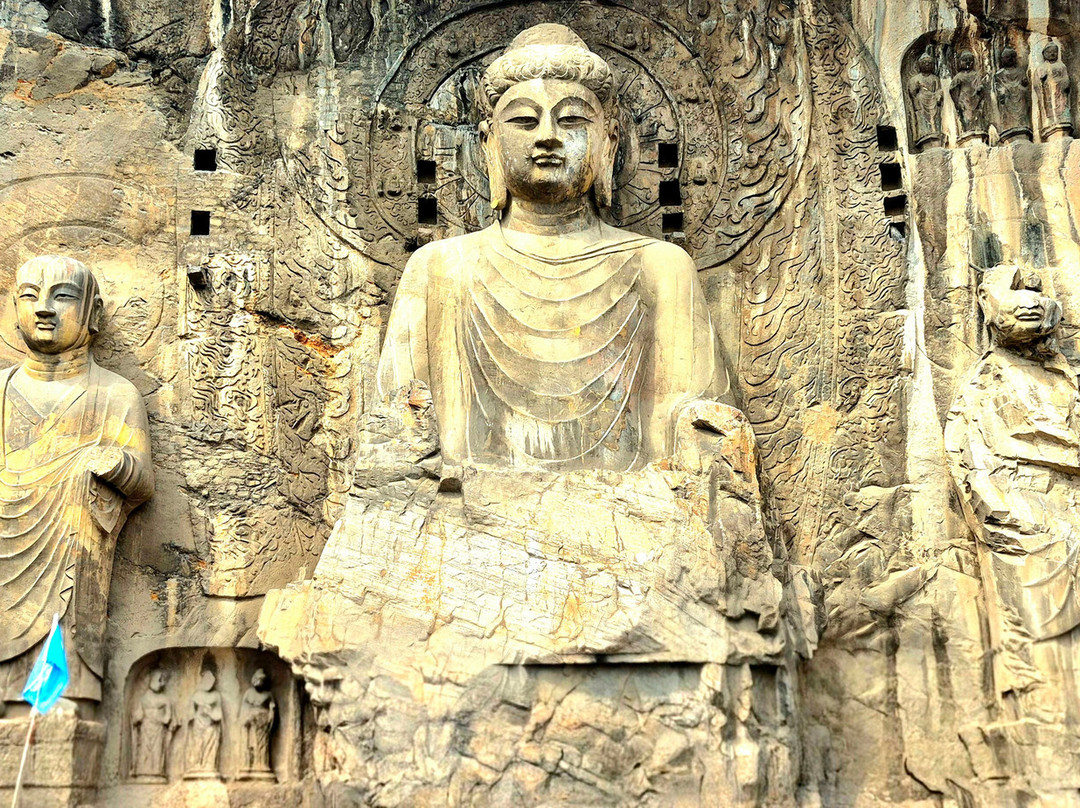
Its highlight is the Vairocana Buddha: a colossal seated figure, 17 meters tall, carved in 675 CE under the patronage of Empress Wu Zetian. Scholars often interpret the Buddha’s face as modeled after the empress herself, symbolizing imperial power and divine legitimacy. The Buddha’s gentle smile and serene gaze evoke the same mysterious aura as Leonardo da Vinci’s Mona Lisa, earning it the nickname “Eastern Mona Lisa.”
Two enduring mysteries add to the grottoes’ aura. First, the unchanging face of Vairocana: despite more than thirteen centuries of weather, wars, and dynastic upheavals, the statue’s serene smile remains intact. Second, the absence of flooding: although nearby Kaifeng and Luoyang suffered devastating floods from the Yellow River, the grottoes’ elevated position along the Yi River spared them, reinforcing their reputation for divine protection.
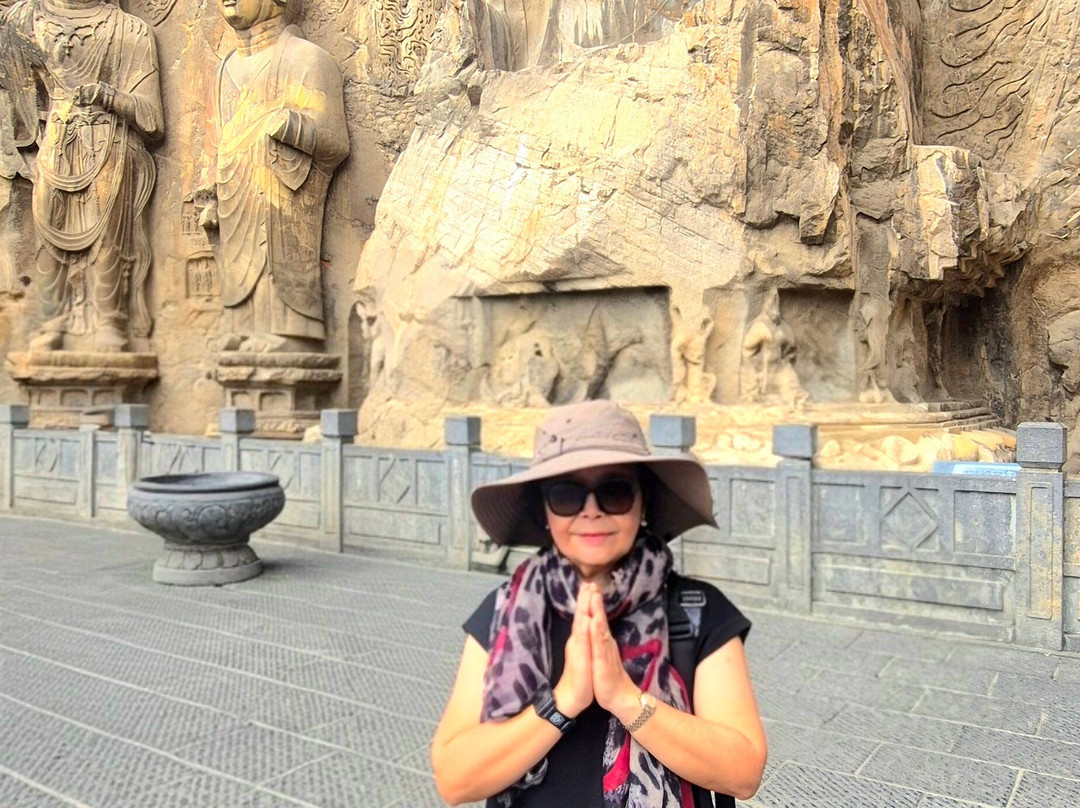
These phenomena are not merely geological or architectural feats — they have become part of the spiritual mystique of Longmen. Visitors often interpret them as signs of guardianship, strengthening the grottoes’ status as one of the most sacred and enduring monuments of Chinese civilization. Standing before the Vairocana Buddha, I felt profoundly blessed to witness such a sacred attraction.
Built across ten dynasties, the grottoes represent the longest continuous grotto project in the world. Along a one‑kilometer stretch of cliff, visitors encounter more than 2,345 caves and niches, housing statues that range from delicate two‑centimeter figures to monumental Buddhas. With 2,800 stelae and inscriptions, the site has earned the title “Forest of Ancient Stelae.” Far beyond religious shrines, the grottoes serve as a comprehensive archive of Chinese civilization, making them one of the most important Buddhist art sites globally.
We visited on a Sunday, when the crowds were immense. Boarding bus no. 81 from a stop opposite our hotel, we traveled for about an hour before arriving at the main gate. Online research had assured us that foreign seniors aged 60 and above enjoy free admission. Yet, despite presenting our passports, we were denied entry under that concession and had to purchase tickets at RMB 90 each.
The most iconic part of the Longmen Grottoes is unquestionably the Fengxian Temple, located deeper inside the site. While the front section features many smaller, repetitive niches carved during the Northern Wei period, Fengxian Temple represents the artistic and spiritual climax of the grottoes.
Its highlight is the Vairocana Buddha: a colossal seated figure, 17 meters tall, carved in 675 CE under the patronage of Empress Wu Zetian. Scholars often interpret the Buddha’s face as modeled after the empress herself, symbolizing imperial power and divine legitimacy. The Buddha’s gentle smile and serene gaze evoke the same mysterious aura as Leonardo da Vinci’s Mona Lisa, earning it the nickname “Eastern Mona Lisa.”
Two enduring mysteries add to the grottoes’ aura. First, the unchanging face of Vairocana: despite more than thirteen centuries of weather, wars, and dynastic upheavals, the statue’s serene smile remains intact. Second, the absence of flooding: although nearby Kaifeng and Luoyang suffered devastating floods from the Yellow River, the grottoes’ elevated position along the Yi River spared them, reinforcing their reputation for divine protection.
These phenomena are not merely geological or architectural feats — they have become part of the spiritual mystique of Longmen. Visitors often interpret them as signs of guardianship, strengthening the grottoes’ status as one of the most sacred and enduring monuments of Chinese civilization. Standing before the Vairocana Buddha, I felt profoundly blessed to witness such a sacred attraction.
翻译:龙门石窟堪称中国佛教石刻艺术的巅峰之作。在长达1400多年的历史长河中,无数工匠在伊河沿岸的石灰岩崖壁上雕刻出了逾11万尊佛像。2000年,联合国教科文组织因其“充分展现了人类的艺术创造力”而将其列入世界遗产名录,龙门石窟也由此被誉为“中国四大石窟”之一。
这些石窟的开凿工作跨越了十个朝代,堪称世界上历时最久的连续性石窟工程。在这段长达一公里的崖壁上,游客们可以看到2,345个以上的洞穴与壁龛,里面供奉着形态各异的佛像——小至仅两厘米高的精致造像,大至体量宏大的巨型佛像。此处还存有2,800块石碑与铭文,因而被誉为“古碑林”。这些石窟远非单纯的宗教圣地,它们实际上是中国文明的完整记录库,因此也属于全球最重要的佛教艺术遗址之一。
我们是在周日去的,当时游人如织。我们在酒店对面的站点乘上了81号接驳巴士,大约行驶一小时后便抵达了大门处。事先在网上查询时我们得知,60岁及以上的外国长者可以免费入园。然而,尽管我们出示了护照,却仍未能享受这一优待,最终不得不以每张90元人民币的价格购买门票。
龙门石窟最具标志性的景点无疑是位于景区深处的奉先寺。其前区则分布着许多规模较小的……作为北魏时期开凿的众多石窟之一,奉先寺堪称这些石窟艺术与精神成就的巅峰之作。
其最引人注目的便是毗卢舍那大佛:这尊高17米的巨型坐佛,建于公元675年,是在女皇武则天的资助下雕凿而成的。学者们普遍认为,大佛的面容是以武则天本人为原型雕刻的,以此象征皇权与神授的正当性。佛陀温和的微笑与宁静的眼神散发出一种神秘的气息,这与达·芬奇笔下的《蒙娜丽莎》如出一辙,因此这里也被誉为“东方蒙娜丽莎”。
有两个长期未解之谜更增添了这些石窟的神秘色彩。其一,毗卢遮那佛的面容始终未变:历经一千三百多年的风霜、战乱与朝代更迭,佛像那安详的微笑依旧完好如初。其二,这里从未发生洪水:尽管邻近的开封和洛阳都曾遭受黄河洪水的肆虐。这些石窟因坐落于伊河沿岸的高处而得以保存,这也进一步巩固了它们受到神灵庇佑的声誉。
这些现象并非单纯的地质或建筑奇观——它们已然成为龙门石窟精神魅力的重要组成部分。游客们常将其视为护佑之兆,从而更加认定这些石窟乃是中国文明最为神圣且历久弥新的象征之一。站在毗卢遮那佛像前,……能亲眼目睹如此神圣的景象,我感到无比幸运与幸福。
这些石窟的开凿工作跨越了十个朝代,堪称世界上历时最久的连续性石窟工程。在这段长达一公里的崖壁上,游客们可以看到2,345个以上的洞穴与壁龛,里面供奉着形态各异的佛像——小至仅两厘米高的精致造像,大至体量宏大的巨型佛像。此处还存有2,800块石碑与铭文,因而被誉为“古碑林”。这些石窟远非单纯的宗教圣地,它们实际上是中国文明的完整记录库,因此也属于全球最重要的佛教艺术遗址之一。
我们是在周日去的,当时游人如织。我们在酒店对面的站点乘上了81号接驳巴士,大约行驶一小时后便抵达了大门处。事先在网上查询时我们得知,60岁及以上的外国长者可以免费入园。然而,尽管我们出示了护照,却仍未能享受这一优待,最终不得不以每张90元人民币的价格购买门票。
龙门石窟最具标志性的景点无疑是位于景区深处的奉先寺。其前区则分布着许多规模较小的……作为北魏时期开凿的众多石窟之一,奉先寺堪称这些石窟艺术与精神成就的巅峰之作。
其最引人注目的便是毗卢舍那大佛:这尊高17米的巨型坐佛,建于公元675年,是在女皇武则天的资助下雕凿而成的。学者们普遍认为,大佛的面容是以武则天本人为原型雕刻的,以此象征皇权与神授的正当性。佛陀温和的微笑与宁静的眼神散发出一种神秘的气息,这与达·芬奇笔下的《蒙娜丽莎》如出一辙,因此这里也被誉为“东方蒙娜丽莎”。
有两个长期未解之谜更增添了这些石窟的神秘色彩。其一,毗卢遮那佛的面容始终未变:历经一千三百多年的风霜、战乱与朝代更迭,佛像那安详的微笑依旧完好如初。其二,这里从未发生洪水:尽管邻近的开封和洛阳都曾遭受黄河洪水的肆虐。这些石窟因坐落于伊河沿岸的高处而得以保存,这也进一步巩固了它们受到神灵庇佑的声誉。
这些现象并非单纯的地质或建筑奇观——它们已然成为龙门石窟精神魅力的重要组成部分。游客们常将其视为护佑之兆,从而更加认定这些石窟乃是中国文明最为神圣且历久弥新的象征之一。站在毗卢遮那佛像前,……能亲眼目睹如此神圣的景象,我感到无比幸运与幸福。

© 2026 Tripadvisor 版权所有。
部分照片由 VFM Leonardo 提供。
TripAdvisor公司对外部网站的内容一概不负责。优惠价格中不含税和其他费用。
ICP证:沪B2-20200433
沪ICP备20013175号
 沪公网安备31010502005427号
鹰程信息技术(上海)有限公司