下载App
资质规则
旅行
账户

Brun066
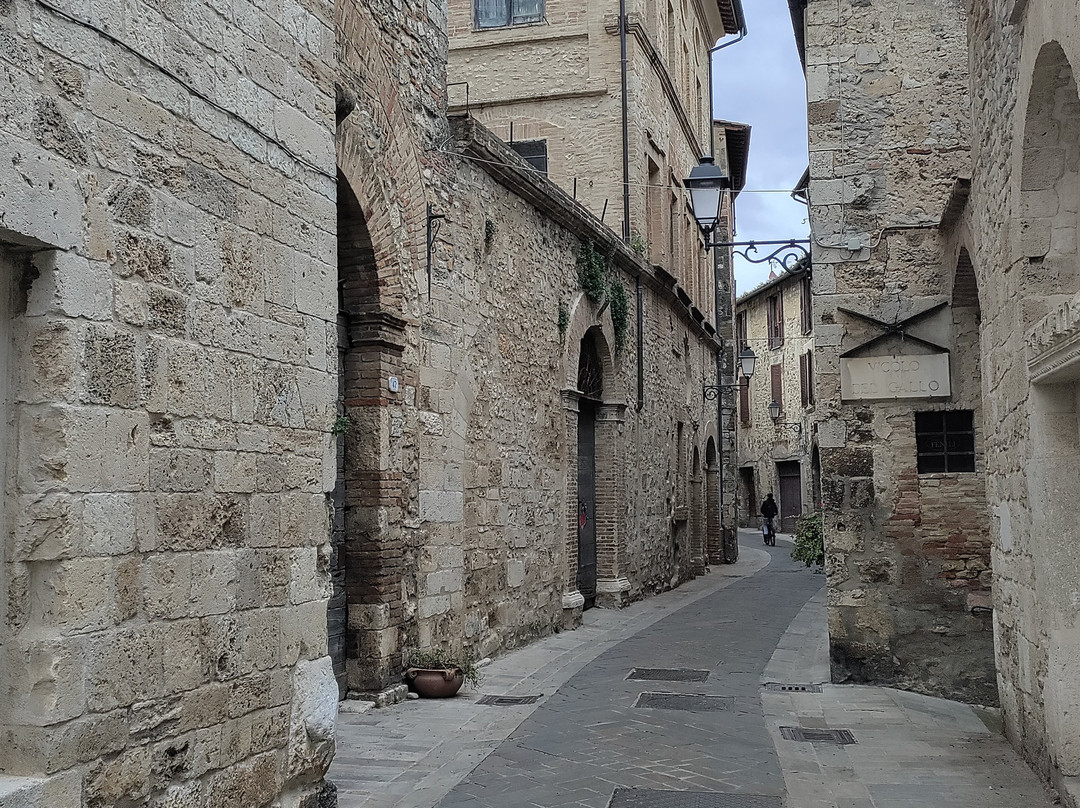
The building fabric speaks to us of a small municipality, but also of a history of independence and prosperity.
Borgo di San Gemini的点评
点评:The ancient center of San Gemini is a testament to its continued importance over the last millennium, from its first documented mention (Deed of Foundation of the Abbey of San Niccolò, 1036) onward. For centuries, the town maintained its status as a free municipality, navigating between the Empire and the Papacy on the one hand, and the more powerful neighboring municipalities, such as Narni, Terni, and Todi on the other. This autonomy thus lasted longer than in many other Italian cities, extending until 1530, when the city was ceded as a fief to the powerful Orsini family by Pope Clement VII.
Some of the results of this long autonomy are clearly visible: the circuit of the walls, built in the first half of the 13th century (and featuring monumental gates, generally of a more recent appearance), is clearly visible, as is the presence of the "Palazzo Vecchio" (formerly the Palazzo Pretorio), seat of the "priors", therefore of executive power. The Municipality's support for the arrival of merchants and artisans is also documented, which increased the village's prosperity and thus the nobility of its buildings.
These processes, combined with the fact that the village has never suffered any particular upheavals or destruction, led to the formation of a valuable urban center, which has currently earned San Gemini the title of "Uno dei borghi più belli d'Italia" (One of the most beautiful villages in Italy).
Some of the results of this long autonomy are clearly visible: the circuit of the walls, built in the first half of the 13th century (and featuring monumental gates, generally of a more recent appearance), is clearly visible, as is the presence of the "Palazzo Vecchio" (formerly the Palazzo Pretorio), seat of the "priors", therefore of executive power. The Municipality's support for the arrival of merchants and artisans is also documented, which increased the village's prosperity and thus the nobility of its buildings.
These processes, combined with the fact that the village has never suffered any particular upheavals or destruction, led to the formation of a valuable urban center, which has currently earned San Gemini the title of "Uno dei borghi più belli d'Italia" (One of the most beautiful villages in Italy).
翻译:圣杰米尼的古老中心见证了它在过去一千年中持续的重要性,其历史可追溯至最早的文字记载(1036 年的《圣尼科洛修道院建院契约》)。几个世纪以来,这座城镇一直保持着自由市镇的地位,一方面游走于罗马帝国和教皇国之间,另一方面又受到纳尔尼、特尔尼和托迪等周边更强大的市镇的影响。因此,圣杰米尼的自治时间比许多其他意大利城市都要长,一直延续到 1530 年,当时教皇克莱门特七世将这座城市作为封地割让给了强大的奥尔西尼家族。
长期自治的成果显而易见:建于13世纪上半叶的城墙(配有气势恢宏的城门,但整体风格较为现代)清晰可见;“旧宫”(Palazzo Vecchio,原名Palazzo Pretorio)也屹立于此,它是“执政官”(priors)的所在地,也是行政权力的象征。此外,有记载表明,市政当局支持商人和工匠的到来,这促进了村庄的繁荣,也提升了村庄建筑的档次。
这些因素,加上村庄从未遭受过任何重大动荡或破坏,最终促成了圣杰米尼(San Gemini)发展成为一个重要的城市中心,并因此荣获“意大利最美村庄之一”(Uno dei borghi più belli d'Italia)的美誉。
长期自治的成果显而易见:建于13世纪上半叶的城墙(配有气势恢宏的城门,但整体风格较为现代)清晰可见;“旧宫”(Palazzo Vecchio,原名Palazzo Pretorio)也屹立于此,它是“执政官”(priors)的所在地,也是行政权力的象征。此外,有记载表明,市政当局支持商人和工匠的到来,这促进了村庄的繁荣,也提升了村庄建筑的档次。
这些因素,加上村庄从未遭受过任何重大动荡或破坏,最终促成了圣杰米尼(San Gemini)发展成为一个重要的城市中心,并因此荣获“意大利最美村庄之一”(Uno dei borghi più belli d'Italia)的美誉。

© 2026 Tripadvisor 版权所有。
部分照片由 VFM Leonardo 提供。
TripAdvisor公司对外部网站的内容一概不负责。优惠价格中不含税和其他费用。
ICP证:沪B2-20200433
沪ICP备20013175号
 沪公网安备31010502005427号
鹰程信息技术(上海)有限公司