下载App
资质规则
旅行
账户

Brun066
A rare example of an 18th-century "founded city" in central Italy.
Piazza Europa的点评
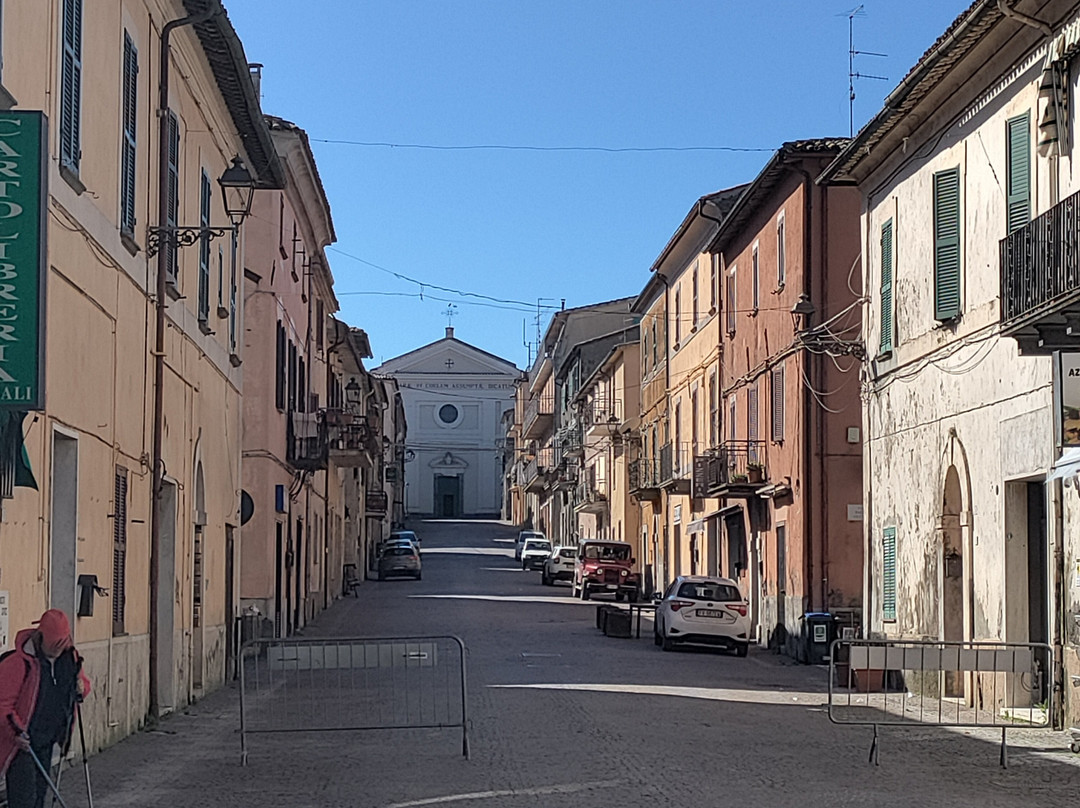
点评:I wrote that this is a rare example because central Italy didn't see many such undertakings at the end of the 18th century. We are no longer in the Renaissance, when a fervor of urban planning initiatives dotted parts of Italy with "ideal cities" (think of Sabbioneta, Gualtieri, Palmanova, or Terra del Sole in Northern Italy, the so-called "Erculean addition" in Ferrara, and Livorno in Central Italy); nor are we in the Middle Ages, when free municipalities established new urban settlements at strategic points in their territory (San Giovanni Valdarno and Buonconvento in Tuscany come to my mind). San Lorenzo Nuovo is a rare initiative, because it's driven by difficulties in the original settlement, San Lorenzo alle Grotte (landslides, malaria, etc.), which necessitated the radical relocation of the town.
Piazza Europa, the center of the town, epitomizes the town's soul. Simple, essential, and orderly, it leaves its mark on the entire grid of the town. Here, not only has the plan been preserved, but (unlike some more peripheral streets) even the individual buildings. A stroll through the square, before even entering the Church of San Lorenzo, is highly recommended.
Piazza Europa, the center of the town, epitomizes the town's soul. Simple, essential, and orderly, it leaves its mark on the entire grid of the town. Here, not only has the plan been preserved, but (unlike some more peripheral streets) even the individual buildings. A stroll through the square, before even entering the Church of San Lorenzo, is highly recommended.
翻译:我曾写道,这是一个罕见的例子,因为在18世纪末的意大利中部,类似的工程并不多见。我们已不再处于文艺复兴时期,那时城市规划的热潮席卷意大利各地,涌现出众多“理想城市”(例如意大利北部的萨比奥内塔、瓜尔蒂耶里、帕尔马诺瓦和特拉德尔索莱,费拉拉所谓的“埃尔库莱恩式扩建”,以及意大利中部的利沃诺);我们也并非处于中世纪,那时自由市镇会在其领土内的战略要地建立新的城镇聚落(例如托斯卡纳的圣乔瓦尼瓦尔达诺和布翁孔文托)。圣洛伦佐新城的建设之所以如此独特,是因为其原址圣洛伦佐阿莱格罗特遭遇了诸多困境(山体滑坡、疟疾等等),最终不得不进行彻底的搬迁。
欧洲广场是这座城市的中心,也是这座城市灵魂的象征。简洁、实用、有序,它在整个城镇的格局中留下了深刻的印记。这里不仅保留了原有的规划,而且(与一些边缘街道不同)甚至连单个建筑也保存完好。强烈建议您在进入圣洛伦佐教堂之前,先在广场上漫步一番。
欧洲广场是这座城市的中心,也是这座城市灵魂的象征。简洁、实用、有序,它在整个城镇的格局中留下了深刻的印记。这里不仅保留了原有的规划,而且(与一些边缘街道不同)甚至连单个建筑也保存完好。强烈建议您在进入圣洛伦佐教堂之前,先在广场上漫步一番。

© 2026 Tripadvisor 版权所有。
部分照片由 VFM Leonardo 提供。
TripAdvisor公司对外部网站的内容一概不负责。优惠价格中不含税和其他费用。
ICP证:沪B2-20200433
沪ICP备20013175号
 沪公网安备31010502005427号
鹰程信息技术(上海)有限公司