下载App
资质规则
旅行
账户

MadhulikaL4
Arguably India’s finest stepwell
Rani Ki vav的点评
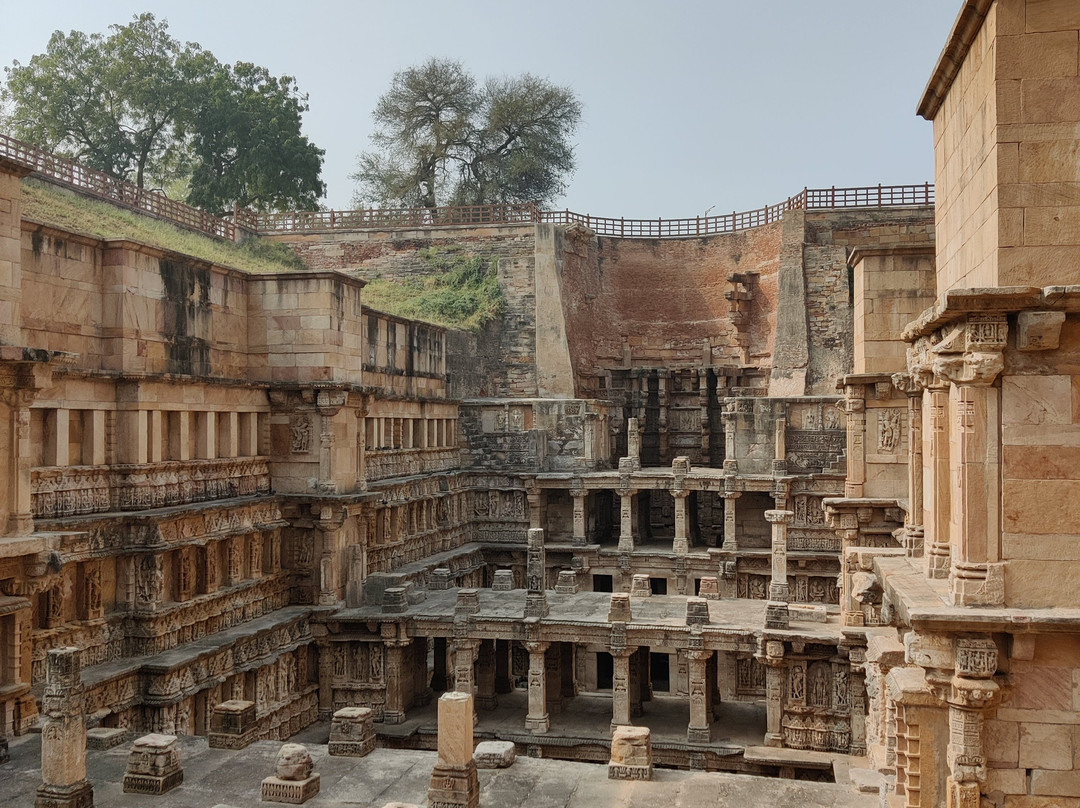
点评:Built by an 11th century CE queen named Rani Udayamati (the consort of Bhimdeva I, of the Solanki dynasty), this huge stepwell or vav is a UNESCO World Heritage Site. The interesting thing here is that over many centuries, the stepwell had got completely silted up and buried, to the extent that it was nearly invisible. It was only in 1958 that the Archaeological Survey of India carried out excavations and dug it out, removed debris, and straightened fallen pillars and so on.
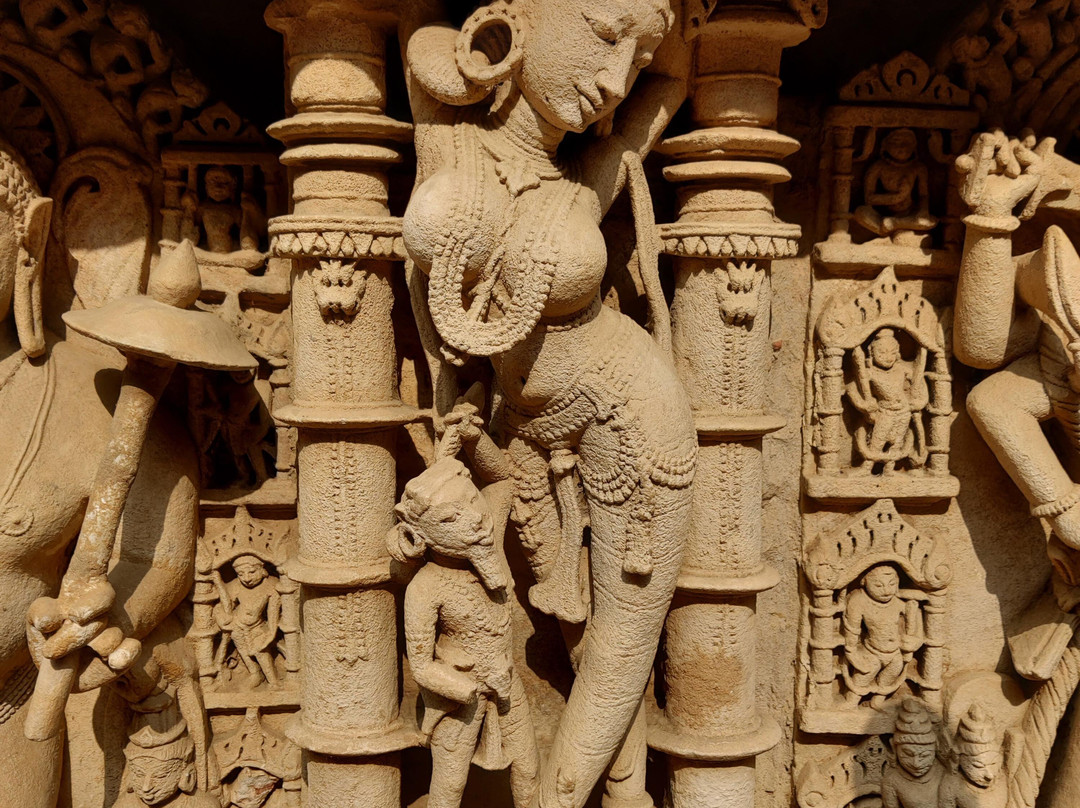
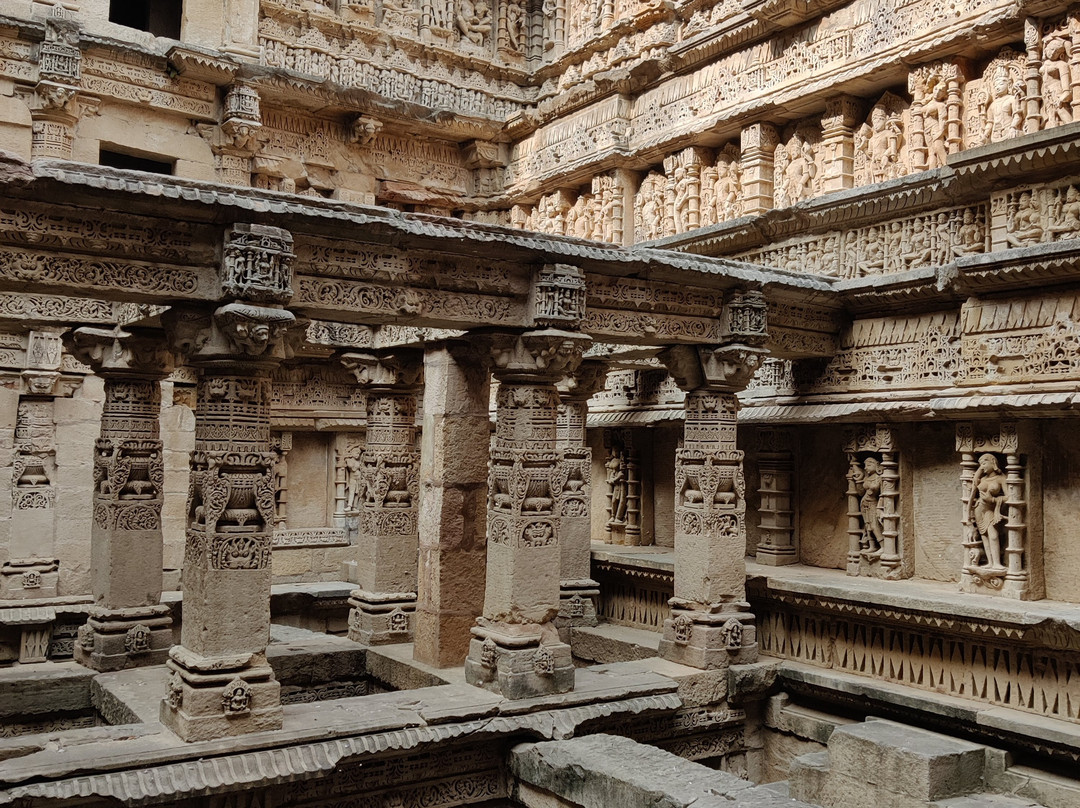
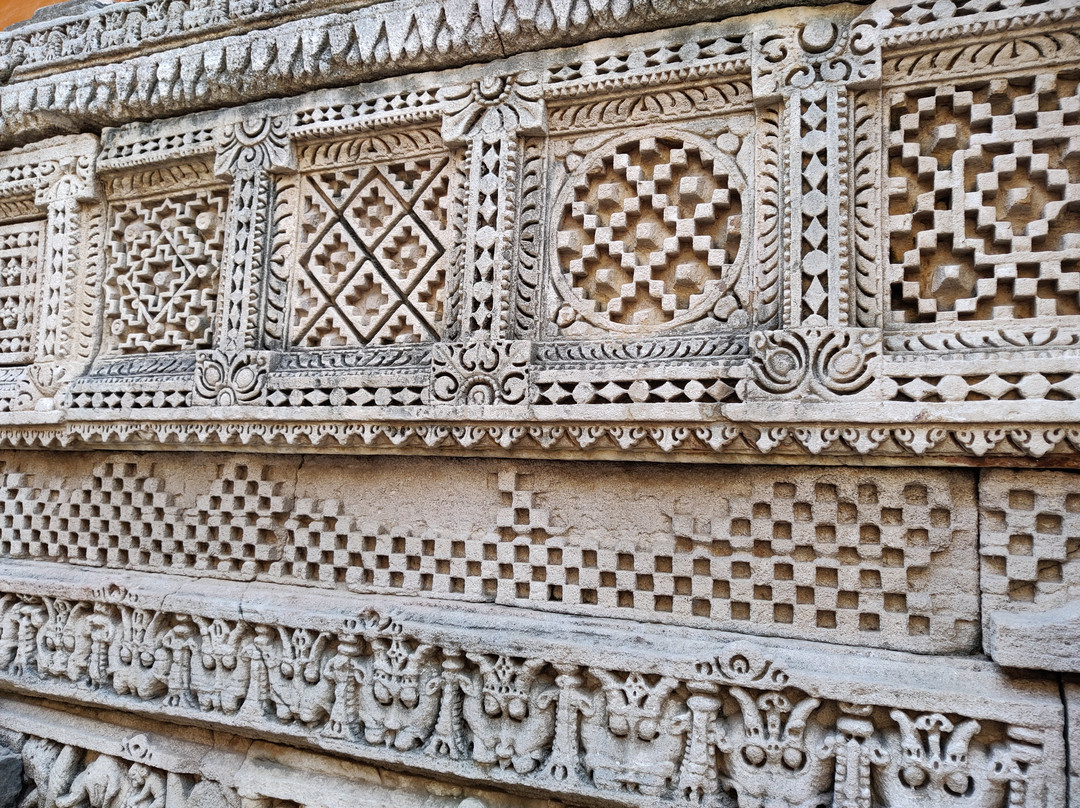
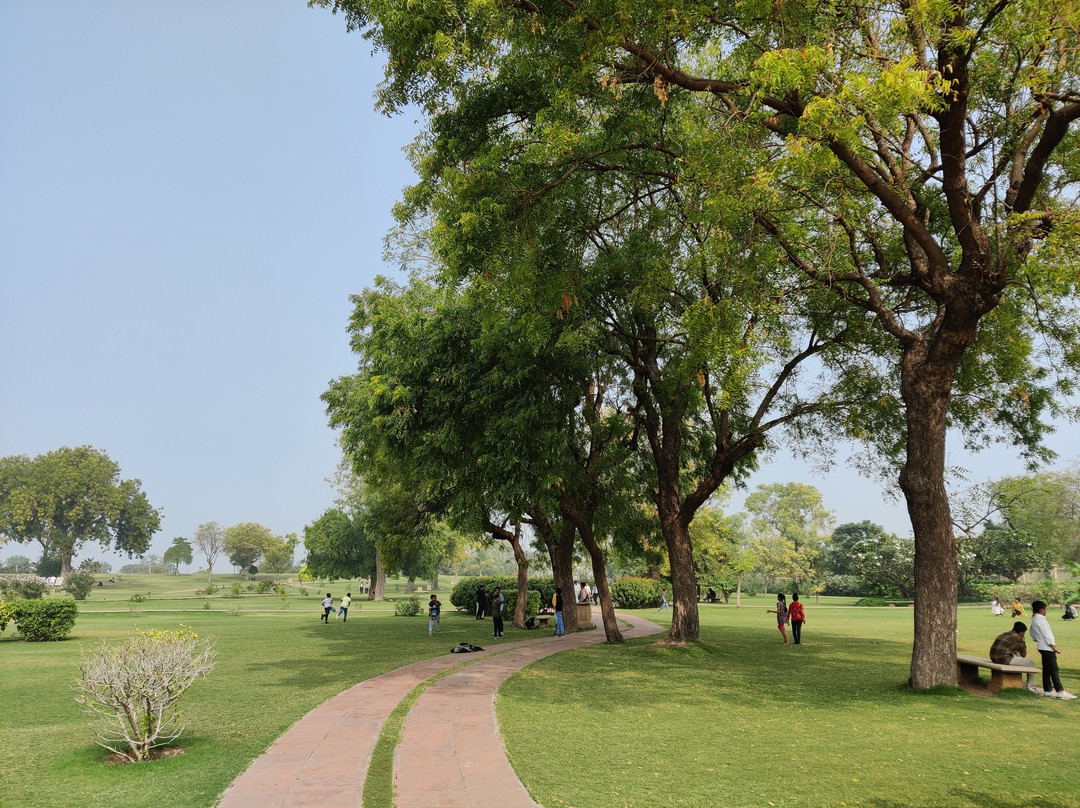
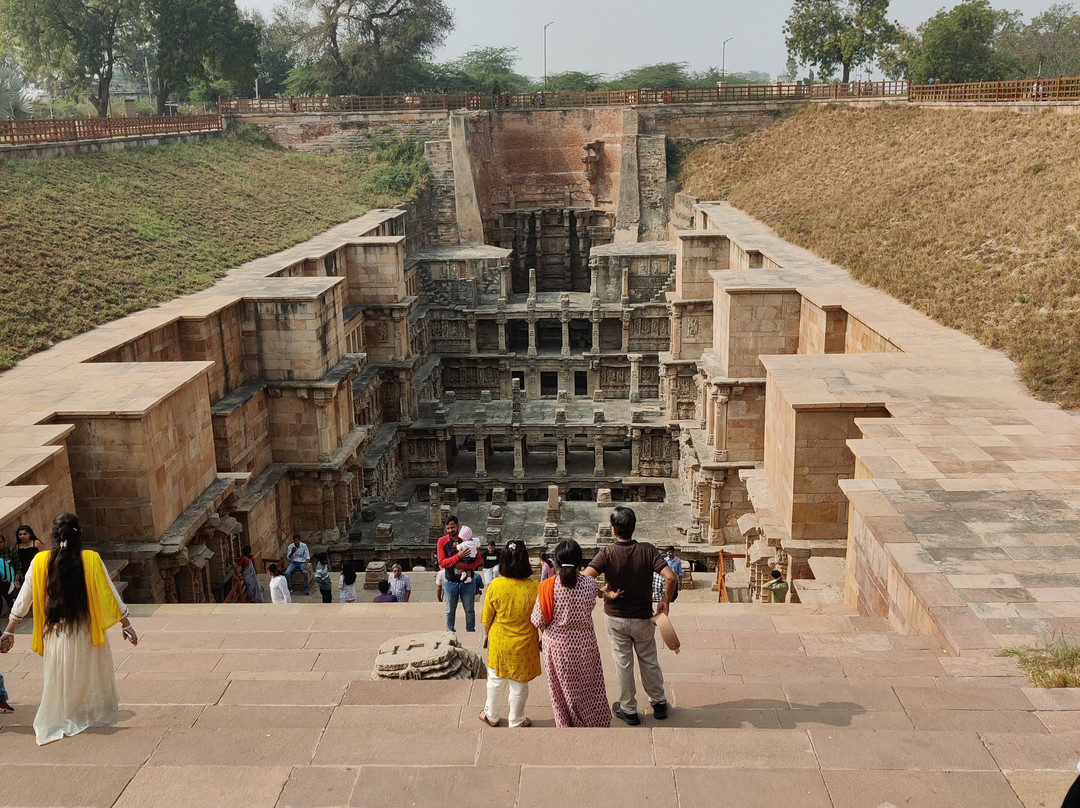
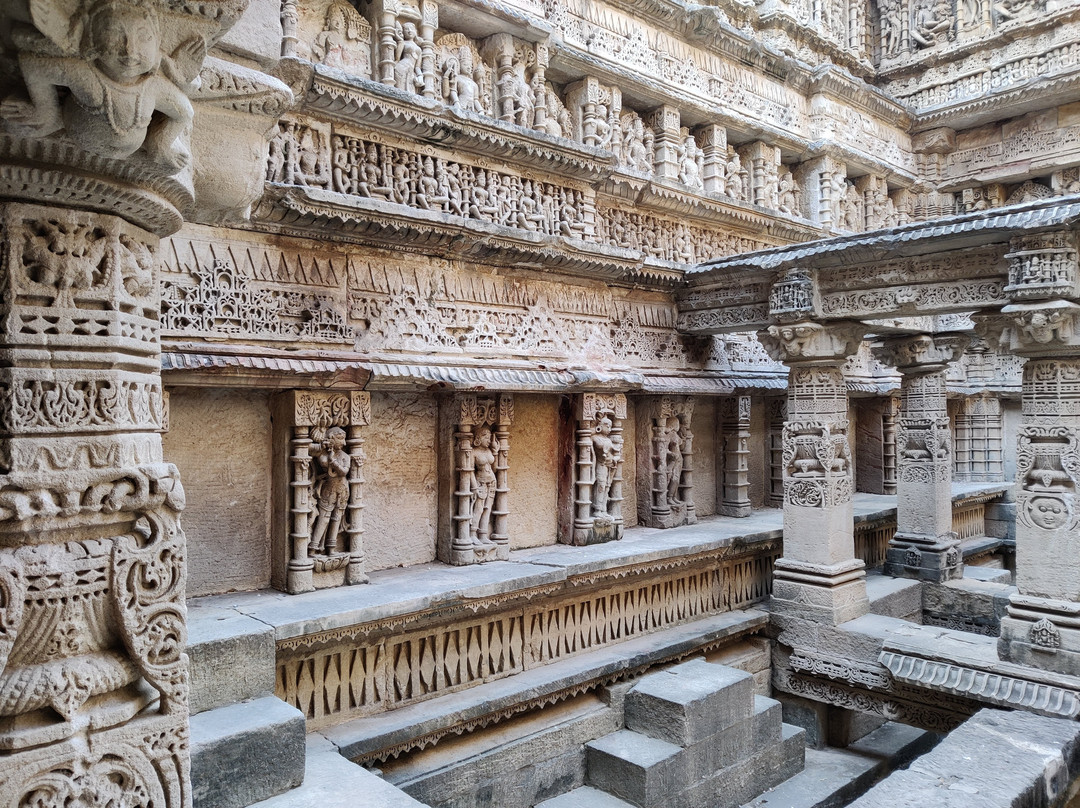
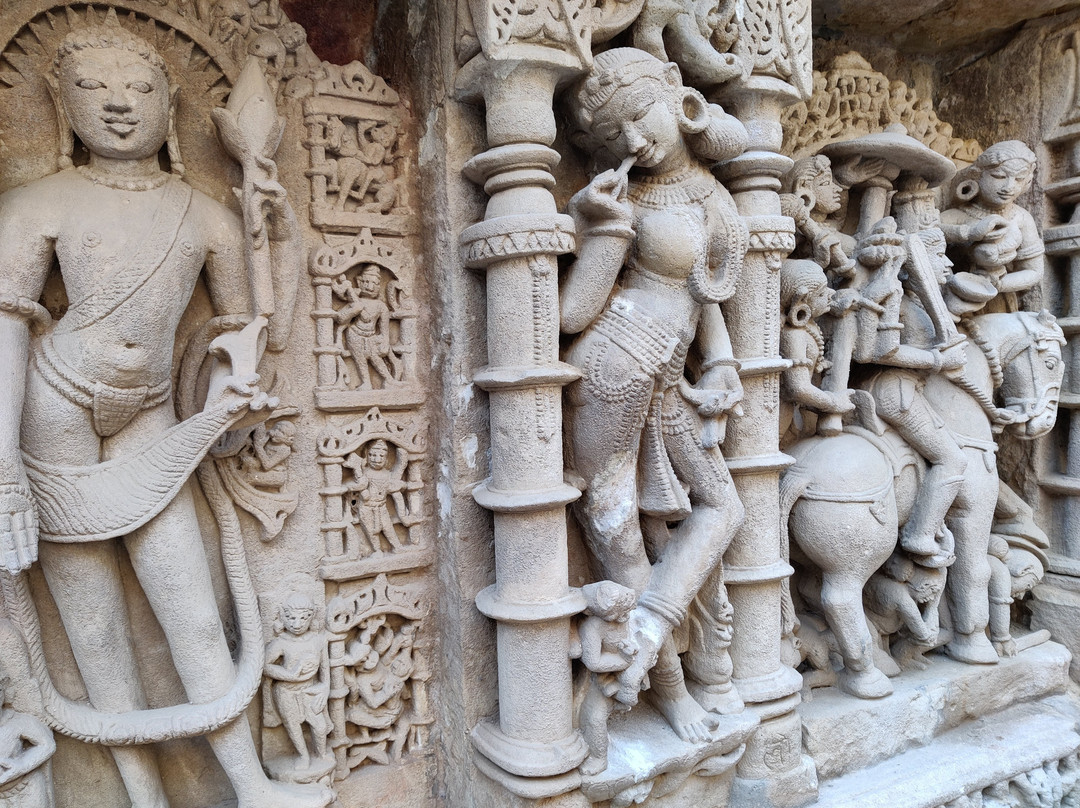
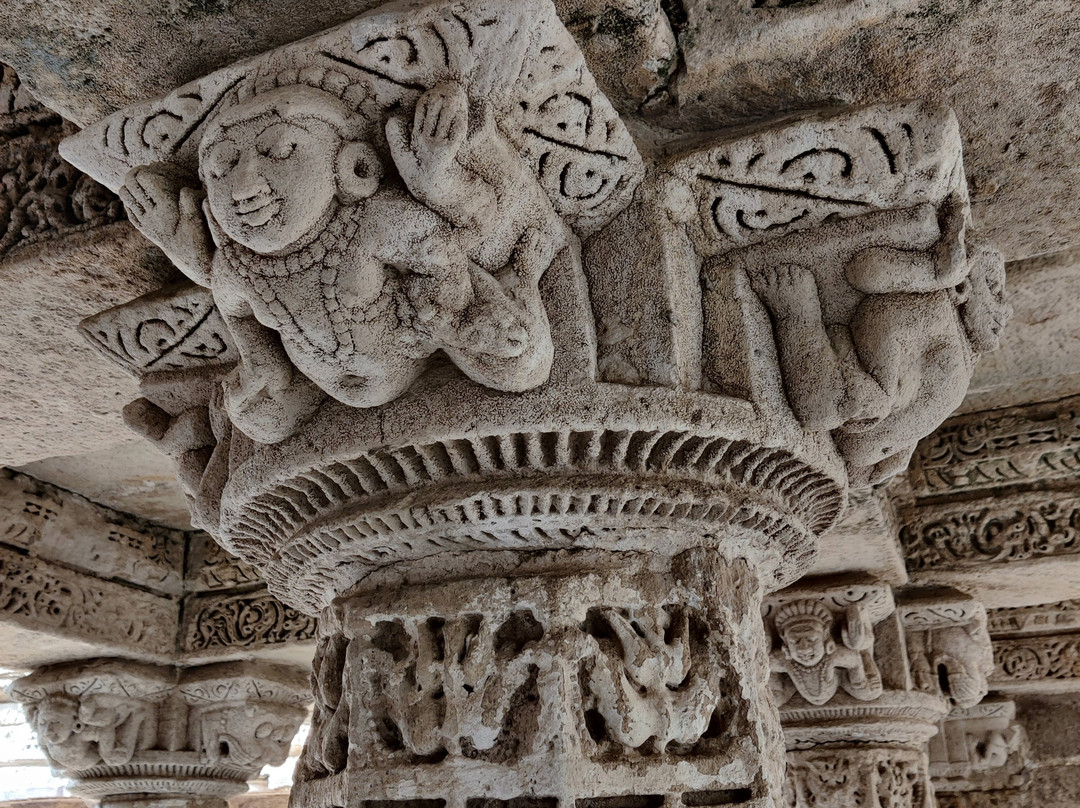
The Rani ki Vav sits in a large landscaped park, the stepwell surrounded by an unsightly-looking railing. The railing extends down on either side of the inside of the stepwell too, to act as a guardrail to prevent visitors touching the profuse stone carvings lining the walls. Many rows of steps lead down, in a crisscross fashion, to the depths of the vav, with ornate carved pillars, ceilings, and walls all along the way. During heavy monsoons, the water can fill all the way up to the lower steps here, but when we visited in January, there was no sign of the water. Beyond a certain level, visitors aren't allowed further, but we were told that around the back (off-limits to the public) is a deep circular well, the walls of which are lined with more exquisite carvings.
Entrance fees are Rs 40 per Indian, Rs 600 per foreigner. Even if you go right down to the lowest accessible level, it takes only about half an hour to see this, unless you’re interested in closely viewing each of the carvings.
The Rani ki Vav sits in a large landscaped park, the stepwell surrounded by an unsightly-looking railing. The railing extends down on either side of the inside of the stepwell too, to act as a guardrail to prevent visitors touching the profuse stone carvings lining the walls. Many rows of steps lead down, in a crisscross fashion, to the depths of the vav, with ornate carved pillars, ceilings, and walls all along the way. During heavy monsoons, the water can fill all the way up to the lower steps here, but when we visited in January, there was no sign of the water. Beyond a certain level, visitors aren't allowed further, but we were told that around the back (off-limits to the public) is a deep circular well, the walls of which are lined with more exquisite carvings.
Entrance fees are Rs 40 per Indian, Rs 600 per foreigner. Even if you go right down to the lowest accessible level, it takes only about half an hour to see this, unless you’re interested in closely viewing each of the carvings.
翻译:这座巨大的阶梯井由公元 11 世纪的女王 Rani Udayamati(索兰基王朝 Bhimdeva I 的配偶)建造,已被联合国教科文组织列为世界遗产。有趣的是,几个世纪以来,阶梯井已经完全被淤积和掩埋,以至于几乎看不见。直到1958年,印度考古调查局才进行发掘,将其挖出、清除杂物、拉直倒下的柱子等。
Rani ki Vav 坐落在一个大型景观公园内,阶梯井周围环绕着难看的栏杆。栏杆也在阶梯井内部的两侧向下延伸,充当护栏,防止游客触摸墙壁上的大量石雕。多排台阶纵横交错,通向瓦夫的深处,一路上都有华丽的雕刻柱子、天花板和墙壁。在强季风期间,水会一直充满到这里较低的台阶,但当我们一月份访问时,没有水的迹象。超过一定高度后,游客就不能再进一步了,但我们被告知,后面(禁止公众进入)有一口深圆形井,井壁上排列着更精美的雕刻。
入场费为每位印度人 40 卢比,每位外国人 600 卢比。即使你直接下到最低层,也只需要大约半个小时就能看到这个,除非你有兴趣仔细观察每一个雕刻。
Rani ki Vav 坐落在一个大型景观公园内,阶梯井周围环绕着难看的栏杆。栏杆也在阶梯井内部的两侧向下延伸,充当护栏,防止游客触摸墙壁上的大量石雕。多排台阶纵横交错,通向瓦夫的深处,一路上都有华丽的雕刻柱子、天花板和墙壁。在强季风期间,水会一直充满到这里较低的台阶,但当我们一月份访问时,没有水的迹象。超过一定高度后,游客就不能再进一步了,但我们被告知,后面(禁止公众进入)有一口深圆形井,井壁上排列着更精美的雕刻。
入场费为每位印度人 40 卢比,每位外国人 600 卢比。即使你直接下到最低层,也只需要大约半个小时就能看到这个,除非你有兴趣仔细观察每一个雕刻。

© 2026 Tripadvisor 版权所有。
部分照片由 VFM Leonardo 提供。
TripAdvisor公司对外部网站的内容一概不负责。优惠价格中不含税和其他费用。
ICP证:沪B2-20200433
沪ICP备20013175号
 沪公网安备31010502005427号
鹰程信息技术(上海)有限公司