下载App
资质规则
旅行
账户

Tripadvisor用户
Eglise Romane
Eglise réformée de St Prex的点评
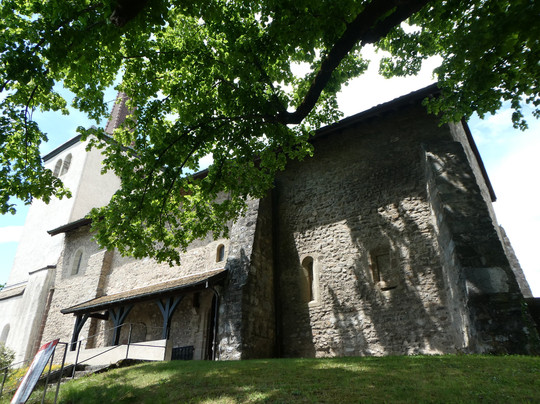
点评:Walking from the railway station and the nearby huge Vetropack glass factory towards the old center of Saint-Prex one will pass a church on top of a small hill, surrounded by greenery and the local cemetery. We are here in the part called 'Devant la Ville'. The church, which is signposted as 'Eglise Romane', is a monument of national importance.
An information board (in French) tells the history of the building with plans of the several churches that existed at this place over the centuries. Excavations have shown that the first building here goes back to the 5th century, thus Gallo-Roman times. In its actual appearance the church has a mainly romanesque character, although in Gothic times some changes have been made like the addition of a spire over the tower.
The church, dedicated to 'Notre Dame,' was turned into a reformed 'temple' after the protestant city-state of Berne took over the whole 'Canton de Vaud' and so it still is, while for the catholics a church dedicated to St.Protais has been built a bit further out. The remains of this saint, called Protasius in Latin, were first buried in the Church of Notre-Dame, before being taken in the 14th century to the cathedral of Lausanne.
St.Protais, not much known outside French speaking Switzerland, had been a 7th century bishop of Lausanne, who died, while cutting wood in the nearby Jura for the cathedral of Lausanne, when a tree fell on him. His body was taken to the village here, then called 'Busages', which after that changed its name, becoming 'Saint-Prex' (from 'Protais').
An information board (in French) tells the history of the building with plans of the several churches that existed at this place over the centuries. Excavations have shown that the first building here goes back to the 5th century, thus Gallo-Roman times. In its actual appearance the church has a mainly romanesque character, although in Gothic times some changes have been made like the addition of a spire over the tower.
The church, dedicated to 'Notre Dame,' was turned into a reformed 'temple' after the protestant city-state of Berne took over the whole 'Canton de Vaud' and so it still is, while for the catholics a church dedicated to St.Protais has been built a bit further out. The remains of this saint, called Protasius in Latin, were first buried in the Church of Notre-Dame, before being taken in the 14th century to the cathedral of Lausanne.
St.Protais, not much known outside French speaking Switzerland, had been a 7th century bishop of Lausanne, who died, while cutting wood in the nearby Jura for the cathedral of Lausanne, when a tree fell on him. His body was taken to the village here, then called 'Busages', which after that changed its name, becoming 'Saint-Prex' (from 'Protais').
翻译:从火车站和附近巨大的 Vetropack 玻璃厂向 Saint-Prex 的旧中心步行,会经过一座小山顶上的教堂,周围环绕着绿树和当地墓地。我们在名为“Devant la Ville”的部分。标示为“Eglise Romane”的教堂是具有国家重要性的纪念碑。
一个信息板(法语)讲述了这座建筑的历史以及几个世纪以来在这个地方存在的几座教堂的计划。发掘表明,这里的第一座建筑可以追溯到公元 5 世纪,也就是高卢罗马时代。教堂的实际外观主要具有罗马式特征,尽管在哥特时代已经进行了一些更改,例如在塔楼上增加了一个尖顶。
在新教城邦伯尔尼接管整个“沃州”后,这座献给“巴黎圣母院”的教堂变成了一座改革后的“寺庙”,现在仍然如此,而对于天主教徒来说,一座教堂献给了圣母院.Protais 构建得更远一些。这位圣人的遗体在拉丁语中称为 Protasius,最初被埋葬在巴黎圣母院教堂,然后在 14 世纪被带到洛桑大教堂。
St.Protais 在讲法语的瑞士之外鲜为人知,他曾是 7 世纪的洛桑主教,他在附近的侏罗山为洛桑大教堂砍柴时被一棵树倒下压死。他的遗体被带到这里的村庄,然后被称为“Busages”,之后更名为“Saint-Prex”(来自“Protais”)。
一个信息板(法语)讲述了这座建筑的历史以及几个世纪以来在这个地方存在的几座教堂的计划。发掘表明,这里的第一座建筑可以追溯到公元 5 世纪,也就是高卢罗马时代。教堂的实际外观主要具有罗马式特征,尽管在哥特时代已经进行了一些更改,例如在塔楼上增加了一个尖顶。
在新教城邦伯尔尼接管整个“沃州”后,这座献给“巴黎圣母院”的教堂变成了一座改革后的“寺庙”,现在仍然如此,而对于天主教徒来说,一座教堂献给了圣母院.Protais 构建得更远一些。这位圣人的遗体在拉丁语中称为 Protasius,最初被埋葬在巴黎圣母院教堂,然后在 14 世纪被带到洛桑大教堂。
St.Protais 在讲法语的瑞士之外鲜为人知,他曾是 7 世纪的洛桑主教,他在附近的侏罗山为洛桑大教堂砍柴时被一棵树倒下压死。他的遗体被带到这里的村庄,然后被称为“Busages”,之后更名为“Saint-Prex”(来自“Protais”)。

© 2026 Tripadvisor 版权所有。
部分照片由 VFM Leonardo 提供。
TripAdvisor公司对外部网站的内容一概不负责。优惠价格中不含税和其他费用。
ICP证:沪B2-20200433
沪ICP备20013175号
 沪公网安备31010502005427号
鹰程信息技术(上海)有限公司